Download
English:
DownloadContext
Neonatal mortality remains the leading contributor to death across all age groups in Uganda, at 22 deaths per 1,000 live births (UDHS, 2022). Mortality rates are uneven across regions, with high rates of 22/1,000 in Lango, 26/1,000 in Buganda, 25/1,000 in Tooro, and 28/1,000 in Busoga (UDHS, 2022). Most deaths are preventable and are mainly due to birth asphyxia, prematurity complications, and neonatal sepsis. The quality and coverage of newborn care in Uganda are constrained by key health system gaps, including inadequate worker knowledge and skills, limited mentorship and follow-up, stockouts of essential medicines and commodities, inadequate and poorly maintained equipment, and weak newborn data management systems.
The Ministry of Health (MOH) developed the Accelerated Neonatal Implementation Plan (2025/26–2029/30) with a goal to reduce the neonatal mortality rate to 12/1,000 live births by 2030. Per MOH standards, general hospitals should provide at least Level 2B newborn care, which includes capacity to identify and refer newborns requiring Level 3 care to regional referral hospitals. In turn, regional referral hospitals should provide at least Level 3 newborn care and serve as referral centers for lower-level facilities. The Lango, Tooro, Buganda, and Busoga subregions are supported by Lira, Fort Portal, and Masaka Regional Referral Hospitals and Iganga General Hospital, respectively.
The EMPOWER Approach
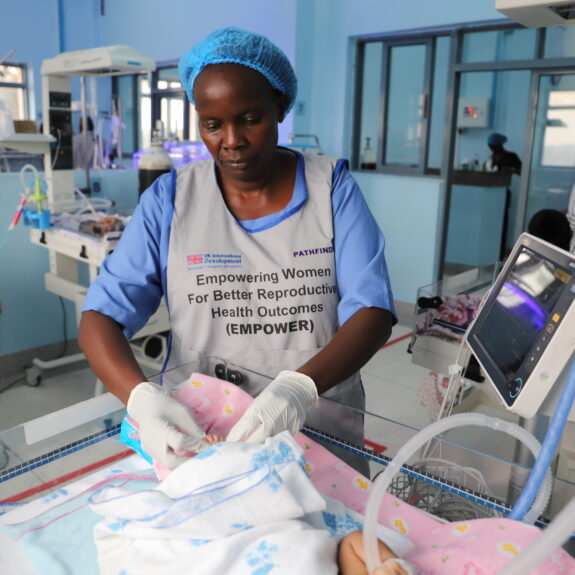
EMPOWER approached NICU functionalization as a systems investment. Working closely with the MOH Newborn Health Secretariat, the programme analysed newborn health data, identified high-burden regions, and agreed on priority health facilities. In collaboration with Local Maternity and Neonatal Systems (LMNS) newborn coordinators, facility-specific assessments were conducted to identify gaps in the availability and functionality of newborn services. EMPOWER addressed these gaps through a four-pronged approach (below) that ensured hospitals not only received advanced technology, but retained the clinical competencies and systems required to use and sustain it.