Download
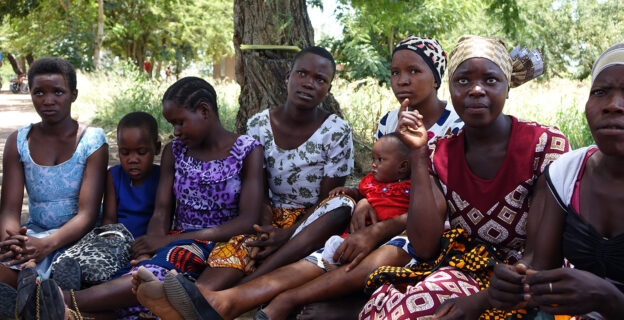
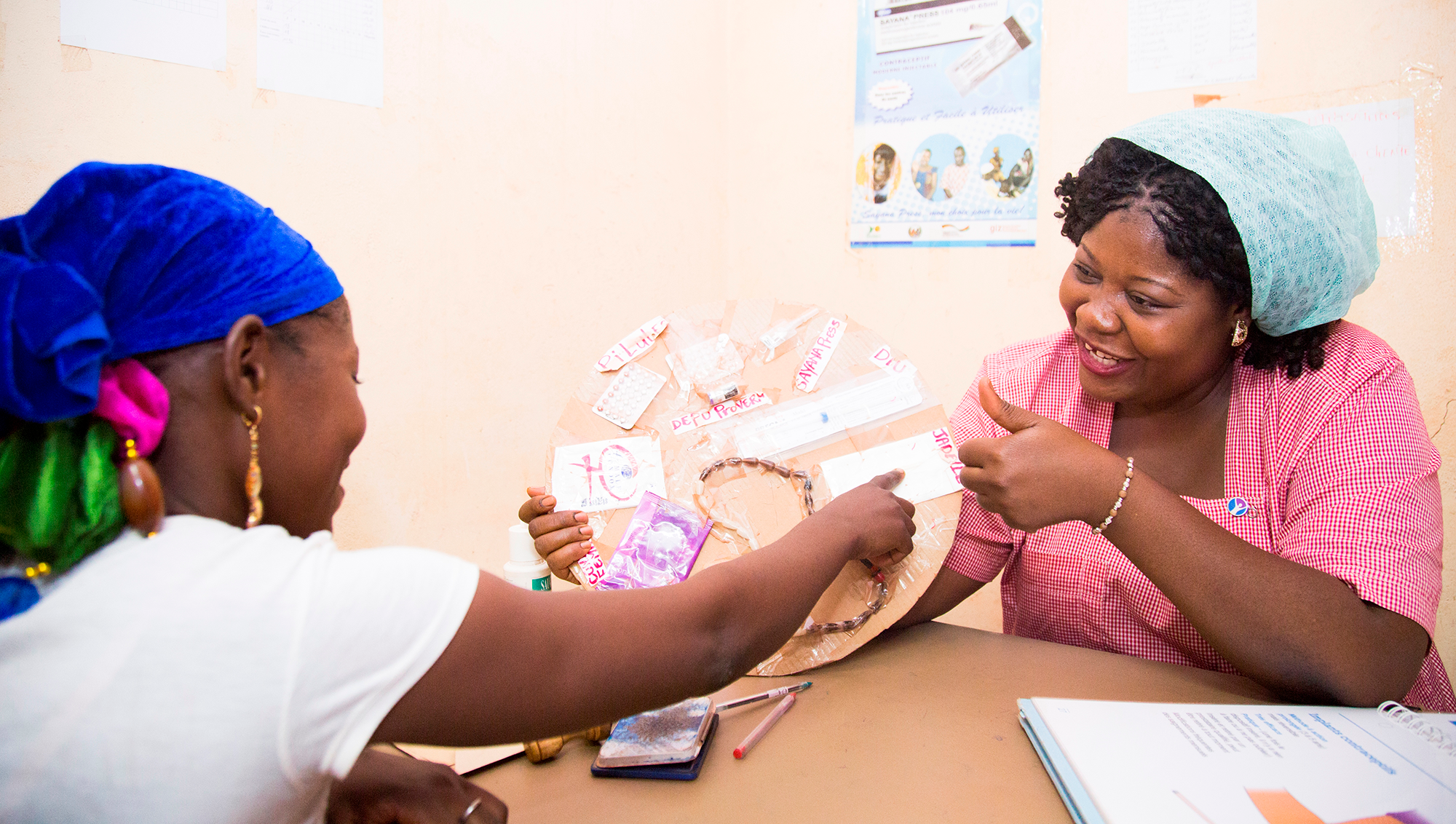
The Beyond Bias project sought to ensure that young people between 15 and 24 years of age have access to empathetic, non-judgmental, quality counseling and provision of a full range of contraceptive methods, regardless of their marital status or parity. By bringing together providers and the young people they serve, Beyond Bias worked to design and test scalable solutions that address provider bias and improve contraceptive counseling and services.
Beyond Bias was innovative in its multidisciplinary approach, which brought together experts in adolescent and youth sexual and reproductive health, social and behavior change communication, human-centered design, behavioral economics, and segmentation analysis. These complementary approaches enabled a nuanced understanding of the drivers, manifestations, and outcomes of provider bias and inform tailored interventions to address that bias.
Led by Pathfinder International, Beyond Bias partners included Camber Collective, YLabs, and the Behavioral Economics in Reproductive Health Initiative (BERI). Beyond Bias was active in Pakistan, Tanzania, and Burkina Faso, with funding from the Gates Foundation.
This resource is presented in three parts: