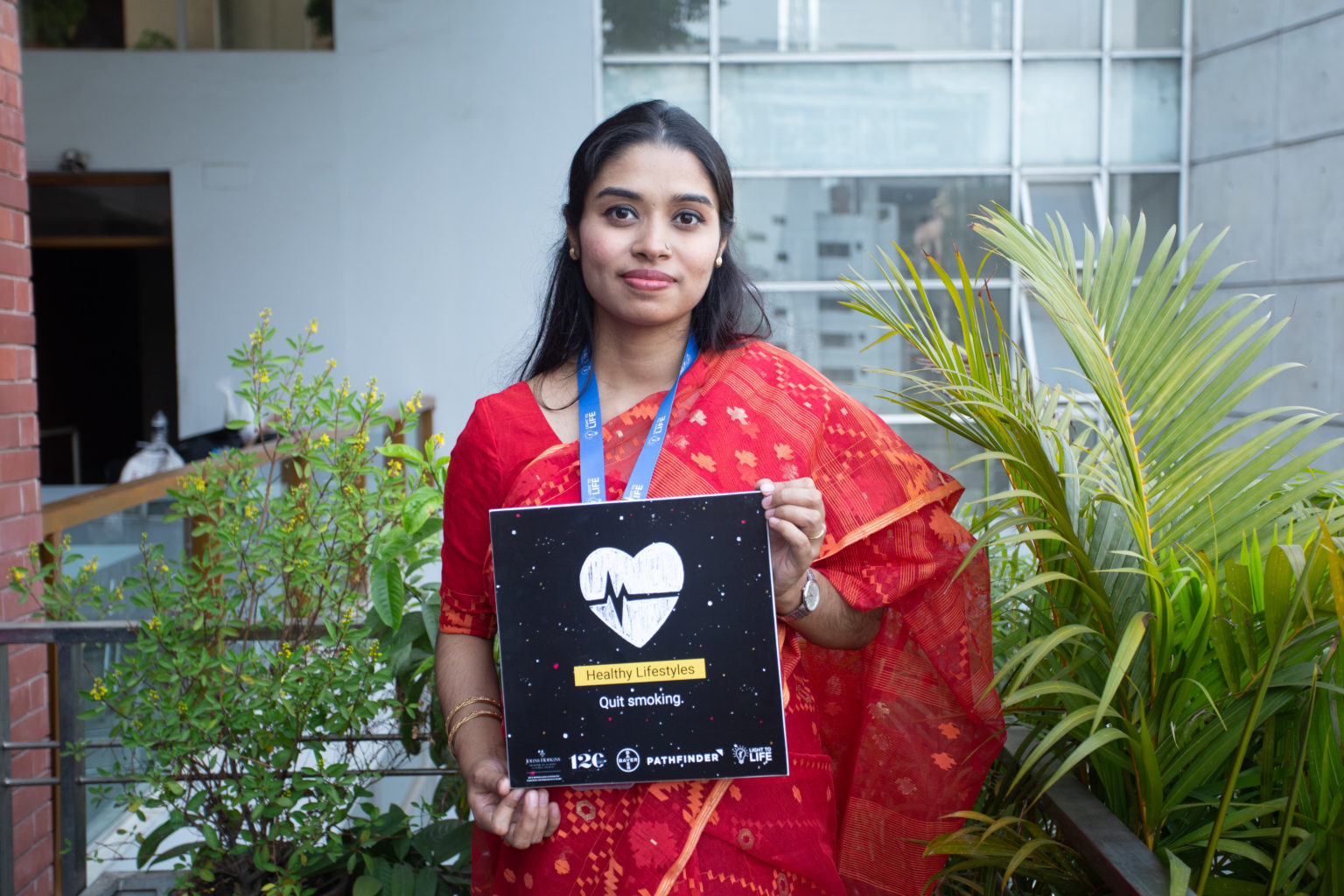
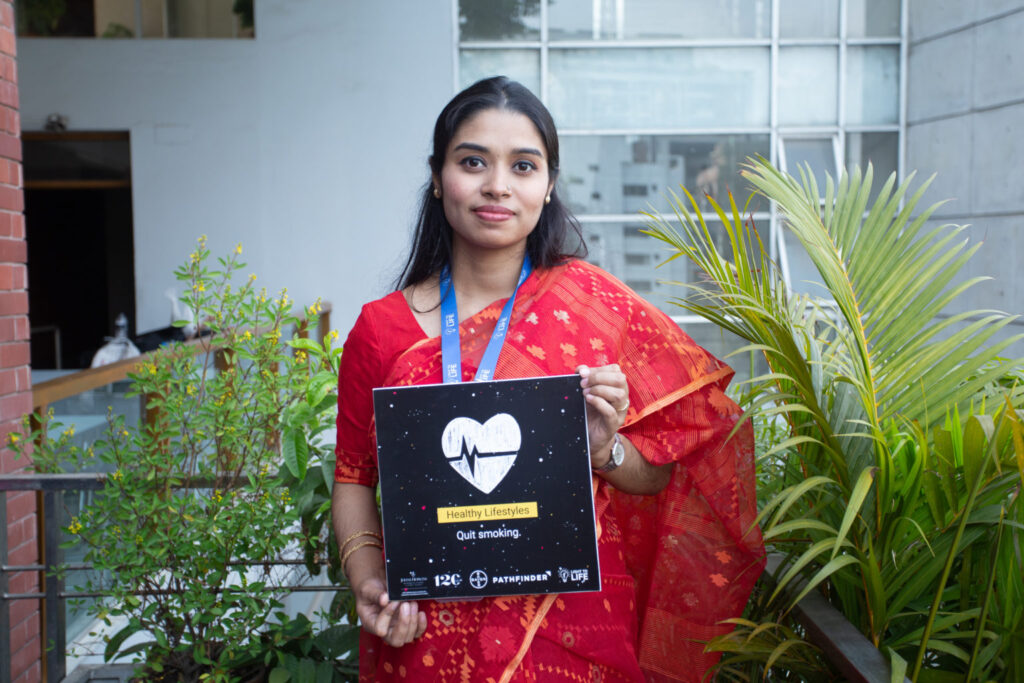
Sadia Rahman is one of six leaders from different countries in sub-Saharan Africa and South Asia who received $10,000 to lead innovative programs with potential to drive major breakthroughs in reproductive health. The awards are part of the 2021 Ingenuity Fund, developed by the Johns Hopkins University Bloomberg School of Public Health’s Bill & Melinda Gates Institute for Population and Reproductive Health (Gates Institute) and supported by Pathfinder International and Bayer. Sadia’s project, the School of (Im)Possible, an online platform where adolescents, girls and boys from climate vulnerable areas of Bangladesh can get sexual and reproductive health and climate information through different art forms. Sadia is Program Director at Light to Life in Bangladesh, a youth-led organization leading programs on sexual and reproductive health and rights, mental health, and climate change.
What brought you to this work?
I grew up in a community where I didn’t have comprehensive sexual health education. When I started to explore the sexual and reproductive health and rights (SRHR) realm, particularly rights, it really resonated and inspired me. I wanted to spread awareness. Because when young people are informed about their rights, they can claim them.
When young people are informed about their rights, they can claim them.
We need to reach as many people as possible with knowledge about their rights, and create environments where they can access those rights.
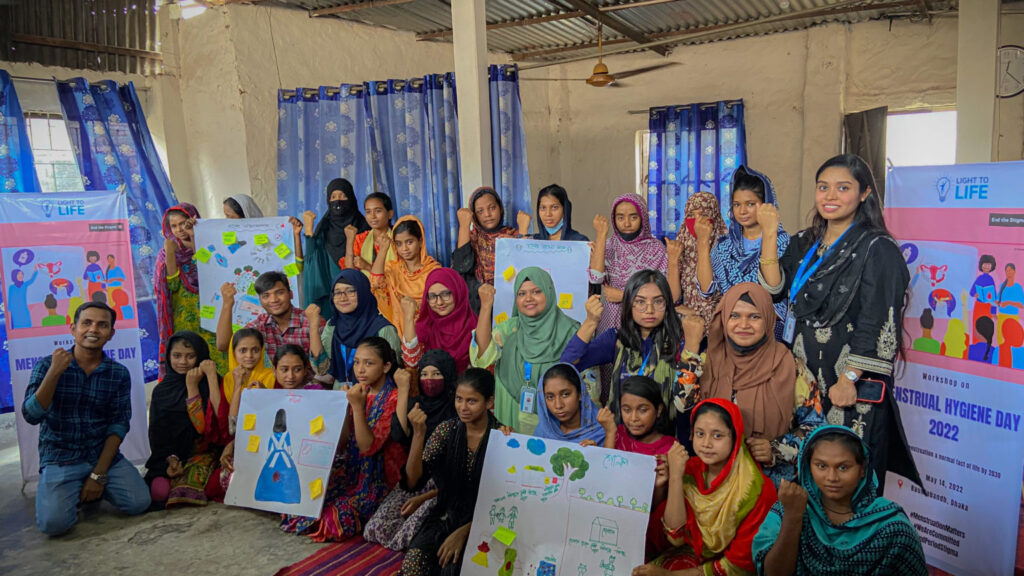
Your organization works at the intersection of a number of issues. Tell us a little bit about how the varied pieces overlap.
In areas vulnerable to climate change, there are numerous barriers facing women and adolescents in terms of sexual and reproductive health and rights. Health services are tough to access in areas that are facing natural disasters. Statistically, places most vulnerable to climate change show increased rates of child marriage. Because after disasters, families face increased economic pressure and instability, and if they marry their daughters, they will no longer need to support them. So then we see adolescent girls married, a mother at 16. She’s a child, and the mother of a child herself. This is how climate change is connected to reproductive health and rights.
More than this, mental health is a critical component tied to this work at large. The number of climate refugees and migrants are increasing. They are coming to urban areas, and facing significant challenges in adapting to their new surroundings. Mental trauma is real, having to leave their land, their homes. They have trauma, and myriad challenges.
All of this work – sexual and reproductive health, climate resilience, and mental health – is linked, and we need solutions that cross these realms.
Tell us a bit about your work around mental health. Why mental health?
Mental health isn’t something that is really discussed in Bangladesh. We only have two words that are commonly used to describe it: Either you are sane or insane. If you have any mental health challenges, people call you mad. There isn’t a broad understanding of mental health challenges. The stigma is huge.
Our government is the key stakeholder to address this challenge, and to interlink this work with climate resilience. We need to declare a mental health emergency, and we need to make it clear why climate resilience is tied to this emergency. People are suffering. But there are very few mental health professionals in Bangladesh. Services are very hard to access, and private services are extremely expensive. In terms of SRHR we have definitely come a long way. But SRHR is directly linked to these other issues.
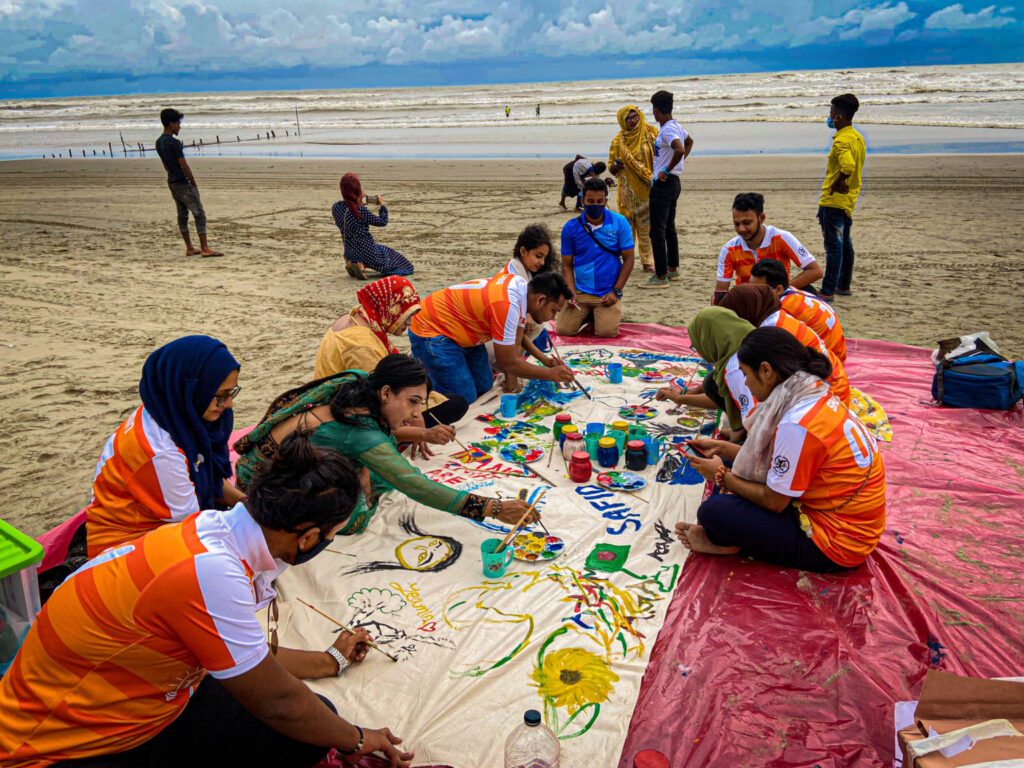
What needs to be done globally to build more climate resilient communities?
The reality is, when we talk about climate resilience, countries like Bangladesh are the ones that are suffering. There are countries who are more responsible for the shifts in climate, and then there are countries that are bearing the impact.
First and foremost, we need global policies to protect our communities from climate change. That’s the first thing. Two, we need to invest in adaptation to the damages that have already been done. There isn’t much left to stop the impacts. What has happened has happened. Today, the focus should be on tackling the impacts, addressing the impacts that are being seen now in countries, and mitigating the impacts in the upcoming years. It’s been said that within 50 years, a large swath of Bangladesh will be under water. What will happen to the people living there? We need to address this now!
We need shifts in global policies, in global investments, and we need them now. We need broad activism. We need global and national leaders to hear us.
How is your organization part of the solution to climate resilience?
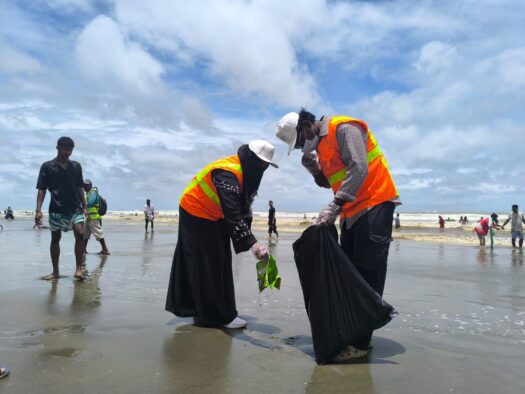
Right now, we do advocacy work with the government and key stakeholders. We also conduct direct interventions in communities. We work mainly with adolescents and youth. We are in four divisions, including Cox’s Bazaar. We work with young people and educate them on how climate change is impacting their rights. We work with local partners so we can reach more people.
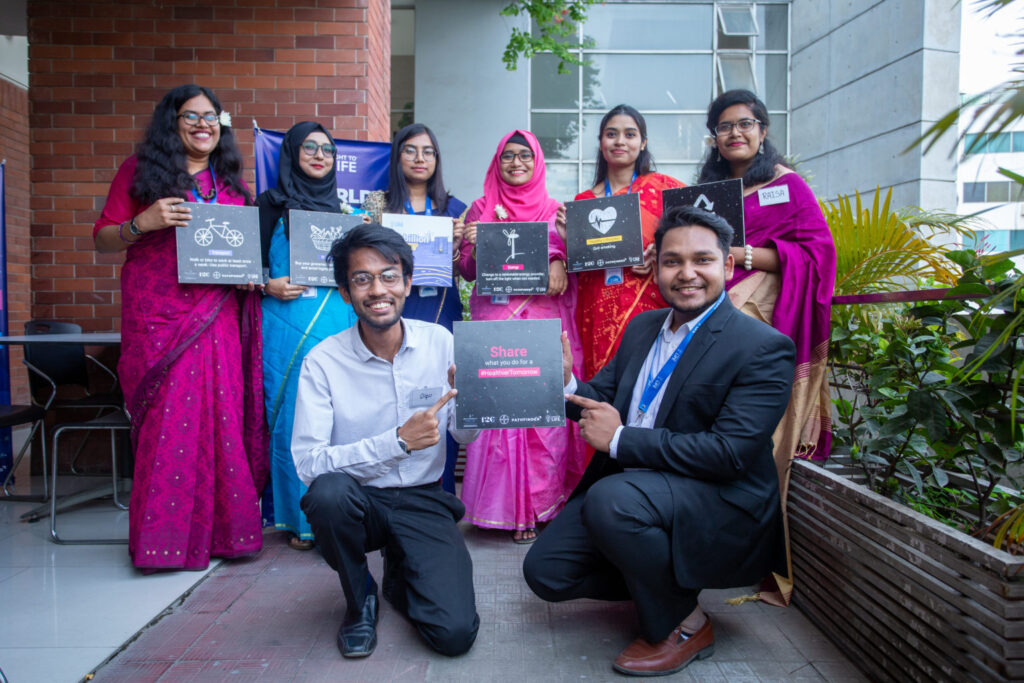
What is the specific project you are working on with the Ingenuity Fund grant?
Our project’s name is ‘School of (Im)possible!” The IM is in brackets, because it’s really “I am possible!” It’s an online platform where we can reach adolescents and youth, and provide them information on climate resilience and SRHR. But this information will be through play-based learning methods. It will be art based, storytelling, songs, and poetry. This way, adolescents and youth can connect in various ways, and express themselves.
Art is a universal language. This is why we want to use it. On top of our site, we will develop a set of comic books to distribute.
At the high level, we will work to engage government officials and policy makers, and create a two-way dialogue between youth and adolescents and these leaders through our platform.
What’s your long-term goal and vision?
My long-term goal is to reach as many young people as possible. I want to establish an enabling environment and system for them where they can claim their rights in the three key arenas: climate resilience, mental health, and sexual and reproductive health. We want a platform where we don’t need to ask about the rights because the rights are already in place.
Read more about the Ingenuity Fund awards.
Recent News Coverage on Light to Life and School of the (Im)Possible:
- World Menstrual Hygiene Day: Social Organizations Fight Taboos (The Dhaka Tribune)
- Light to Life Calls Out Red Elephant in the Room (The Business Standard)
- Light to Life Celebrates World Health Day (The Daily Star)