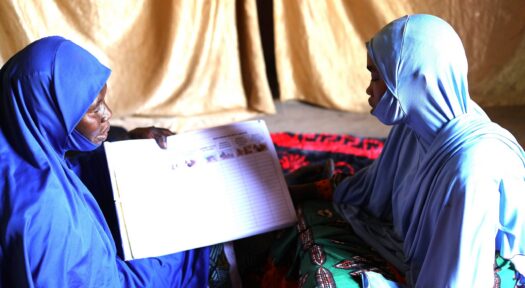

Safia, in her late thirties, has had eight pregnancies. Four of her children made it to their first birthdays, while the rest died shortly after birth. Painful loss and physical exhaustion are all too familiar to Safia, who lives in rural Niger.
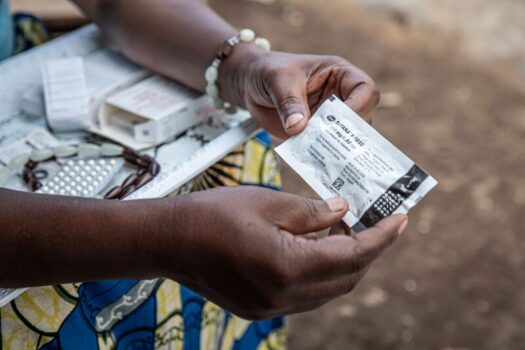
Today, Safia suffers from uterine prolapse, a common consequence of repeated and closely spaced pregnancies, exacerbated by limited medical follow-up. Under the guidance of a health worker, Safia received an injectable contraceptive to prevent future pregnancies.
“I had a problem with my uterus, and it continues, so I decided to put myself on a method to allow me to rest,” said Safia. Although her body got a chance to recover, she still worried about making the 14-kilometer roundtrip to the health center for her next contraceptive dose—a costly and cumbersome journey from the village of Tombo Kaina where she lives.
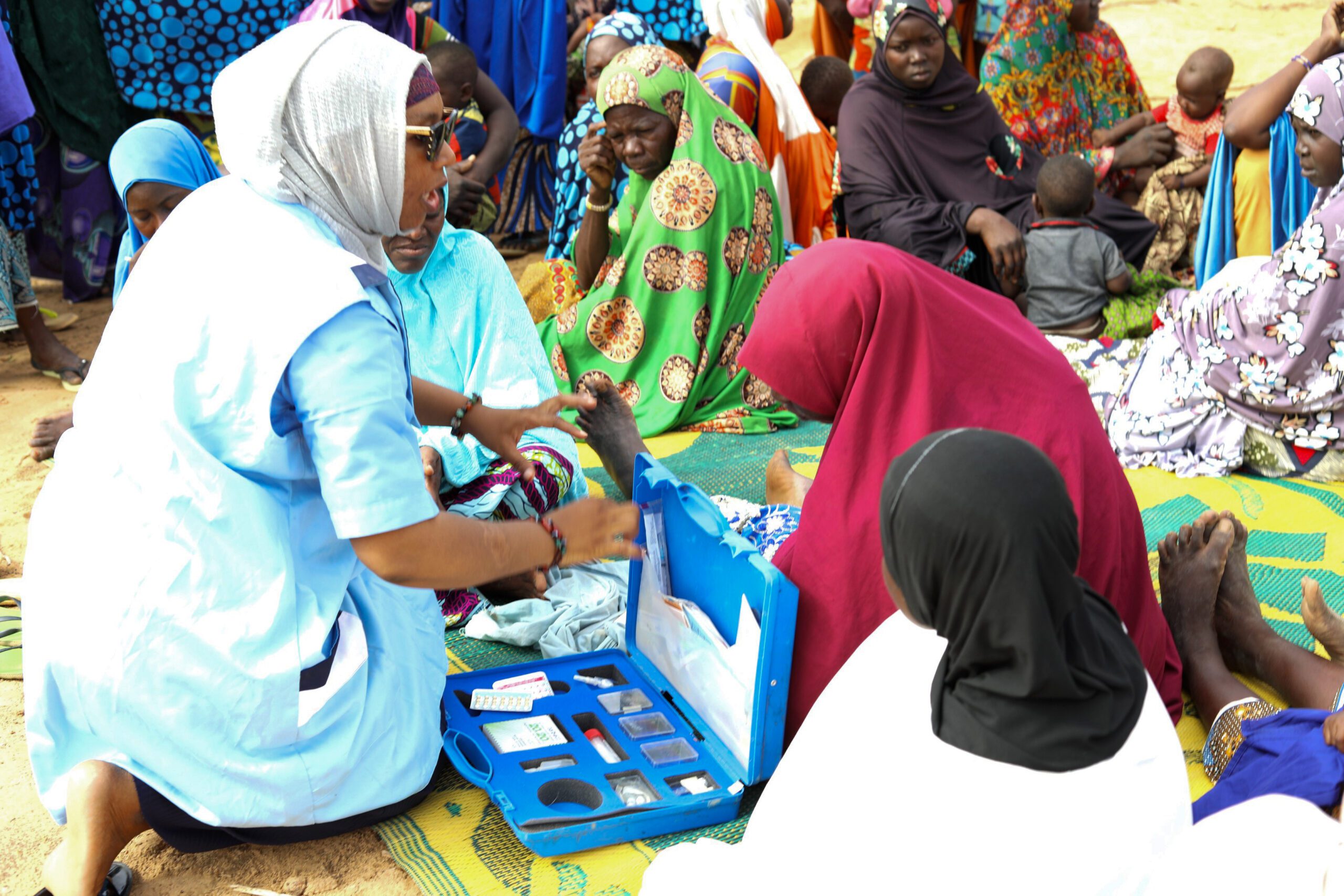
Fortunately, her worries have finally been put to rest with the arrival of mobile health teams in Tombo Kaina supported by Pathfinder’s J-Matassa project.
J-Matassa, led by Pathfinder International in consortium with Marie Stopes International in Niger and the Association des Jeunes Filles pour la Santé de la Reproduction, brings mobile teams to seven health districts in Tillabéry and Dosso regions each month or two, reaching 5,000 people across 336 villages from September 2024 to June 2025. The mobile teams offer integrated, lifesaving services for women and children:
- prenatal consultations.
- vaccinations for children younger than 5 years.
- family planning including the option to receive a long-acting contraceptive implant inserted or removed.
- sexually transmitted disease management and treatment.
“The team arrived this morning. I was able to pick up my Implanon right here, without moving. It makes our lives easier. We are happy to hear that they will be coming back every two months. We won’t have to go far to access our methods.”
Additionally, the mobile teams in partnership with community influencers and leaders provide information to individuals about contraception and the different methods available.
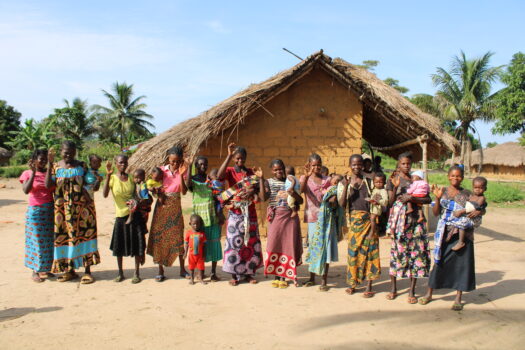
Mobile teams are a great way to reach rural communities with essential health care as they centralize multiple services in one place, allow for direct engagement with communities, reduce access barriers such as transportation and cost, and build trust between health workers and communities.
“Before, we had to walk to Kombili, about 12 km round trip, just to get a method. And sometimes, even after all this journey, we couldn’t find anything. We had to wait a little longer. Today, with the mobile teams coming to us, the suffering is over.”
Advantages of the mobile health approach
- less infrastructure to build or maintain than a stationary clinic.
- optimization of staff—the same team can cover several areas at a lower cost.
- ability to reach those most in need.
- reduced transportation costs for clients.
“The mobile approach is a high-impact innovation,” said Dr. Asma Yaroh Gali, Pathfinder’s Country Director in Niger. “Mobile teams reduce geographic inequalities, strengthen preventive health, and build trust with marginalized communities.”
To increase impact and sustainability, J-Matassa designed the program to be in alignment with Niger’s national health strategy, working in close collaboration with the Ministries of Health and Public Hygiene; National Education, Literacy and Language Promotion; Youth and Sports, and Population, Social Action and National Solidarity and Youth.
“In times of limited resources, mobile services therefore offer a flexible, efficient, and equitable response, bringing essential care directly to communities, while increasing access to health services for all,” said Dr. Gali.
Learn more about J-Matassa.
Des équipes mobiles soulagent les souffrances des femmes dans les zones rurales du Niger
Safia, âgée d’une trentaine d’années, a eu huit grossesses. Quatre de ses enfants ont atteint leur premier anniversaire, tandis que les autres sont morts peu après leur naissance. La douleur de la perte et l’épuisement physique sont monnaie courante pour Safia, qui vit dans une zone rurale du Niger.
Aujourd’hui, Safia souffre d’un prolapsus utérin, une conséquence courante des grossesses répétées et rapprochées, exacerbée par un suivi médical limité. Sous la supervision d’un agent de santé, Safia a reçu un contraceptif injectable pour éviter de nouvelles grossesses.
« J’avais un problème avec mon utérus, et il persiste, alors j’ai décidé d’opter pour une méthode qui me permette de me reposer », explique Safia. Bien que son corps ait eu la chance de se rétablir, elle s’inquiétait toujours de devoir parcourir 14 kilomètres aller-retour jusqu’au centre de santé pour obtenir sa prochaine dose de contraceptif, un trajet coûteux et fastidieux depuis le village de Tombo Kaina où elle vit.
Heureusement, ses inquiétudes ont finalement été apaisées avec l’arrivée à Tombo Kaina d’équipes de santé mobiles soutenues par le projet J-Matassa de Pathfinder.
J-Matassa, dirigé par Pathfinder International en consortium avec Marie Stopes International au Niger et l’Association des Jeunes Filles pour la Santé de la Reproduction, envoie chaque mois our deux mois des équipes mobiles dans sept districts sanitaires des régions de Tillabéry et Dosso, touchant 5 000 personnes dans 336 villages entre septembre 2024 et juin 2025. Les équipes mobiles offrent des services intégrés et vitaux aux femmes et aux enfants :
- Consultations prénatales
- Vaccinations pour les enfants de moins de 5 ans
- Planning familial, y compris la possibilité de se faire poser ou retirer un implant contraceptif à longue durée d’action
- Prise en charge et traitement des maladies sexuellement transmissibles
« L’équipe est arrivée ce matin. J’ai pu récupérer mon Implanon ici même, sans avoir à me déplacer. Cela nous facilite la vie. Nous sommes heureuses d’apprendre qu’elles reviendront tous les deux mois. Nous n’aurons plus à aller loin pour accéder à nos méthodes contraceptives. »
De plus, les équipes mobiles, en partenariat avec des leaders et des personnalités influentes au sein des communautés, fournissent aux individus des informations sur la contraception et les différentes méthodes disponibles.
Les équipes mobiles constituent un excellent moyen d’apporter des soins de santé essentiels aux communautés rurales, car elles centralisent plusieurs services en un seul endroit, permettent un engagement direct avec les communautés, réduisent les obstacles à l’accès tels que le transport et le coût, et renforcent la confiance entre les agents de santé et les communautés.
« Avant, nous devions marcher jusqu’à Kombili, soit environ 12 km aller-retour, juste pour obtenir une méthode contraceptive. Et parfois, même après tout ce trajet, nous ne trouvions rien. Nous devions attendre encore un peu. Aujourd’hui, grâce aux équipes mobiles qui viennent à nous, cette souffrance est terminée.»
Les avantages de l’approche mobile sont les suivants :
- Moins d’infrastructures à construire ou à entretenir qu’une clinique fixe.
- Optimisation du personnel : la même équipe peut couvrir plusieurs zones à moindre coût.
- Capacité à atteindre les personnes qui en ont le plus besoin.
- Réduction des frais de transport pour les clients.
« L’approche mobile est une innovation à fort impact », a déclaré le Dr Asma Yaroh Gali, directrice nationale de Pathfinder au Niger. « Les équipes mobiles réduisent les inégalités géographiques, renforcent la santé préventive et instaurent la confiance auprès des communautés marginalisées. »
Afin d’accroître l’impact et la durabilité, J-Matassa a conçu le programme en accord avec la stratégie nationale de santé du Niger, en étroite collaboration avec les ministères de la Santé et de l’Hygiène publique, de l’Éducation nationale, de l’Alphabétisation et de la Promotion linguistique, de la Jeunesse et des Sports, ainsi que de la Population, de l’Action sociale, de la Solidarité nationale.
« En période de ressources limitées, les services mobiles offrent donc une réponse flexible, efficace et équitable, en apportant des soins essentiels directement aux communautés, tout en améliorant l’accès aux services de santé pour tous », a déclaré le Dr Gali.
Pour en savoir plus sur J-Matassa.