Aller à la traduction en français >>
A Golden Opportunity
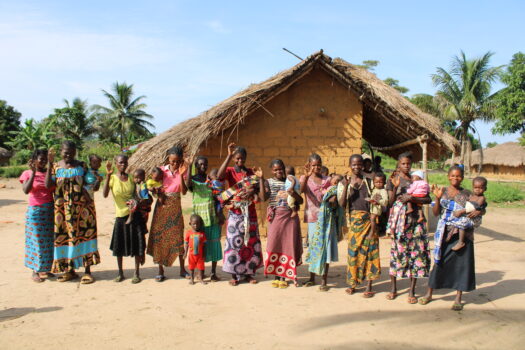
Vincent Aseme Talasi, 42, is a father to six children. His wife, Mila Kunzulu, gave birth to their youngest just a week and a half ago. Meanwhile, their eldest is preparing to attend nursing school—15 kilometers away from their village of Ntoki, in the Kama health zone of Kwilu Province, Democratic Republic of the Congo (DRC).
Vincent was already feeling the financial strain from his first child’s tuition fees, and he had five more educations to budget for… in addition to providing clean water and sufficient food to his growing family every day. What would it be like to keep this up until his youngest was grown? In another five years, would this new baby still be his youngest child? Or would there be more siblings to follow?
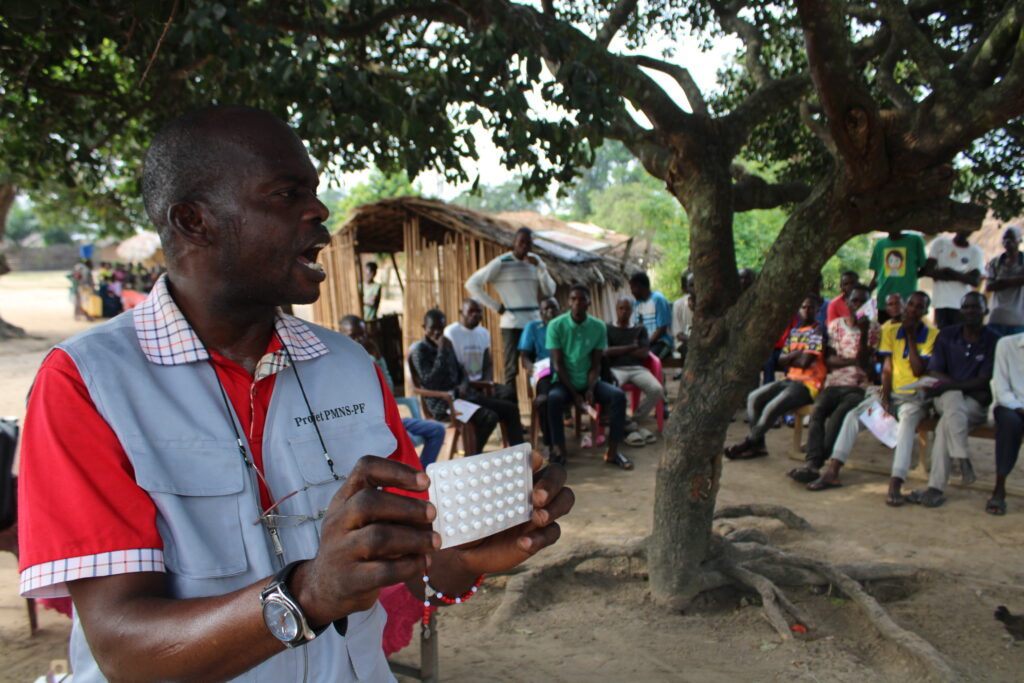
One day, when Vincent attended a family planning awareness session in his village, something clicked. The session, which was organized by service providers, the Village Chief, and community-based distributors (CBDs) with support from the UG-PDSS through the Sanru–Pathfinder consortium and funding from the World Bank, helped him understand the benefits of family planning and healthy timing and spacing of pregnancies. He stayed at the session much longer than he intended to speak with the outreach campaign team.
When Vincent returned home, he told Mila about what he had learned in the session. He also told her about the team of providers and CBDs in their village who had come to offer free family planning services, which Mila later described as a “golden opportunity.” She confided in Vincent that she had wanted to stop at three children, but lack of family planning services and resources had prevented her.
Vincent and Mila did not delay a second longer. On that same day, in the pouring rain, the couple returned to the village to visit the team of family planning providers. After comprehensive counseling, Mila chose a long-acting method with Vincent’s support.
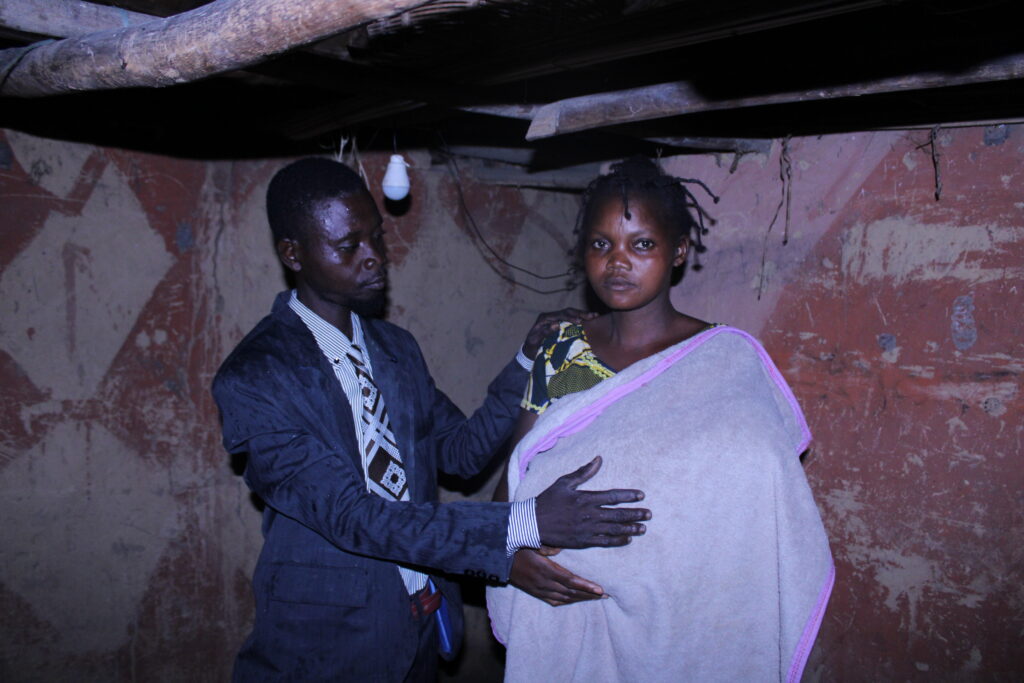
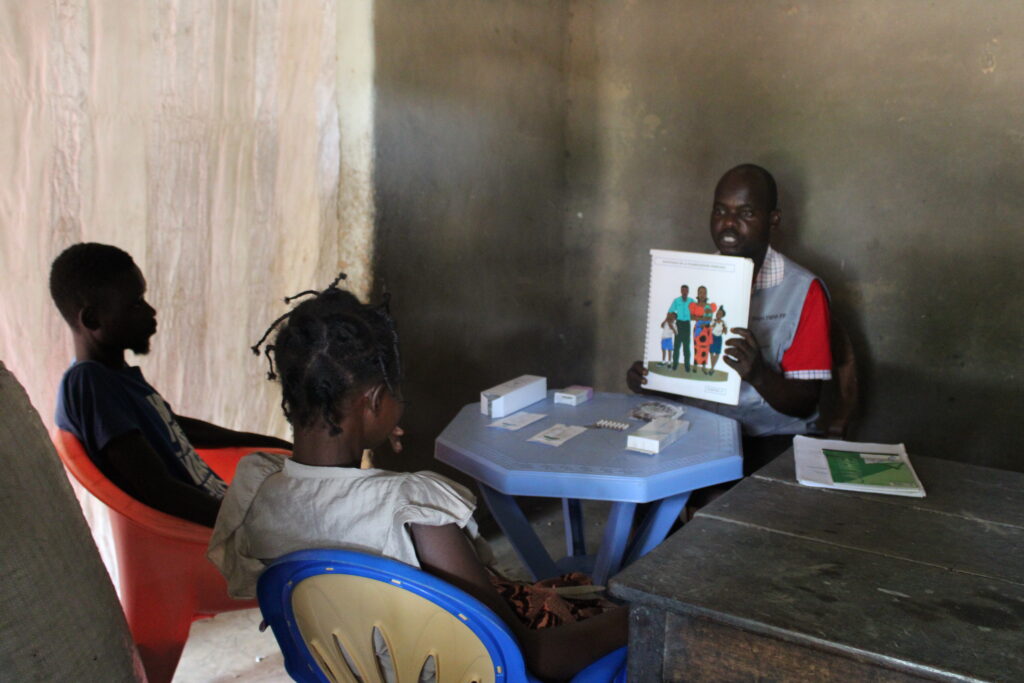
“From now on, we’re going to focus on the children we already have. Thank you for coming back to offer us this new opportunity. My wife and I make our living from farming; in the days ahead, we’ll finally be able to work in the fields together, as a team.”
—Vincent Aseme Talasi, 42
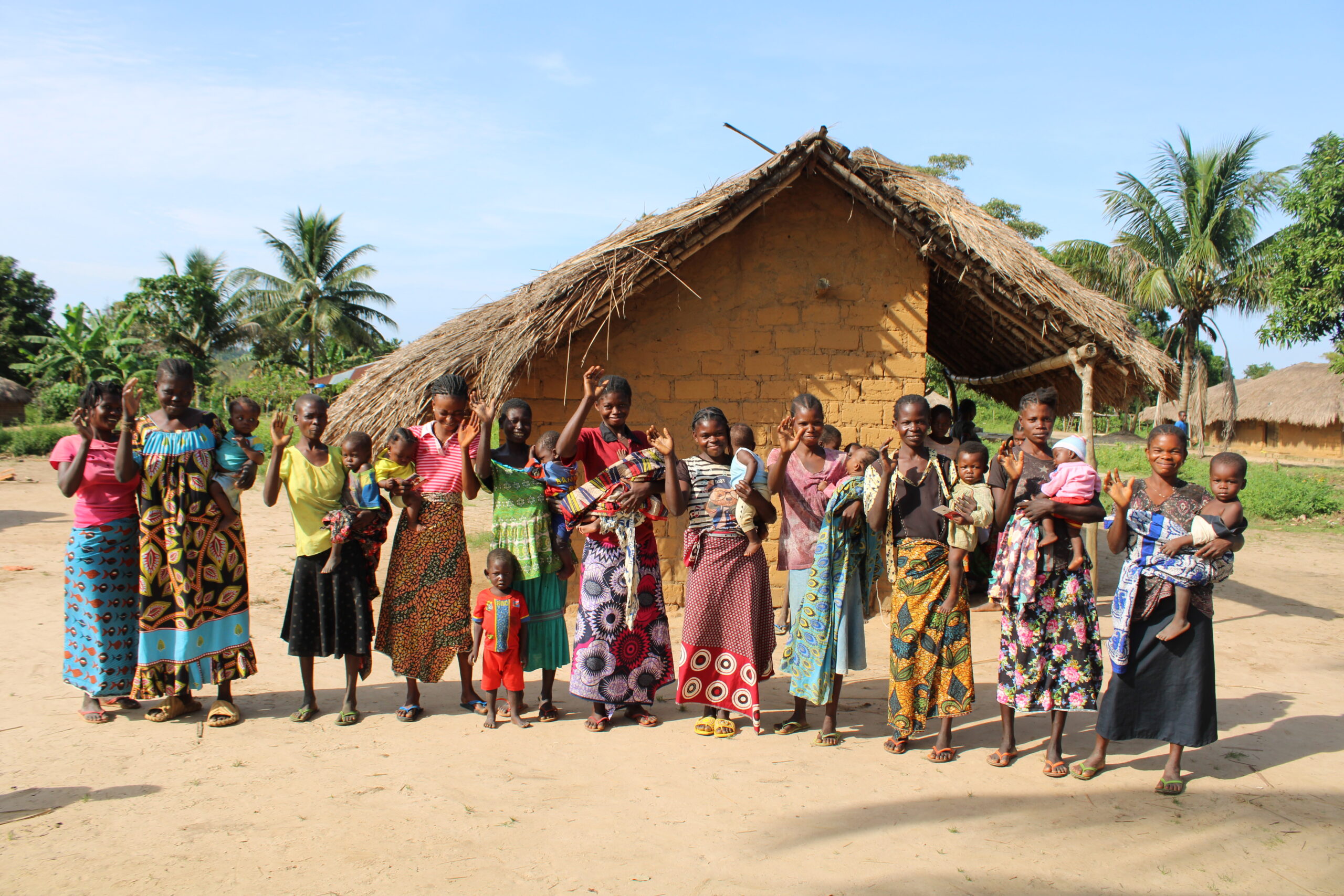
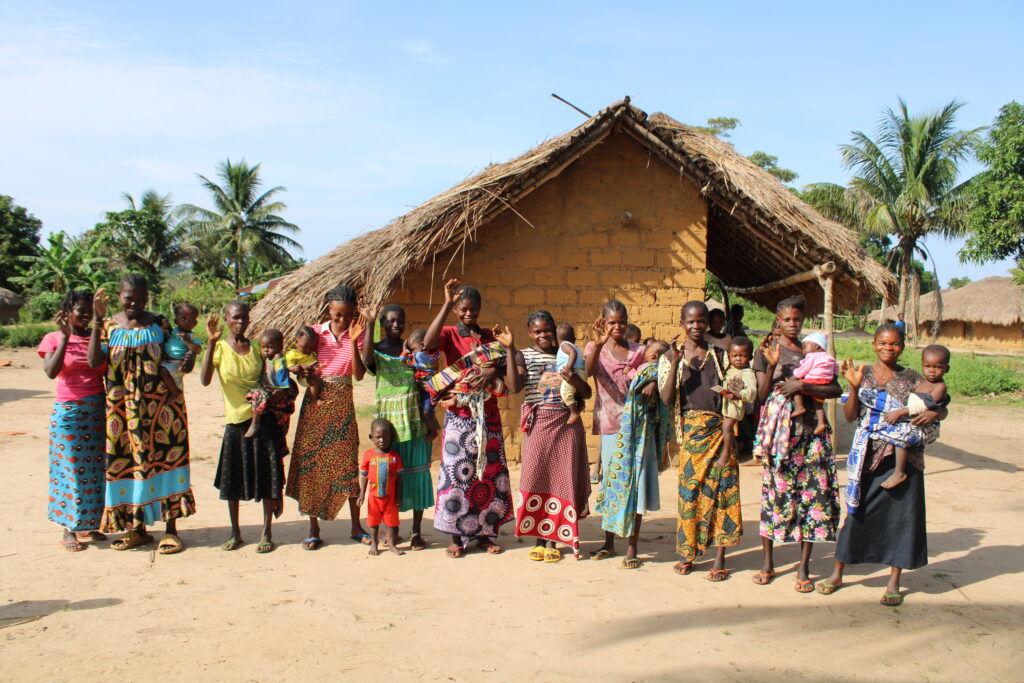
Several other households in Vincent and Mila’s community had the same idea. Throughout the day, couples visited the providers for confidential counseling and services. Many women, like Mila, reported feeling overwhelmed by the lack of control over their reproductive futures. During a similar outreach session in Panga, a village within the SIA health zone, almost 80% of the women who attended had a child under two years of age. After the session, they overwhelmingly expressed the need to plan their births.
Kwilu Province, DRC
In Kwilu Province, fertility among adolescents aged 15‒19 is estimated at 76 per 1,000, which is below the national average of 109 per 1,000 (MICS 2018). However, the modern contraceptive prevalence rate in Kwilu is among the lowest in the country, at just 3% among women aged 15‒49 who are married or in a union.
This low modern contraceptive prevalence rate is linked to a complex, interconnected set of factors—including sociocultural and economic barriers, low availability of contraceptive supplies, and lack of access to health care and information. To address these factors, the Sanru-Pathfinder consortium, through Projet Multisectoriel de Nutrition et de la Santé (PMNS-PF), supports the implementation of Advanced and Mobile Strategies across Kwilu’s 24 health zones.
Advanced and Mobile Strategies
With technical and financial support from the SANRU-Pathfinder consortium, health zone management teams organize mobile outreach through health area teams, which comprise providers, CBDs, and village chiefs. Health zone management teams also organize preparatory meetings and provide clinical mentorship for health area teams to ensure high-quality service while meeting high demand. The Sanru-Pathfinder consortium provides transportation of contraceptives and reproductive health supplies to outreach sites.
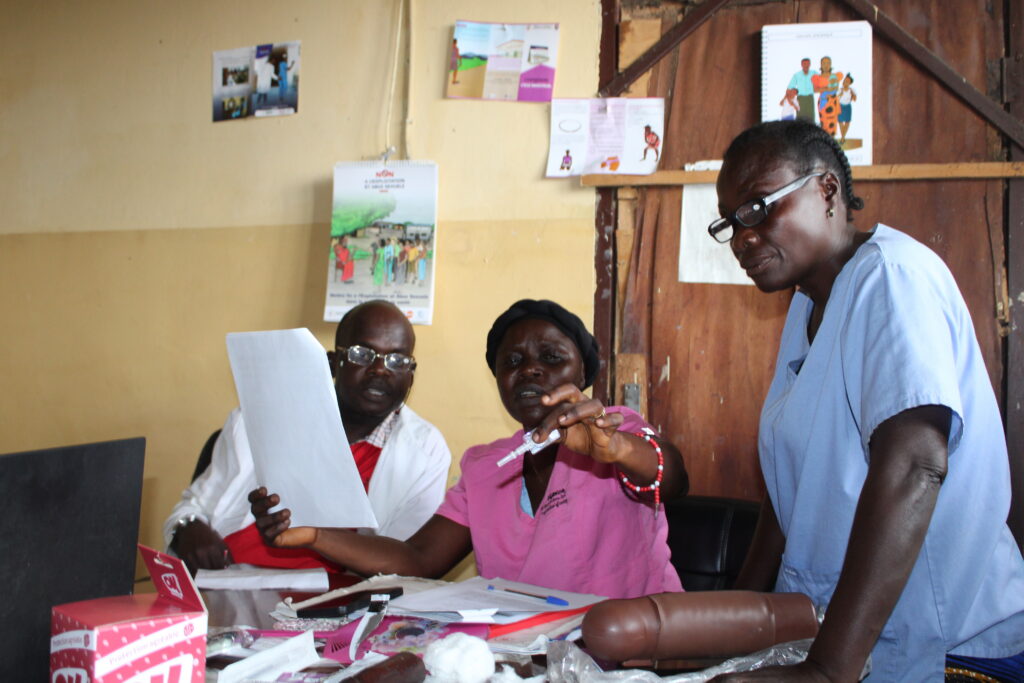

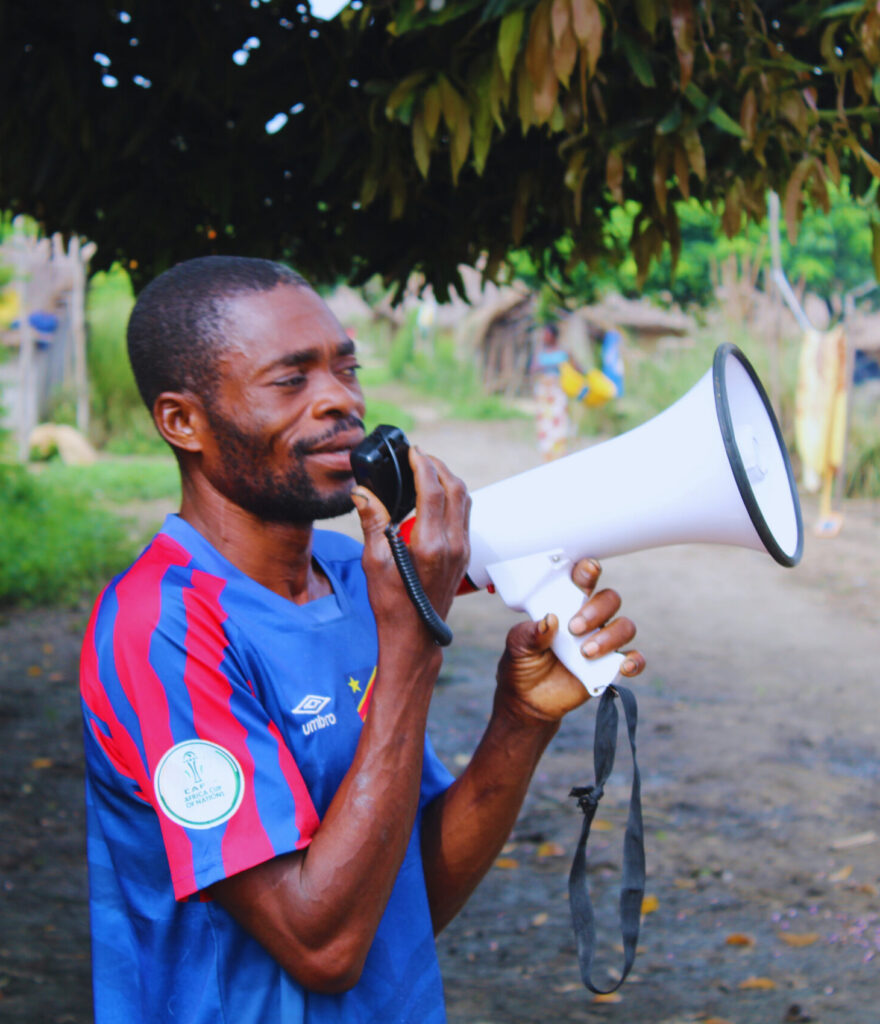
For successful mobile outreach to remote health areas in Kwilu, the health zone management team first contacts the village chief. The chief then informs the community, often using a megaphone, of the time and location of the family planning awareness session. The team also identifies a suitable location that can guarantee confidentiality as a service delivery point.
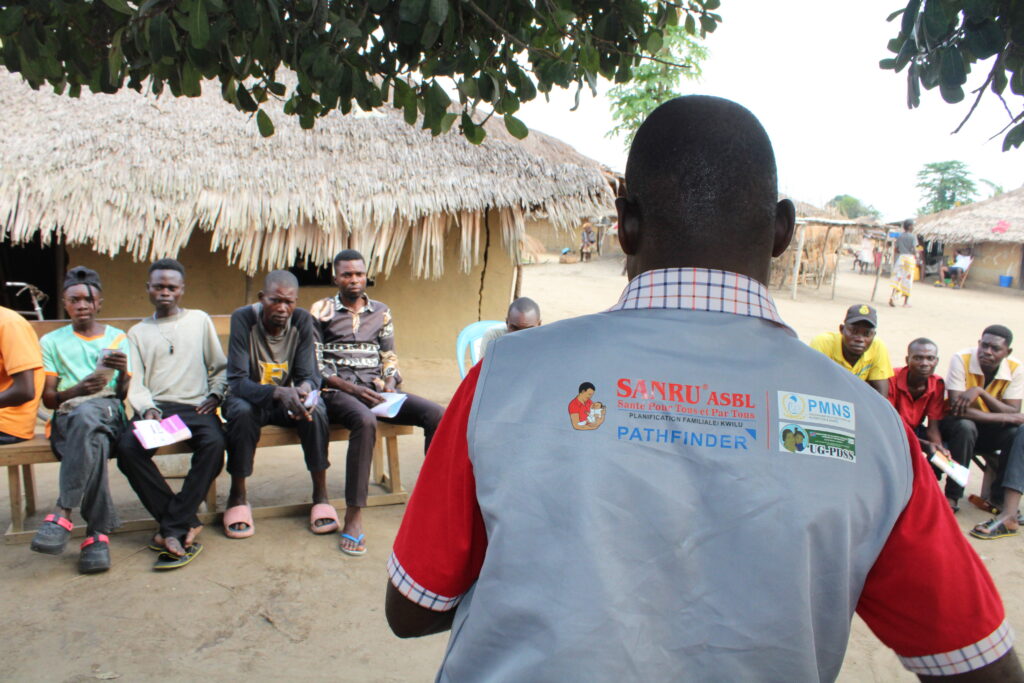
At the session, participants form a men’s group and a women’s group, which helps encourage all participants to speak freely. The women’s group and men’s group are sensitized to family planning by service providers and CBDs of the same gender. The presence of the village chief and community-based distributors ensures that both groups will not be disturbed during the session. These discussions are further supported by a SANRU-Pathfinder consortium advisor.
Women’s Groups
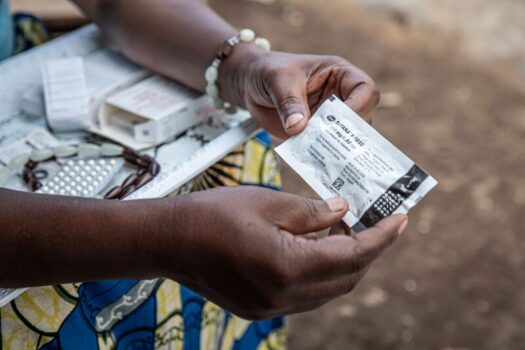
In women’s groups, participants generally want to see and touch the contraceptive methods and be assured about their reversibility. They also ask for clarifications around family planning myths and misconceptions, particularly those related to cancer. Providers and CBDs address all questions and concerns until all participants are satisfied. At the end of the awareness session, the outreach team invites interested individuals to reach out for further counseling and care. Most women attend another outreach session before going in for personalized counseling and care—but some, like Mila, go in as soon as possible.
Men’s Groups
In general, men’s groups have many questions. Several participants express fears around the costs and consequences of contraceptives, and some worry that their wives’ contraceptive use might lead to infidelity. These concerns are addressed and clarified until the participants are satisfied. At the end of each session, many men accompany their wives to receive counseling and, if they choose, a family planning method.
Visual Aids for Reinforcing Awareness-Raising Efforts
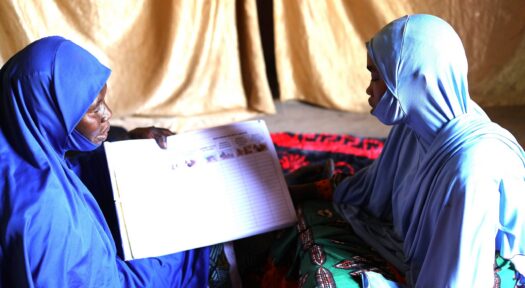
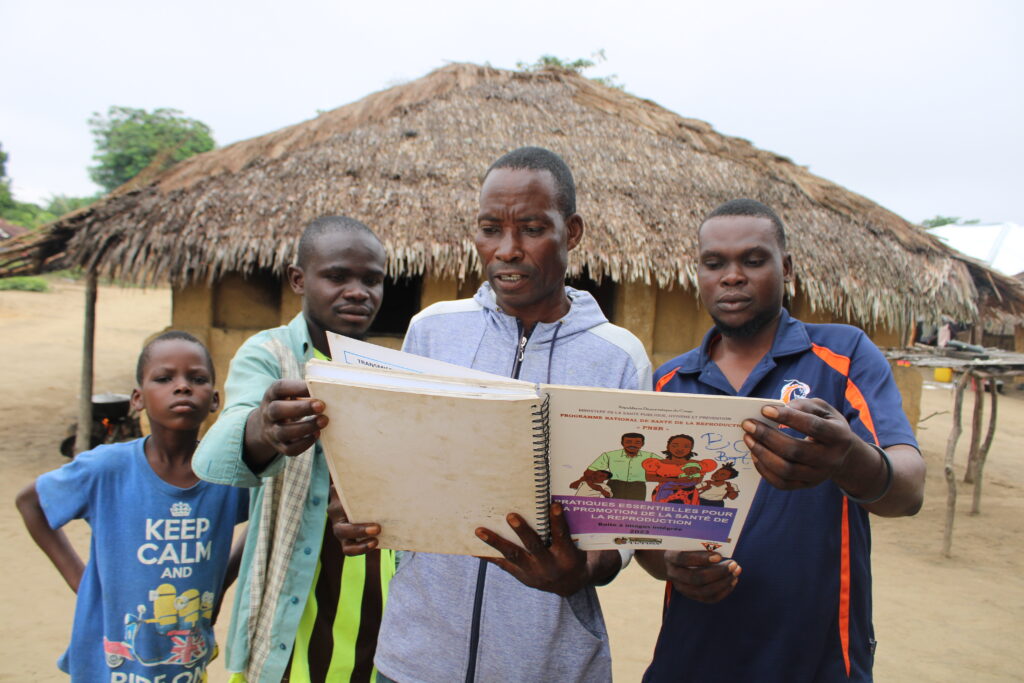
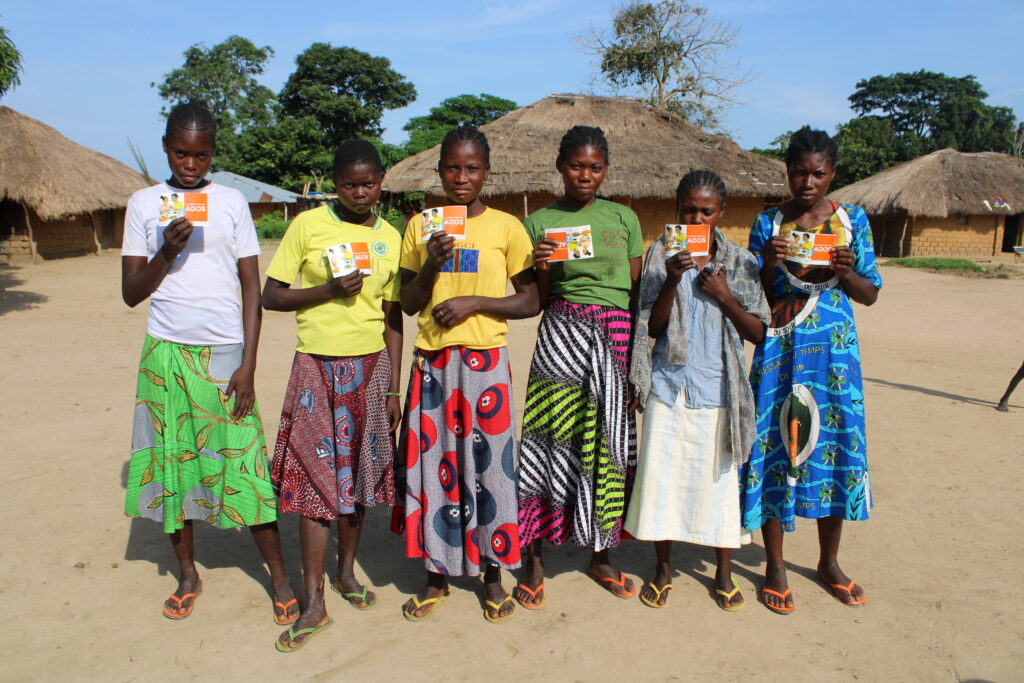
Visual aids such as picture boxes, leaflets, and booklets proved to be a valuable tool for mobile outreach even outside of awareness sessions. After a session in Kama health zone, a group of young men who caught sight of some picture boxes being transported by project staff asked to read them. These picture boxes, which were produced by UG-PDSS with support from the World Bank, depict how family planning can benefit the wellbeing of a family. For over two hours, they examined the panels carefully and discussed the messages among themselves.
Data Management for Advanced and Mobile Strategies
All data generated during outreach campaigns are recorded either in the CBDs’ registers or in the health center’s family planning register. At the end of the month, after validation during on-site monitoring, the Head Nurse compiles them into the SNIS report template and enters them into DHIS2. This data can then be accessed and analyzed by all stakeholders. At the health center level, it supports decision-making and helps assess the performance of interventions. It is used to guide the targeting of activities, measure results, and identify any discrepancies or inconsistencies.
Key Results
- 6,635 women educated about family planning
- 39 clients removed a contraceptive implant
- 1,096 out-of-school adolescents received iron-folic acid (IFA) supplementation
- 3,844 clients received a modern contraceptive method during mobile outreach, including:
- 1,417 recipients under the age of 20 (36.9%)
- 2,427 recipients aged 20 and older (63.1%)
- 222 postpartum recipients (5.8%)
- 765 former users who renewed their contraceptive method (19.9%)
Beyond Family Planning
Advanced and Mobile Strategies enable teams of health center providers to reach remote and underserved communities. These visits are not limited to family planning; they also aim to address other priority health needs at the community level.
Through the PMNS-PF project, providers ensure iron and folic acid supplementation for pregnant women and adolescents. They also educate pregnant women and refer them to the health center for prenatal checkups and delivery. Furthermore, they assess children and pregnant women for malnutrition and refer cases to the health center for appropriate care.
Une stratégie mobile innovante pour faire évoluer les perceptions sur la planification familiale dans la province de Kwilu, en RDC
Une occasion en or
Vincent Aseme Talasi, 42 ans, est père de six enfants. Sa femme, Mila Kunzulu, a donné naissance à leur benjamin il y a tout juste une semaine et demie. Pendant ce temps, leur aîné se prépare à entrer À l’Institut des techniques médicales, établissement spécialisé dans la formation des infirmiers, située à Bagata à 15 kilomètres de leur village de Ntoki, dans la zone sanitaire de Kama, province de Kwilu, en République démocratique du Congo (RDC).
Vincent ressentait déjà la pression financière liée aux frais de scolarité de son aîné, et il devait encore prévoir le budget pour cinq autres scolarités… en plus de fournir chaque jour de l’eau potable et de quoi nourrir sa famille qui s’agrandissait. Comment allait-il faire pour tenir le coup jusqu’à ce que son plus jeune soit grand ? Dans cinq ans, ce nouveau-né serait-il toujours son plus jeune enfant ? Ou y aurait-il d’autres frères et sœurs à venir ?
Un jour, alors que Vincent assistait à une séance de sensibilisation au planning familial dans son village, il a eu un déclic. La séance, organisée par des prestataires de services, le chef du village et des distributeurs communautaires (DBC) avec le soutien de l’UG-PDSS par l’intermédiaire du consortium Sanru–Pathfinder et un financement de la Banque mondiale, l’a aidé à comprendre les avantages de la planification familiale ainsi que d’un espacement et d’un timing sains entre les grossesses. Il est resté à la séance bien plus longtemps que prévu pour discuter avec l’équipe de la campagne de sensibilisation.
De retour chez lui, Vincent a raconté à Mila ce qu’il avait appris lors de la séance. Il lui a également parlé de l’équipe de prestataires et de DBC de leur village qui étaient venus proposer des services de planification familiale gratuits, ce que Mila a qualifié plus tard d’« occasion en or ». Elle a confié à Vincent qu’elle avait souhaité s’arrêter à trois enfants, mais que le manque de services et de ressources en matière de planification familiale l’en avait empêchée. Vincent et Mila n’ont pas attendu une seconde de plus. Le jour même, sous une pluie battante, le couple est retourné au village pour rendre visite à l’équipe de prestataires de services de planification familiale. Après un accompagnement complet, Mila a choisi une méthode à longue durée d’action avec le soutien de Vincent.
« À partir de maintenant, nous allons nous concentrer sur les enfants que nous avons déjà. Merci d’être revenus nous offrir cette nouvelle opportunité. Ma femme et moi vivons de l’agriculture ; dans les jours à venir, nous pourrons enfin travailler ensemble dans les champs, en équipe. »
—Vincent Aseme Talasi, 42 ans
Plusieurs autres ménages de la communauté de Vincent et Mila ont eu la même idée. Tout au long de la journée, des couples se sont rendus auprès des prestataires pour bénéficier de conseils et de services confidentiels. De nombreuses femmes, comme Mila, ont déclaré se sentir dépassées par le manque de contrôle sur leur avenir en matière de reproduction. Lors d’une session de sensibilisation similaire à Panga, un village situé dans la zone sanitaire de la SIA, près de 80 % des femmes présentes avaient un enfant de moins de deux ans. À l’issue de la session, elles ont massivement exprimé le besoin de planifier leurs grossesses.
Province de Kwilu, RDC
Dans la province du Kwilu, la fécondité chez les adolescentes âgées de 15 à 19 ans est estimée à 76 pour 1 000, ce qui est inférieur à la moyenne nationale de 109 pour 1 000 (MICS 2018). Cependant, le taux de prévalence des contraceptifs modernes à Kwilu est parmi les plus bas du pays, avec seulement 3 % chez les femmes âgées de 15 à 49 ans qui sont mariées ou en union.
Ce faible taux de prévalence des contraceptifs modernes est lié à un ensemble complexe et interdépendant de facteurs, notamment des obstacles socioculturels et économiques, une faible disponibilité des produits contraceptifs et un manque d’accès aux soins de santé et à l’information. Pour remédier à ces facteurs, le consortium Sanru-Pathfinder, par le biais du Projet Multisectoriel de Nutrition et de Santé (PMNS-PF), soutient la mise en œuvre de stratégies avancées et mobiles dans les 24 zones de santé de Kwilu.
Stratégies avancées et mobiles
Grâce au soutien technique et financier du consortium SANRU-Pathfinder, les équipes de gestion des zones de santé organisent des actions de sensibilisation mobiles par l’intermédiaire d’équipes de santé locales, composées de prestataires, de DBC et de chefs de village. Les équipes de gestion des zones de santé organisent également des réunions préparatoires et assurent un accompagnement clinique aux équipes de santé locales afin de garantir un service de haute qualité tout en répondant à une forte demande. Le consortium Sanru-Pathfinder assure le transport des contraceptifs et des fournitures de santé reproductive vers les sites d’intervention.
Pour assurer le succès des interventions mobiles dans les zones de santé reculées de Kwilu, l’équipe de gestion de la zone de santé contacte d’abord le chef du village. Le chef informe ensuite la communauté, souvent à l’aide d’un mégaphone, de l’heure et du lieu de la séance de sensibilisation à la planification familiale. L’équipe identifie également un lieu approprié, garantissant la confidentialité, pour servir de point de prestation de services.
Lors de la séance, les participants forment un groupe d’hommes et un groupe de femmes, ce qui aide à encourager tous les participants à s’exprimer librement. Le groupe des femmes et le groupe des hommes sont sensibilisés à la planification familiale par des prestataires de services et des CBD du même sexe. La présence du chef du village et des distributeurs communautaires garantit que les deux groupes ne seront pas dérangés pendant la séance. Ces discussions sont en outre soutenues par un conseiller du consortium SANRU-Pathfinder.
Groupes de femmes
Au sein des groupes de femmes, les participantes souhaitent généralement voir et toucher les méthodes de contraception et être rassurées quant à leur réversibilité. Elles demandent également des éclaircissements sur les mythes et les idées reçues concernant la planification familiale, en particulier ceux liés au cancer. Les prestataires et les DBC répondent à toutes les questions et préoccupations jusqu’à ce que toutes les participantes soient satisfaites. À la fin de la séance de sensibilisation, l’équipe de terrain invite les personnes intéressées à se manifester pour bénéficier de conseils et de soins supplémentaires. La plupart des femmes assistent à une autre séance de sensibilisation avant de se présenter pour des conseils et des soins personnalisés, mais certaines, comme Mila, s’y rendent dès que possible.
Groupes d’hommes
En général, les groupes d’hommes ont de nombreuses questions. Plusieurs participants expriment des craintes concernant les coûts et les conséquences des contraceptifs, et certains s’inquiètent que l’utilisation de contraceptifs par leur épouse puisse conduire à l’infidélité. Ces préoccupations sont abordées et clarifiées jusqu’à ce que les participants soient satisfaits. À la fin de chaque session, de nombreux hommes accompagnent leur épouse pour qu’elle bénéficie d’un conseil et, si elle le souhaite, d’une méthode de planification familiale.
Supports visuels pour renforcer les efforts de sensibilisation
Les supports visuels tels que les boîtes d’images, les dépliants et les brochures se sont révélés être un outil précieux pour la sensibilisation itinérante, même en dehors des sessions de sensibilisation. Après une session dans la zone de santé de Kama, un groupe de jeunes hommes qui ont aperçu des boîtes d’images transportées par le personnel du projet ont demandé à les lire. Ces boîtes d’images, produites par l’UG-PDSS avec le soutien de la Banque mondiale, illustrent comment la planification familiale peut contribuer au bien-être d’une famille. Pendant plus de deux heures, ils ont examiné attentivement les panneaux et discuté des messages entre eux.
Gestion des données pour les stratégies avancées et mobiles
Toutes les données générées lors des campagnes de sensibilisation sont enregistrées soit dans les registres des DBC, soit dans le registre de planification familiale du centre de santé. À la fin du mois, après validation lors du suivi sur site, l’infirmier titulaire les compile dans le canevas de rapport SNIS et les saisit dans DHIS2. Ces données peuvent ensuite être consultées et analysées par toutes les parties prenantes. Au niveau du centre de santé, elles facilitent la prise de décision et aident à évaluer la performance des interventions. Elles servent à orienter le ciblage des activités, à mesurer les résultats et à identifier les divergences ou incohérences.
Principaux résultats
- 6 635 femmes sensibilisées à la planification familiale
- 39 patientes se sont fait retirer un implant contraceptif
- 1 096 adolescentes non scolarisées ont reçu une supplémentation en fer et en acide folique
- 3 844 clientes ont reçu une méthode contraceptive moderne lors des campagnes mobiles, dont :
- 1 417 bénéficiaires âgées de moins de 20 ans (36,9 %)
- 2 427 bénéficiaires âgées de 20 ans et plus (63,1 %)
- 222 bénéficiaires en post-partum (5,8 %)
- 765 anciennes utilisatrices ayant renouvelé leur méthode contraceptive (19,9 %)
Beyond Family Planning
Advanced and Mobile Strategies enable teams of health center providers to reach remote and underserved communities. These visits are not limited to family planning; they also aim to address other priority health needs at the community level.
Through the PMNS-PF project, providers ensure iron and folic acid supplementation for pregnant women and adolescents. They also educate pregnant women and refer them to the health center for prenatal checkups and delivery. Furthermore, they assess children and pregnant women for malnutrition and refer cases to the health center for appropriate care.