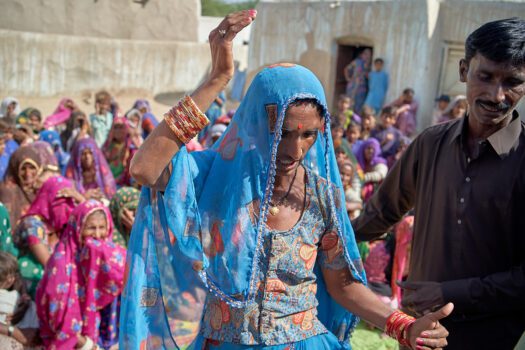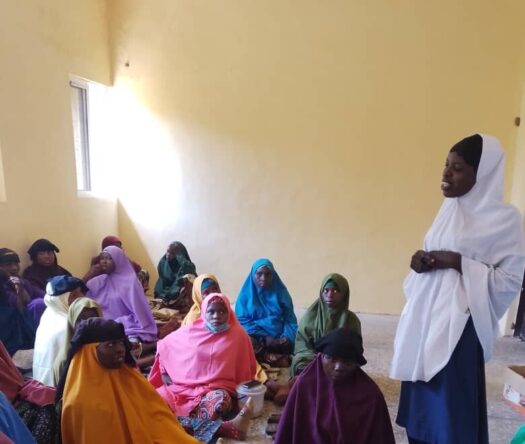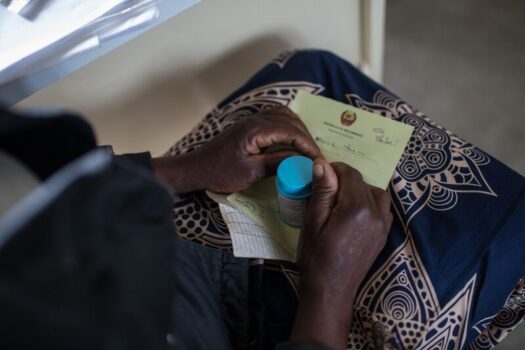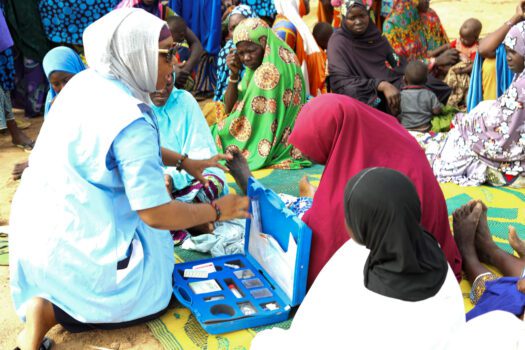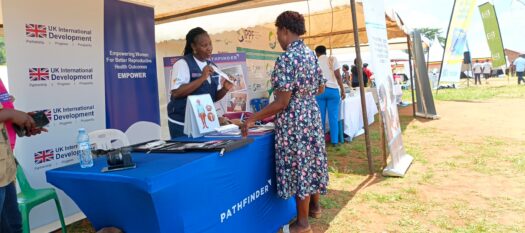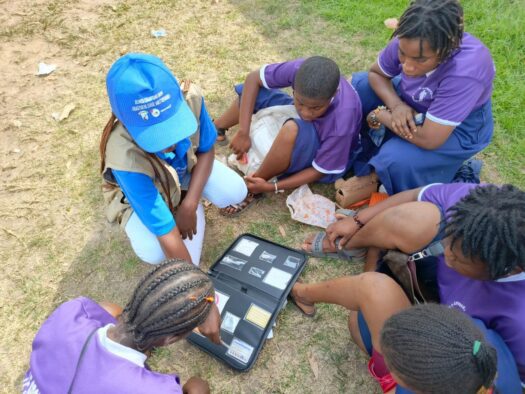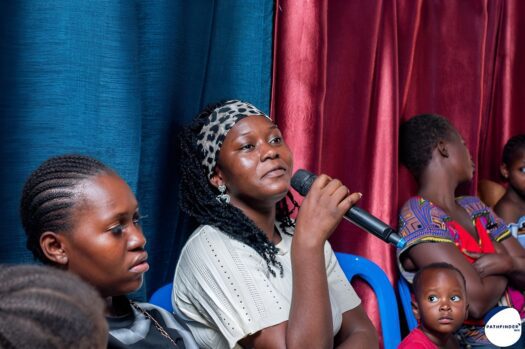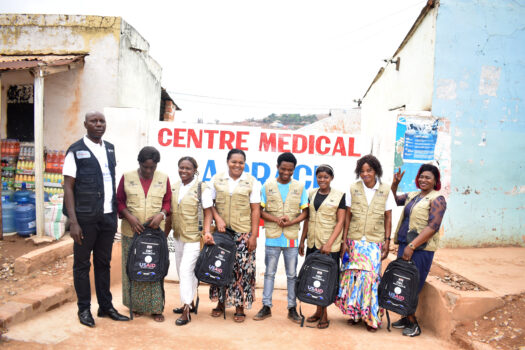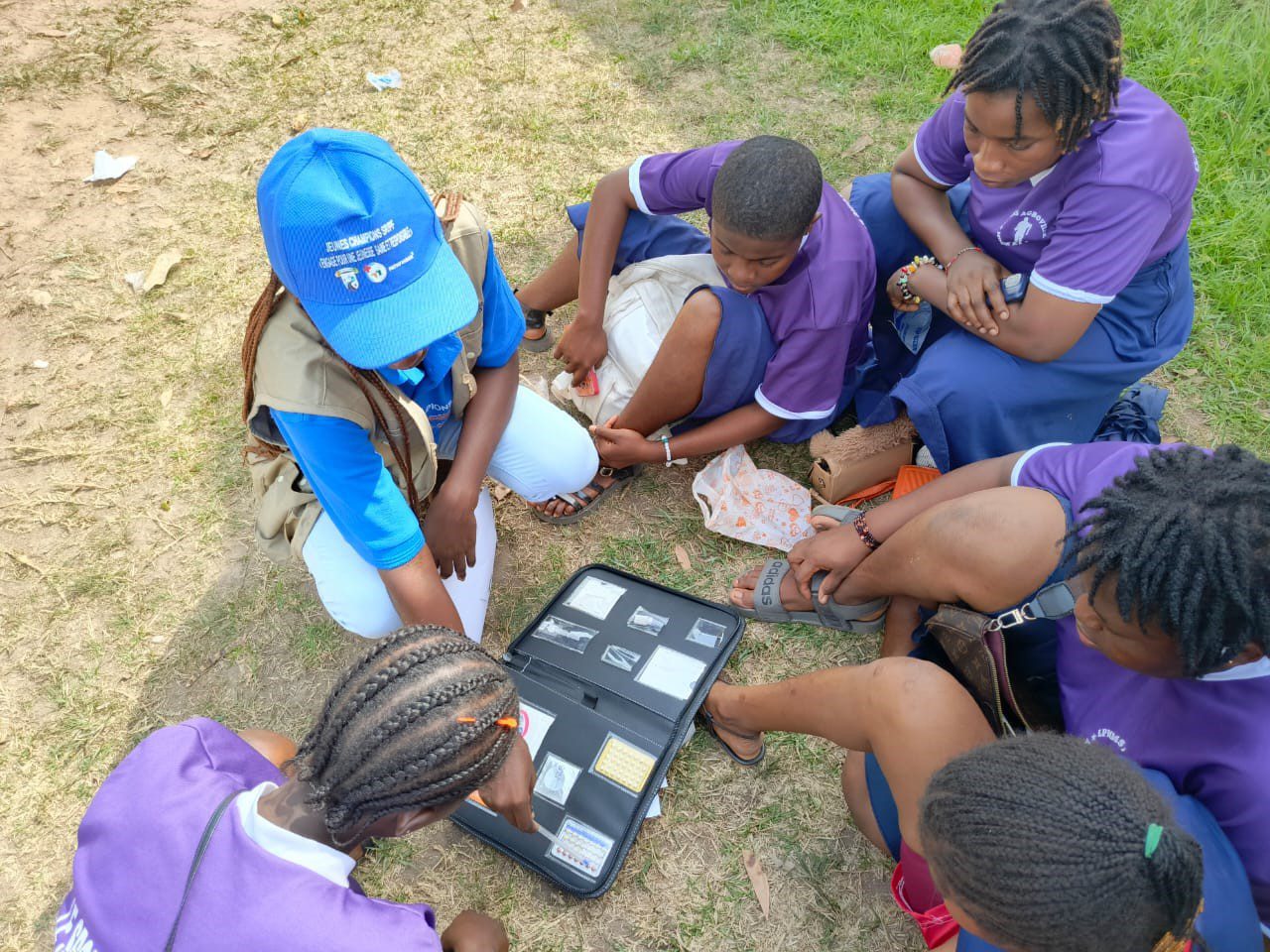
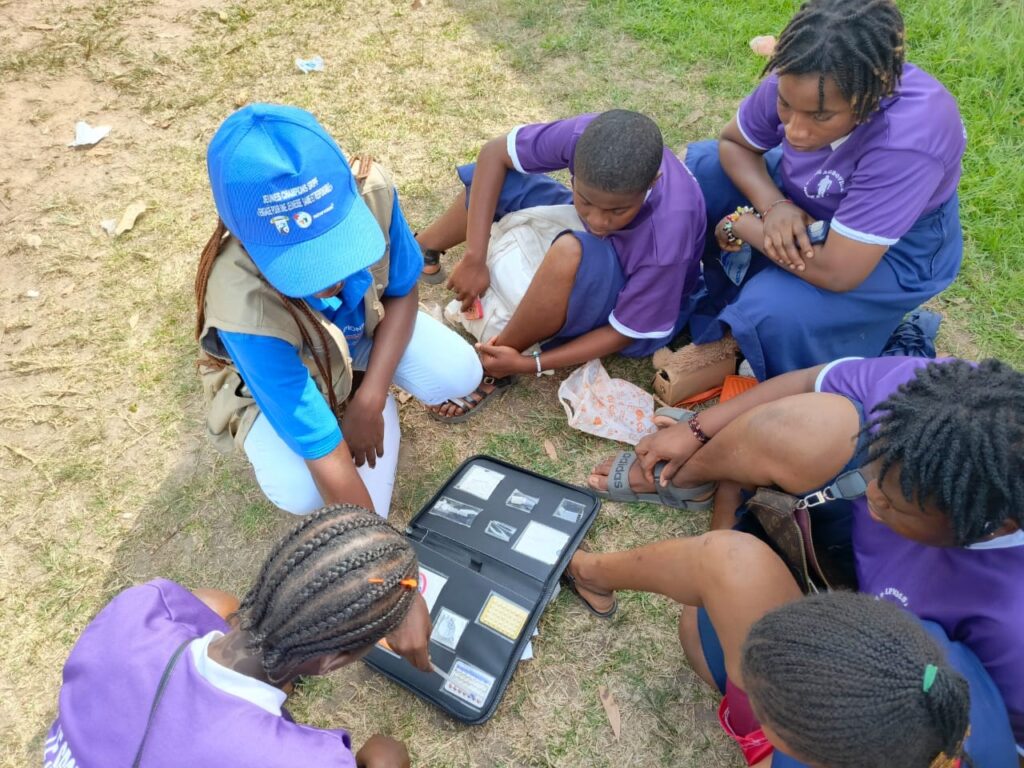
Alongside making contraceptive services accessible to women at health clinics, Pathfinder supports efforts across communities in Côte d’Ivoire to increase awareness about contraception and where to get it.
The journey to free family planning services across Côte d’Ivoire began with the voice of one very passionate woman: a midwife working at the regional hospital in Agboville.
When the Pathfinder team first met with her in 2017 to discuss our new postpartum family planning program, she didn’t mince words.
“Childbirth services are free. Immediate postpartum family planning should also be free so that all women can access it.”
In 2011, the government had made antenatal care and childbirth monitoring free to prevent maternal mortality—but family planning, despite its proven impact on saving mothers’ lives, still came at a cost.
The small cost of an implant (US$2) or an injectable (US$1)—the two most popular contraceptives—was a formidable barrier for many, especially young women and girls. This was a heartbreaking reality reflected in the data, which showed that only 6% of postpartum women were able to take a modern contraceptive method home after giving birth.
Following the midwife’s insight, we spoke with dozens of other midwives across 30 facilities in 7 districts—and the message was consistent: cost was the primary barrier.
Free family planning advocacy campaign
With this compelling evidence, we joined forces with several partners—civil society organizations focused on reproductive health, EngenderHealth, and PSI. Together, we launched a powerful advocacy campaign in 2019, positioning family planning as a critical tool for curbing maternal deaths, improving women’s health and autonomy, and accelerating national development.
The government listened. In September 2021, the Ministry of Health began a pilot program in Agboville health district, making all contraceptives—not just postpartum and postabortion methods—free of charge. Contraceptive use rates increased significantly in Agboville—and we saw notable uptake among adolescents and youth who made up 52 percent of new family planning users. This success was the proof the government needed. It immediately formed a national committee to develop a budget and mobilize resources for a full-scale national rollout.
In 2024, the Ministry of Health signed into law a national free family planning policy and is committed to national scale-up across all 113 districts of the country. As part of its FP2030 commitment, the government has committed over $4 million each year to purchasing contraceptives.
Local civil society must continue to mobilize around this commitment to ensure follow-through.
The Gates Foundation and the Hewlett Foundation continue to supplement government support by contributing to the rollout of free family planning services in 98 health districts with technical assistance from Pathfinder, strengthening the government’s efforts to ensure equitable and sustainable access to reproductive health care. This not only includes ensuring the availability of contraceptive methods but also training health providers on strong data monitoring and collection practices to build evidence for the free family planning program and show its true impact on women’s lives.
For women in Côte d’Ivoire, it’s a big win.
But there is still a lot of work to do in reaching women in rural areas that live far from health facilities.
As we live through a time where global resources for contraceptive access shrink, it is essential that governments increase their budgets for family planning, finding innovative ways to mobilize resources domestic, international organizations, and the private sector.
On the sidelines of the UN General Assembly this year, Pathfinder and the Côte d’Ivoire Ministry of Health will convene a roundtable discussion with key partners to discuss ways of working together and ensure the sustainability of these efforts. Stay tuned for updates on our social media channels!
Investir dans les femmes : l’engagement de la Côte d’Ivoire en faveur de la gratuité des services de planification familiale
Le chemin vers la gratuité des services de planning familial en Côte d’Ivoire a commencé grâce à la voix d’une femme très engagée : une sage-femme travaillant à l’hôpital régional d’Agboville.
Lorsque l’équipe Pathfinder l’a rencontrée pour la première fois en 2017 afin de discuter de notre nouveau programme de planification familiale post-partum, elle n’a pas mâché ses mots.
« Les services d’accouchement sont gratuits. La planification familiale post-partum immédiate devrait également être gratuite afin que toutes les femmes puissent y avoir accès. »
En 2011, le gouvernement avait rendu gratuits les soins prénatals et le suivi de l’accouchement afin de prévenir la mortalité maternelle, mais la planification familiale, malgré son impact avéré sur la survie des mères, restait payante.
Le coût modique d’un implant (2 dollars américains) ou d’un contraceptif injectable (1 dollar américain), les deux contraceptifs les plus populaires, constituait un obstacle considérable pour beaucoup, en particulier les jeunes femmes et les adolescentes. Cette réalité déchirante se reflétait dans les données, qui montraient que seulement 6 % des femmes en post-partum pouvaient utiliser une méthode contraceptive moderne après l’accouchement.
Suite à l’observation de la sage-femme, nous avons discuté avec des dizaines d’autres sages-femmes dans 30 formation sanitaire répartis dans 7 districts, et le message était le même : le coût était le principal obstacle.
Forts de ces preuves convaincantes, nous avons uni nos forces à celles de plusieurs partenaires : des organisations de la société civile axées sur la santé reproductive, EngenderHealth et PSI. Ensemble, nous avons lancé une campagne de sensibilisation percutante en 2019, présentant la planification familiale comme un outil essentiel pour réduire la mortalité maternelle, améliorer la santé et l’autonomie des femmes et accélérer le développement national.
Le gouvernement nous a écoutés. En septembre 2021, le ministère de la Santé a lancé un programme pilote dans le district sanitaire d’Agboville, rendant gratuits tous les contraceptifs, et pas seulement les méthodes post-partum et post-avortement. Le taux d’utilisation des contraceptifs a considérablement augmenté à Agboville, et nous avons constaté une adoption notable chez les adolescents et les jeunes, qui représentaient 52 % des nouveaux utilisateurs de services de planification familiale. Ce succès était la preuve dont le gouvernement avait besoin. Il a immédiatement formé un comité national chargé d’élaborer un budget et de mobiliser des ressources pour un déploiement national à grande échelle. Ce succès a été la preuve dont le gouvernement avait besoin. Il a immédiatement formé un comité national chargé d’élaborer un budget et de mobiliser des ressources pour un déploiement national à grande échelle.
En 2024, le ministère de la Santé a promulgué une politique nationale de planification familiale gratuite et s’est engagé à la mettre en œuvre à l’échelle nationale dans les 113 districts du pays. Dans le cadre de son engagement FP2030, le gouvernement a alloué plus de 4 millions de dollars par an à l’achat de contraceptifs.
La société civile locale doit continuer à se mobiliser autour de cet engagement afin d’en garantir la mise en œuvre.
La Fondation Gates et la Fondation Hewlett continuent de compléter le soutien du gouvernement en contribuant au déploiement de services gratuits de planification familiale dans 98 districts sanitaires grâce à l’assistance technique de Pathfinder, renforçant ainsi les efforts de l’État de Côte d’Ivoire pour garantir l’accès équitable et durable à la santé reproductive. Cela consiste non seulement à garantir la disponibilité des méthodes contraceptives, mais aussi à former les prestataires de soins de santé à des pratiques rigoureuses de suivi et de collecte de données afin de constituer des preuves pour le programme gratuit de planification familiale et de montrer son impact réel sur la vie des femmes.
Pour les femmes de la Côte d’Ivoire, c’est une grande victoire.
Mais il reste encore beaucoup à faire pour atteindre les femmes des zones rurales qui vivent loin des formations sanitaires.
À l’heure où les ressources mondiales pour l’accès à la contraception diminuent, il est essentiel que les gouvernements augmentent leurs budgets consacrés à la planification familiale et trouvent des moyens innovants de mobiliser les ressources domestique, des organisations internationales et du secteur privé.
En marge de l’Assemblée générale des Nations unies de cette année, Pathfinder et le ministère ivoirien de la Santé organiseront une table ronde avec des partenaires clés afin de discuter des moyens de collaborer et d’assurer la pérennité de ces efforts. Restez à l’écoute pour les dernières nouvelles sur nos réseaux sociaux !