When I studied gender in graduate school almost 20 years ago, I learned about gender as binary—that people largely identified as being either men or women. Fortunately, an evolution has taken place, and gender is now widely recognized as it should be—something that differs from biological sex, exists on a spectrum, and relates directly to our lived experiences reinforced by the world around us.
This evolution is something I have witnessed in my own line of work—global health. Two years ago, Pathfinder International started an intentional journey of self-examination on gender, how we understand and communicate it, and how we reflect and advance gender diversity and equality in our programs and organizational culture. Our new definition of gender, released to coincide with Pride month in the United States, is a result of this journey.
“Gender refers to the roles, responsibilities, characteristics, and behaviors that a given society associates with our identities as women, girls, men, boys, or non-binary people. Gender is socially and culturally constructed, so our understandings of gender differ across contexts and over time. Gender influences what is expected of each of us, the power we have in society, how we relate to others, and the norms to which we are expected to conform. Gender is a distinct concept and not the same as sex classification, which is typically assigned at birth.”
I’m incredibly proud of this definition. It is evidence-based and bold—like our work and the values we commit to.
In global health, we often speak of “leaving no one behind,” “going the last mile,” and reaching the marginalized, but for many of us, our limiting definition of such a fundamental concept—gender—has done just that. We know gender is socially constructed and distinct from biological sex classifications, yet for too long many have insisted on defining it in binary terms. The gender binary is also rooted in a legacy of colonialism1, imposing this structure in places and spaces where broader ideas of gender had previously been the norm2, 3.
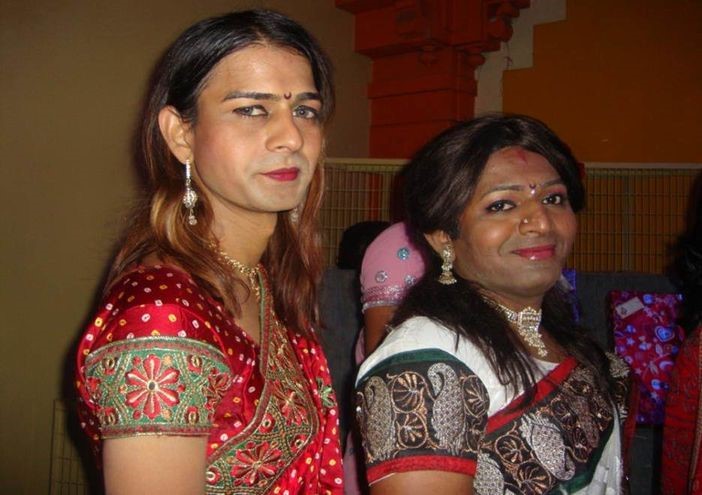
By articulating our approach and definition of gender as one that is inclusive, Pathfinder is living toward its vision—a world where everyone is able to lead a healthy sexual and reproductive life.
Gender is deeply socialized and embedded within every one of us, and that is something that we all must understand—the preconceptions and bias we bring when discussing gender. We project our own lived experiences. The definition of gender that Pathfinder has adopted requires many of us to consider the lived experiences of those with gender identities different than ours, whether that be a man or woman, or someone that identifies as non-binary or transgender.
We intentionally define gender as a social construct, and we acknowledge that gender roles change over time and across contexts. We know there are diverse experiences of gender in the different communities where we work. The definition and language we use ensures a standard of inclusivity, recognizes the different lived experiences in the communities where we work, and values people as experts in their own lives.
In leading gender workshops with colleagues in different areas of the world, I ask participants: “what does gender mean to you, and how has it influenced your life?” Responses have been rich, detailed, and sometimes painful. Often, individuals express not understanding gender, but also feeling they “don’t fit,” “not being as much of a woman or a man” as they are expected to be, or not adhering to the externally defined expectations of femininity and masculinity.
Many in the global health and gender fields will be familiar with a workshop activity Act Like a Man, Act Like a Woman, where participants discuss roles or behaviors from their community that are expected of a man, boy, woman, or girl. A box is then drawn around these expectations—one box for women and another box for men. What happens, we ask, when people step outside the box? Unfortunately, for too long the language we use has created and reinforced these boxes without consideration of what the painful consequences may be.
Recognizing the lived experiences of all genders, including those outside of “traditional” boxes, is being on the right side of that line, and I’m proud to say that Pathfinder’s definition and language around gender reflect just that.
Read more about Pathfinder’s Gender Equity Initiative and how Pathfinder advances gender equality through its programs, including past programs like the Mukta project.
Sources:
- Shiera S. el-Malik (2014) Rattling the binary: symbolic power, gender, and embodied colonial legacies, Politics, Groups, and Identities, 2:1, 1-16, DOI: 10.1080/21565503.2013.869236
- Collins, Patricia Hill. 1990. Black Feminist Thought: Knowledge, Consciousness, and the Politics of Empowerment. Boston, MA: Unwin Hyman
- Freya Schiwy (2007) DECOLONIZATION AND THE QUESTION OF SUBJECTIVITY, Cultural Studies, 21:2-3, 271-294, DOI: 10.1080/09502380601162555