Download
English:
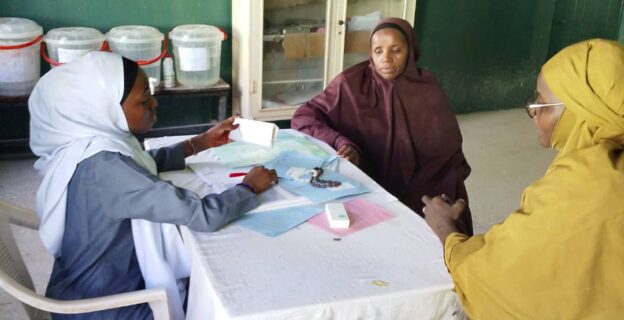
DownloadNigeria’s health system faces a critical shortage of skilled health workers, particularly at the primary health care (PHC) level. To address these shortages and improve service delivery, Nigeria adopted the Task Shifting and Task Sharing (TSTS) policy in 2014, with revisions in 2018 and 2022.
The policy expands the roles of lower-cadre health workers, including Community Health Extension Workers (CHEWs), Junior Community Health Extension Workers (JCHEWs) and Community Health Officers (CHOs) by expanding their roles in the provision of essential healthcare services. Building on the national direction, Kaduna state developed its own Task Shifting and Task Sharing Policy in September 2017 to respond to the state-specific workforce challenges. The policy seeks to optimize human resources by reallocating selected responsibilities from highly specialized medical professionals to trained mid- and lower-level cadres. Aligned with the National Frameworks, the Kaduna Task Shifting and Task Sharing Policy policy prioritizes the delivery of key health interventions, including Reproductive, Maternal, Newborn, Child Adolescent and Elderly Health (RMNCHAE+N), Tuberculosis (TB), Malaria, HIV/AIDS, and other communicable and non-communicable diseases.
MORE ON TASK SHIFTING AND TASK SHARING IN KADUNA STATE
Dr. Amina Dorayi, Regional Portfolio Director West & Central Africa, weighs in on improving health equity in an era of dwindling foreign assistance.