Last month, in celebration of World Environment Day, the Advancing the Leadership of Women and Girls Towards Better Health and Climate Change Resilience (“Dishari”) project led a series of community-driven activities under the theme “Beat Plastic Pollution” across five of the most climate-vulnerable districts in Bangladesh. The initiative came at a critical time, as Bangladesh’s annual per capita plastic consumption in urban areas has tripled—from 3 kg in 2005 to 9 kg in 2020. The COVID-19 pandemic has further accelerated this crisis, resulting in massive plastic waste being dumped in landfills, water bodies, and rivers, severely affecting both the environment and public health.
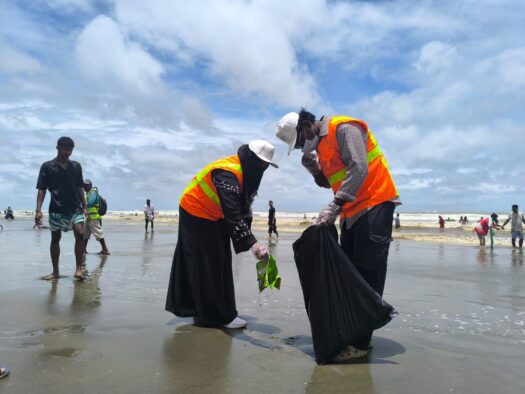
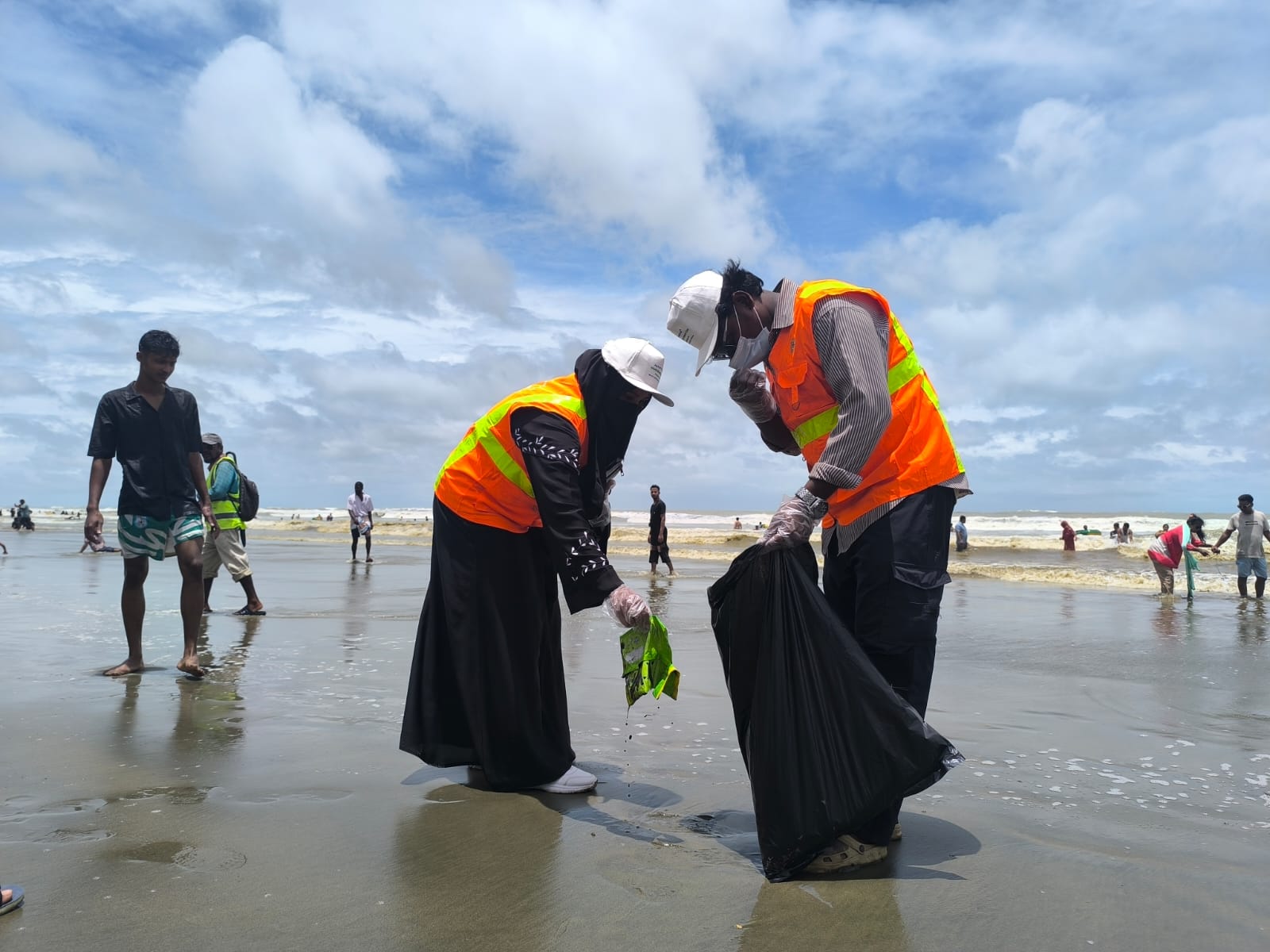
In Cox’s Bazar, where the beach is one of the worst victims of plastic waste, 36 school students, residents, and members of the emergency response team came together for a beach cleanup campaign. The initiative focused on removing plastic debris from the shoreline while raising awareness about environmental protection and the need to reduce plastic consumption in daily life.
Mostafa Kamal, a 21-year-old Resilience Volunteer, told Pathfinder that he joined the beach cleanup because he is “committed to saving our planet.”
“Plastic is ruining our sea and harming marine life,” he said. “We need to stop using so much plastic before it’s too late.”


In Sylhet, an innovative “Tree for Plastic” campaign was launched to promote both waste reduction and greening efforts. Community members were encouraged to bring 10 discarded plastic bottles in exchange for a tree sapling.
Rafia Sultana, 27, a resident of Parkul Village, Sylhet, called the tree exchange for plastic bottles “simple but powerful.”
“I felt happy getting a tree in exchange for plastic bottles,” she said. “We will beat plastic by increasing the greenery in our area.”
A total of 50 trees were distributed and later planted on the premises of the Isakalas Union Health and Family Welfare Center. The event included 40 local representatives, healthcare workers, and students.
In Kishoreganj, 255 students from Khanam’s high school participated in a major cleanup drive at Deoghar Bazar, a market area heavily polluted with plastic waste. The students also engaged with local vendors and community members to raise awareness about the dangers of plastic pollution to the environment and human health, encouraging the reduction of single-use plastics in everyday practices.
“When we started cleaning, other local people joined in too,” said Khanam. “That made me really inspired to do such things in the future as well.”


In Netrakona, 43 students from Gobindosree High School organized a discussion session on plastic pollution and cleaned their school compound. They crafted handmade placards bearing messages against plastic use and held a rally to engage the surrounding community in dialogue and action. Suraiya Akter, 13, an eighth grader at Gobindosree High School, Madan, Netrokona shared how she didn’t know “how dangerous plastic is” before participating in the dialogue.
“I’ve learned how dangerous plastic is and how it affects our environment as well as our health,” she told Pathfinder. “From now on, I’ll try to keep my area clean and tell others to do the same.”


In Sunamganj, 20 resilience volunteers led a cleanup initiative in the Bishwamvarpur area. They also organized a public rally to emphasize the importance of minimizing plastic usage and its harmful impact on both nature and people.
“I feel more responsible now,” said 16-year-old Shamima Akter, Resilience Volunteer from Boshontopur Village, Sunamganj. “This event showed me that even small steps, like reducing plastic or planting trees, can protect the environment.”
Through these localized efforts, the Dishari project brought together youth, volunteers, and community members to translate a global call to beat plastic pollution into meaningful grassroots action.