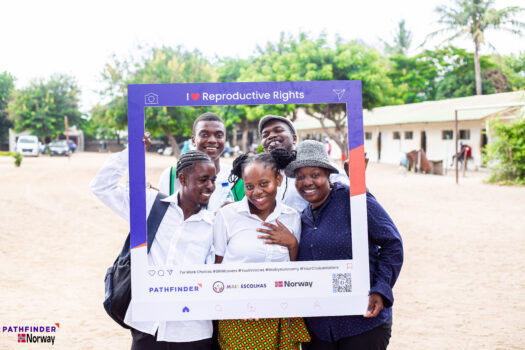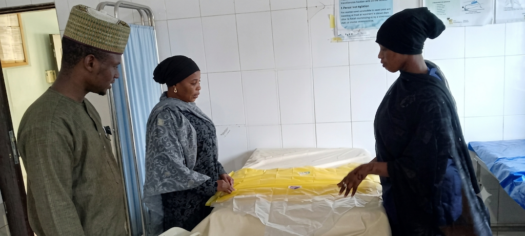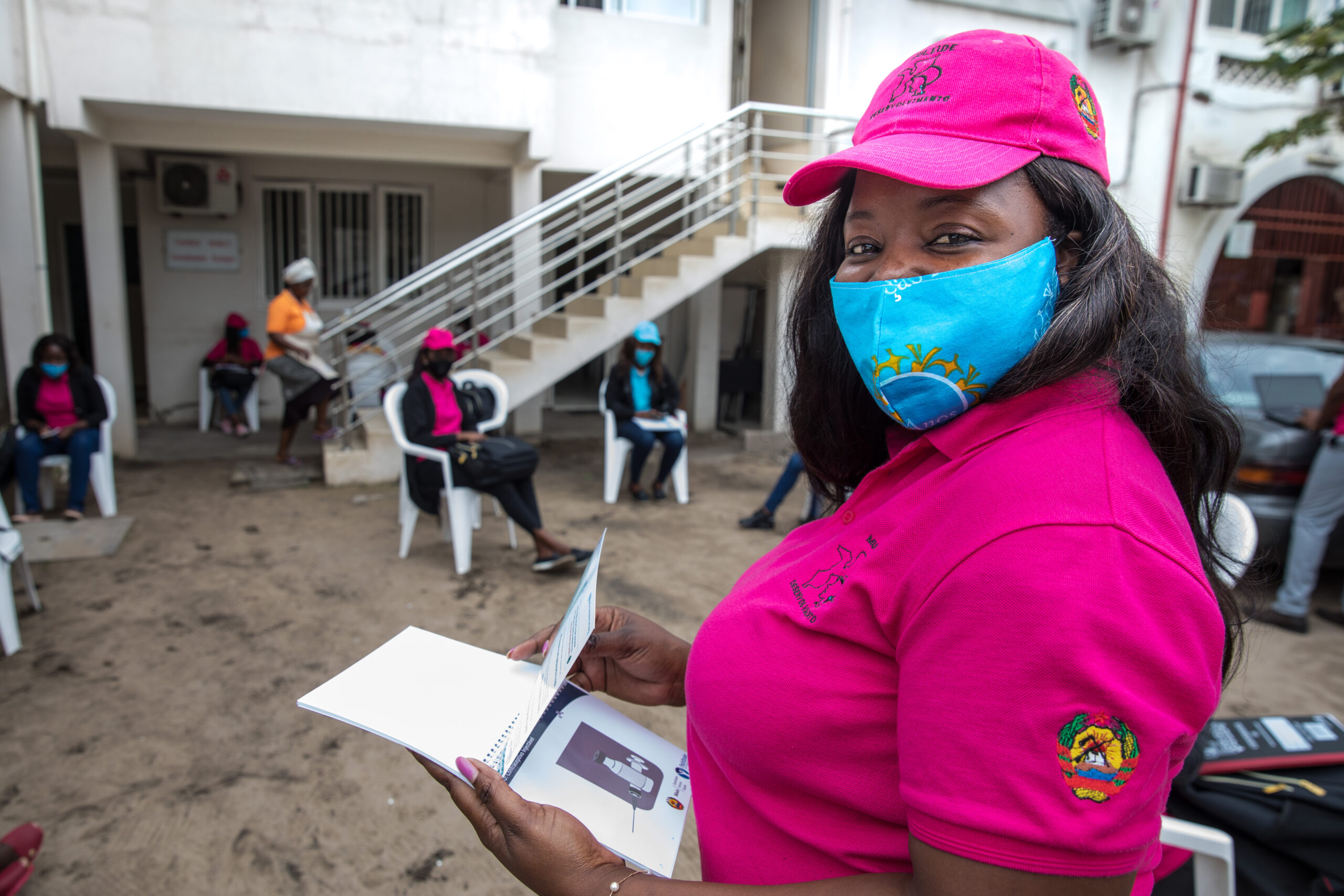
For five years, Pathfinder’s MAIS (MORE Quality, Access and Health) project has worked with health facility-based providers and managers in Maputo City and Matola in Maputo Province, Mozambique. The project has provided information, education, and communication trainings and technical support to community health workers, who then conduct home-based visits to counsel and support women and girls on sexual and reproductive health, family planning, and abortion care. After counseling sessions, community health workers refer women and girls to local health facilities for contraception, abortion care, and further services based on their needs. This work has included challenging stigmas and norms that keep women and girls from getting the care they have a right to — and through this work, has given women and girls autonomy — and saved lives.

Charisma’s Story

When Charisma*, a 16-year-old living in Maputo City, first learned that she was pregnant, she didn’t know what to do. “I was afraid to tell my mother,” she says. “My sister found out (that I was pregnant) because she saw I wasn’t wearing sanitary napkins anymore.” Her sister then told Charisma’s mother, Graciete, who knew she needed to help her daughter.
Graciete’s life had been marked by suffering, first by the death of her mother when she was a young child, then from abandonment by her father, and then by becoming a mother herself at a young age.
She states simply, “I do not wish that anyone went through what I went through.” Though her mother was on her side, Charisma faced numerous challenges. Upon learning of her pregnancy, Charisma’s boyfriend physically assaulted her, which led her to seek help from the police, who then sent her to the Zimpeto Health Facility for care. There, Charisma was assigned a psychologist to support her recovery. She confided that she wanted to terminate her pregnancy —but the psychologist wasn’t aware that abortion services were decriminalized in Mozambique.
That’s where Pathfinder’s MAIS project stepped in.
Though the Government of Mozambique decriminalized abortion in 2014, challenges inhibiting women’s access to comprehensive abortion services— that is, safe abortion and postabortion services—remain. In many public health facilities, stigma, bias, and a shortage of trained health providers, particularly in rural areas, continue to pose barriers to accessing quality abortion care.
Pathfinder staff are on the frontlines of this shift. Lina Mate, an activista with MAIS partner organization Muleide, works to educate community members and challenge the stigma associated with abortion. “The abortion work opens my mind, she says, “and I see a difference because I am able to help someone make positive decisions. I make her realize that she has the power of choice and that the law protects her, and so I can see a difference. I have a chance to inform others, and I feel good about the work I’m doing.”

We inform providers and clients about the law of decriminalization of abortion—that is law 35/2014, which also includes clinical standards of when abortion can be performed, and where. We disseminate this information at the community level with a view to reduce the number of women who die from illegal abortions.
Jonas Maunde, Muleide Association Program Officer
For Charisma, Pathfinder’s MAIS project had a direct impact. Shortly after meeting her, the psychologist supporting Charisma attended a training run by Pathfinder meant to demystify the law. She then approached MAIS staff to see if they could help with the teenager she recently met—Charisma. MAIS staff helped connect Charisma with a doctor who could manage her care, as well as educate her about her options for family planning moving forward. Because the MAIS project reached her provider, Charisma was given a choice. And she doesn’t take that lightly.
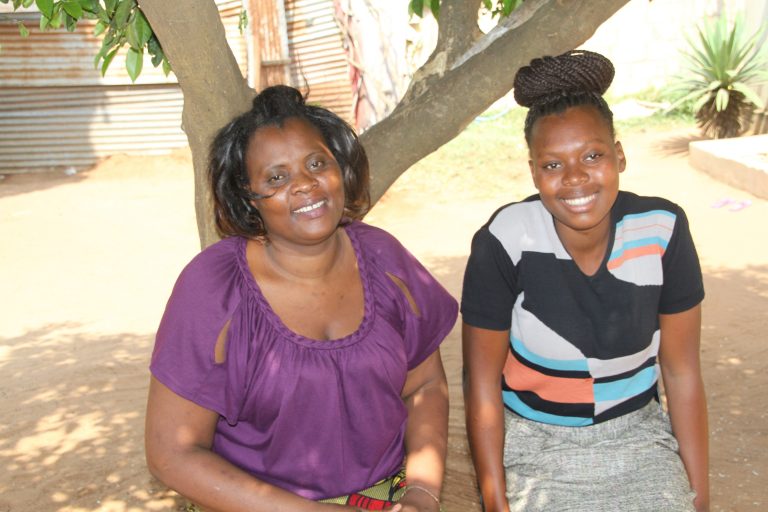
“For the other girls who have the opportunity to listen, I will tell you my experience about what I went through (having) an abortion. I would tell them not to refuse to use family planning, like I did. It’s far better to protect ourselves by using family planning to avoid this choice. I would tell them to use an IUD because it lasts for years, and they can choose to take it out when they are prepared to have a baby.”
Today, Charisma has returned to school, is studying to be a nurse, and is now protected from an unplanned pregnancy. “When I left the hospital,” she says, “I decided to have a new life, to be a new person. I will follow my dream of having a child—but having a life of my own, and being able to choose (when) to have children.”
*pseudonym