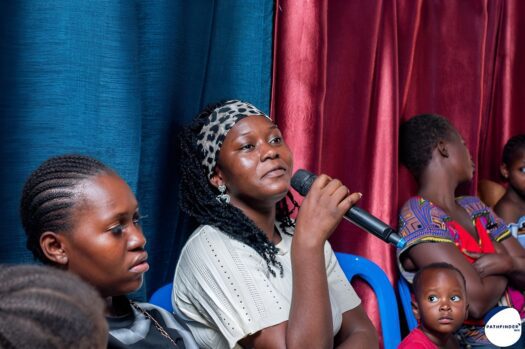
Countries Reflection on UHC Global Monitoring Report and Actions Needed to Accelerate Progress
Each year on December 12th, Universal Health Coverage (UHC) Day marks the date to call on leaders to make smarter investments and accelerate efforts towards “Health for All.” In the world Pathfinder is working to build, UHC must be a priority, not just on December 12th, but each day until everyone, everywhere, has access to quality health care whenever they need it, without suffering financial hardship.
In December 2023, Pathfinder celebrated UHC Day by hosting an event, “Successes, Lessons, and Challenges on the Path to Universal Health Coverage.” The webinar featured stakeholders from Uganda, Democratic Republic of the Congo (DRC), Bangladesh, the World Health Organization, and UNFPA—who play critical roles toward achieving UHC within their countries and organizations.
Speakers reflected on the 2023 UHC global monitoring report, sharing experiences, challenges, lessons, and recommendations on how best to accelerate progress toward achieving UHC, calling for more meaningful collaboration between governments and organizations working on UHC.
HIGHLIGHTS FROM THE EVENT
Opening the event, Dr. Tabinda Sarosh, President, South Asia, Middle East, and North Africa, said:
This year’s theme urges us to invest in resilient health systems that will ensure “health for all” especially at this time where there is a growing number of climate related health threats.
Dr. Sarah Byakika, Commissioner for Health Services Planning, Financing, and Policy, Uganda’s Ministry of Health, Uganda shared the country’s experiences toward achieving UHC, including the financing landscape, health service utilization trends, and outcome indicators. She said that over the last 20 years in Uganda, there has been a 6.5% increase in health service coverage, 29% reduction in out-of-pocket expenditures on health, and a 2.1 % reduction in people accessing health insurance. She mentioned several challenges to UHC, including a fast- growing population not matched by investments in health system capabilities, inadequate financing for health, limited intersectoral programming to address the social determinants of heath, and capacity gaps in community and decentralized health service delivery. She said we must enhance community-led interventions through programs that strengthen the capacity of the community health workforce and address financial risk protection through introduction of the National Health Information Systems and increased domestic financial allocations for health.
Dr. Mbongani Kabila, Coordinator, DRC National Council on Universal Health Coverage, reflecting on the 2023 UHC global monitoring report, shared DRC’s lessons learned in its journey toward UHC. These included including how important it is to have the strong commitment of political leaders, sustainable resource mobilization, strong health infrastructure, sufficient human resources and geographical accessibility of health care, community involvement, quality data and monitoring, flexible and adaptable strategies, fair and equitable financial access mechanisms, and integration of health in all policies (multisectoral).
Dr. Shamsul Hoque, Program Manager, Ministry of Health and Family Welfare, Bangladesh also reflecting on the 2023 UHC global monitoring report, discussed issues including accountability, financing, governance, collaboration for sharing knowledge and best practices, and investments needed in health systems. He said that in Bangladesh changes in coverage of essential health services have increased from 40% to 49% between 2010 and 2020 (World Health Organization (WHO) Crisis or Opportunity? Health Financing in Times of Uncertainty. Country profiles from the South-East Asia Region3), while the National and district level coverage of immunization increased from 83.9% in 2019 and 92-94% in 2022.
Judicael Elidje, UNFPA Representative, Burundi, spotlighted the efforts of civil society organizations (CSOs) in supporting countries to accelerate UHC. He made recommendations to country governments on legal frameworks and policies that favor and protect CSOs’ engagement in accelerating UHC and an effective multisectoral approach. He highlighted the need to connect countries’ UHC priorities with global megatrends, such as climate change, population dynamics, humanitarian and emergency preparedness, innovation, and digitization, for relevance and continued attention globally.
Prof. Georges Ki-Zerbo, Head, WHO Liaison Office, African Union and Economic Commission for Africa, shared that “It is important to apply the Primary Health Care approach and sustain the Global Action Plan, review political commitments (governance and coordination) at all levels, improve digital health, health workforce especially community health workers. At the UN High Level Meeting on UHC, countries are called to repivot health systems and service delivery to enhance sufficient and uninterrupted access to quality health services.”
CALL TO ACTION | FOR COUNTRY GOVERNMENTS
- Increase investment in health infrastructure, medical products, technology, and digitization of health information, by mobilizing sustainable domestic resources.
- Strengthening national health insurance systems and increase domestic financial allocation for health to alleviate financial hardship.
- Bolster the health workforce—with sufficient staff, opportunity and capacity for research and development, and attention to staff motivation and retention.
- Reinforce community-led interventions through programs that strengthen community health workforce capacity.
- Implement programs that address the social determinants of health: water and sanitation, food security, education, transportation, and housing.
- Strengthen partnerships and coordination of actors, including government, private sector, and civil society.
- Improve quality data collection to monitor progress toward achieving UHC.
- Establish continuous learning and evaluation processes.
KEY TAKEAWAYS | FOR THE GLOBAL COMMUNITY
- Strengthen partnerships across sectors, including multilaterals, INGOs, foundations, and other stakeholders.
- Create channels for sharing knowledge and best practices—including opportunities to exchange experiences and strategies on implementing policies and programs that advance countries toward UHC.
- Increase financial support and investment in health infrastructure.