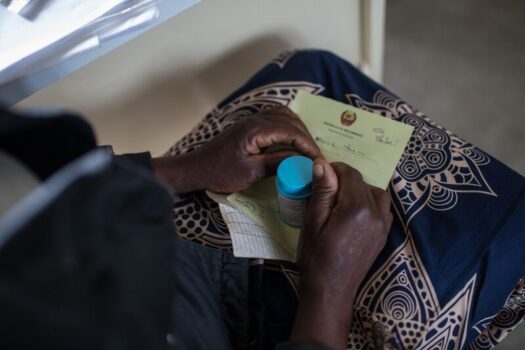
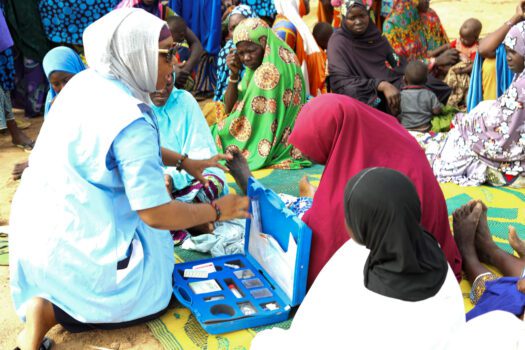
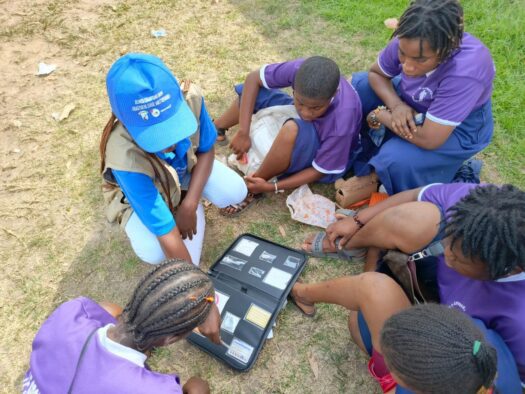
A person’s autonomy and their choice to make decisions about their lives, including whether, when, how, and with whom to have children, is central to sexual and reproductive health and rights (SRHR).
SRHR programs and services, however, have predominantly focused on preventing unintended pregnancies through access to contraception. And while contraceptive access is a critical right, a sole focus on the prevention of unintended pregnancy neglects to fully acknowledge and address the magnitude and consequences of involuntary infertility and other barriers to having children for millions of people around the world.
SRHR needs exist in parallel to each other
Global public health policymakers have not prioritized involuntary infertility and access to assisted reproductive care, giving these issues far less attention when compared to other sexual and reproductive rights (WHO bulletin). Yet in every country and demographic around the world, both the need to prevent unintended pregnancies and assistance to grow a family exist in parallel and are part of holistic SRHR.
While exact data is lacking, the WHO estimates that 48 million couples and 186 million individuals face the consequences of involuntary infertility, most of whom are in low- and middle-income countries. Still, availability, access, and quality of activities to address involuntary infertility remain a challenge in most countries, even though infertility has significant negative social impacts on the lives of infertile couples and particularly women, who frequently experience violence, divorce, social stigma, emotional stress, depression, anxiety, and low self-esteem (WHO).
In African countries, involuntary infertility is rising. It is almost twice as high in African countries as in high-income countries. It comes with devastating social, cultural, emotional, and economic consequences, and access to assisted reproductive services remains a huge challenge. Patients who can afford to, fly to South Africa for treatment. Those who cannot are forced to live with the condition for the rest of their lives (DW).
LGBTQ+ couples face additional barriers to growing their family
LGBTQ+ people are particularly affected by the lack of investments in assisted reproductive care. All across the world, they often do not get the comprehensive reproductive and sexual health counseling, screenings, or care they need, because of barriers including provider bias, social stigma, and legal and financial restrictions.
While fertility treatments and technology have progressed and adapted exponentially in the last four decades since the naissance of assisted reproductive treatments and the number of LGBTQ+ people becoming parents is increasing in high-income countries, there are still many barriers to parenthood. In many low- and middle-income countries, pervasive misunderstanding of LGBTQ+ lives and homophobia continues to lead to poor health outcomes; elevated levels of exclusion from critical social, economic and political processes; and violations that not only often go largely unchallenged and unprosecuted, but have major sexual and reproductive health implications (SRHM).
In the approximately 70 countries where same-sex relationships are still illegal, the barriers are immeasurably higher. Fear of disclosure of sexuality or gender identity to health service providers greatly inhibits an LGBTQ+ couple’s ability to receive the correct information and health care they need, especially in the many countries where being queer still attracts life imprisonment, or long jail terms, or the death penalty. In Nigeria, even heterosexual family members, allies, and friends who support or aid gay and lesbian men and women risk a 10-year jail sentence themselves (SRHM). While decriminalization does not automatically result in better access to quality health care, it would still lead to improved access to services by giving them a platform to fight for their rights.
When it comes to fertility needs and assisted reproductive care for LGBTQ+ families in low- and middle-income countries, there is a total lack of data.
Even in the US where same-sex marriage is legal, many insurance companies don’t cover fertility treatments for LGBTQ+ families in the absence of a ‘diagnosis of infertility’ since infertility is based on heteronormative values and family structures (Forbes).
Also in the US, a survey conducted by Modern Fertility found that 46% of LGBTQ+ people don’t feel comfortable talking to a health care provider about their fertility due to misgendering, heteronormative intake forms, and a lack of knowledge about LGBTQ+ families’ needs. Digital solutions are helping to broaden accessibility: Many queer couples and single people are circumventing traditional fertility clinics and services and are using apps to find sperm donors, egg donors, surrogates, and co-parents.
Facing our past and ensuring a rights-based future
The neglect of involuntary infertility and its related physical and mental health consequences (WHO report) is deeply ingrained in our industry’s approach, metrics, and even our understanding of sexual and reproductive health. For example, generally in global health we tend to measure prevention of unwanted pregnancy through metrics like ‘unmet need’ or ‘couple years protection,’ instead of focusing on ‘reproductive autonomy’ metrics—on having the power to decide and control contraceptive use, pregnancy, and childbearing. These metrics were developed a long time ago and have not been substantively updated to better reflect autonomy and a client-centered approach, reflecting the legacy of colonialism and population control that has had lasting effects on structures and policies that we must actively work to dismantle (Population and Development Review).
Global sexual and reproductive health had in its origin been weaponized as a tool to exert power over the bodies of marginalized people, finding some people unfit for reproduction (ICRW). By not making fertility treatments and assisted reproductive care accessible for everyone who needs them, we are failing to sufficiently break with that legacy.
At Pathfinder International, we’ve started the conversation about involuntary infertility and access to assisted reproductive care as part of our efforts to become a more equitable, rights-based organization. We are asking the following questions: Are we really considering the holistic sexual and reproductive health rights of individuals, couples, and families if we ignore fertility needs and access to assisted reproductive care? Or when we do not routinely include infertility data or those seeking assisted reproductive care in most countries? And where there is insurance coverage for assisted reproduction, how can we truly live values of equity and inclusion when there remains a financial penalty to queer couples and those who choose single parenthood?
In addition to opening new discussions, there are a few things we can do now:
- Raise the issue of involuntary infertility and assisted reproduction as an inherent component of SRHR, regardless of geography, orientation, identity, or marital status.
- Advocate with donors and researchers to fund low-cost assisted reproductive technology as part of a commitment to the UN Universal Declaration of Human Rights.
- Support data collection and research on LGBTQ+ family’s access of assisted reproductive health care in low-and middle-income countries
- And most importantly, meaningfully engage with diverse communities to understand the full spectrum of SRHR needs, including treatment of involuntary infertility and equitable access to assisted reproductive care.
This Pride month, let’s remember that all people, regardless of where they live and who they love, have the right to decide whether and when to have children, to exist free from fear and stigma, and to lead the lives they choose.