FOR IMMEDIATE RELEASE
November 05, 2018
Media Contact: Eva Cantrell, ecantrell@pathfinder.org
New program, funded with support by USAID, continues organization’s commitment to species conservation through sustainable development and habitat protection.
(Kigoma, Tanzania) – Today, with support and funding from the United States government through its Agency for International Development, the Jane Goodall Institute (JGI) announced the launch of the Landscape Conservation in Western Tanzania (LCWT), a five-year USD $20 million program. The program is designed to build upon and magnify JGI’s expertise of nearly 25 years’ experience in Tanzania to protect endangered chimpanzee populations and their habitats, while empowering local communities in what is known as the Gombe-Masito-Ugalla (GMU) ecosystem. The LCWT program, implemented in partnership with Pathfinder International and the RTI International, will provide necessary support to sustain and grow JGI’s efforts like never before.
Dr. Jane Goodall, founder of the Jane Goodall Institute and UN Messenger of Peace commented on the announcement saying, “I’m tremendously proud of the Jane Goodall Institute’s community-centered conservation work in Tanzania over nearly 25 years and I am delighted about the news of our new initiative. It will make such a difference in our partnerships with local communities and our efforts to protect wildlife and habitats in the region.”
Western Tanzania, which includes the GMU ecosystem, contains over 90% of Tanzania’s estimated 2,200 chimpanzees. This important population is facing increasing threats due to habitat loss and fragmentation from illegal logging, settlement expansion, and conversion of habitat for economic/agricultural purposes. Chimpanzees are also directly at risk from nearby human communities through disease transmission and human-wildlife conflict. Underlying these threats, rapidly growing human populations in Western Tanzania are depleting natural resources and expanding upon unsustainable land use practices. These issues, paired with inadequate capacity of local government to effectively manage natural resources, have limited conservation outcomes.
Guided by JGI-led chimpanzee conservation action plans at regional and national scales, the LCWT will increase the organization’s reach from 74 villages to 104 in the Kigoma and Uvinza districts in the Kigoma region, and the Mpanda and Tanganyika districts in the Katavi region. The program’s activities aim to:
- Natural Resource Management: Enhance the capacity of local governments to facilitate conservation practice through increased support of effective natural resource management.
- Land Use Planning & Sustainable Development: Operationalize sustainable land use planning, integrated with sustainable livelihood development.
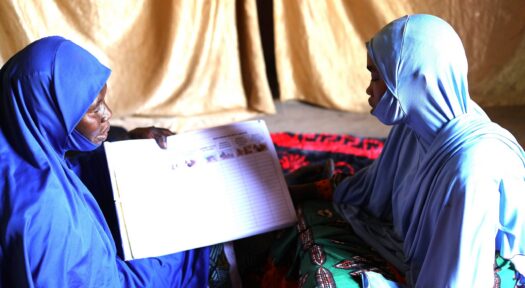
- Population, Health and Environment: Expand activities to improve understanding and access to reproductive health and family planning resources.
- Monitoring: Grow monitoring of conservation and development targets and threats and use sound science and cutting-edge innovative technologies to compile, analyze and share data as part of a decision support and alert system enabling JGI and local stakeholders to test, validate and adapt decisions guiding LCWT activities.
- Environmental Education: Grow the reach and efficacy of community-based environmental education by disseminating messaging through channels such as radio, TV and social media.
Dr. Carlos Drews, JGI’s executive director said of the LCWT, “Thanks to the support of USAID and the dedication of JGI staff and collaborators to design this remarkable initiative, we will be expanding upon our strategy and successes in exciting new ways. He continues, “Collaboration with local people and governments has always been core to our work, and now with this plan to include even more communities, I can only imagine how far we’ll be able to advance the protection of chimpanzees and their habitats.”
JGI will collaborate with local and international institutions during the implementation of LCWT, including Esri, Microsoft, Blue Raster, DigitalGlobe, Sigfox, NASA, Greater Mahale Research and Conservation Team, TAWIRI, FeminaHip, and Impact by Design.
JGI’s decades-long collaboration with local communities has built the trust essential for any successful conservation effort. Local communities and JGI staff know that the organization’s efforts in GMU (and our other program sites) embody Dr. Goodall’s personal philosophy that the survival of all species depends upon the cooperation of all. For more information about the work of the Jane Goodall Institute in Tanzania, visit janegoodall.org/tanzania.
About the Jane Goodall Institute
The Jane Goodall Institute is a global community conservation organization that advances the vision and work of Dr. Jane Goodall. By protecting chimpanzees and inspiring action to conserve the natural world we all share, we improve the lives of people, animals and the environment. Founded in 1977 by Dr. Goodall, JGI makes a difference through community-centered conservation and the innovative use of science and technology. We work closely with local communities around the world, inspiring hope through the collective power of individual action. Through Roots & Shoots, our youth-led community action and learning program, young people in nearly 80 countries are acquiring the knowledge and skills to become compassionate conservation leaders in their own backyards.
About Pathfinder International
Since 1957, Pathfinder International has been driven by the conviction that all people, regardless of where they live, have the right to decide whether and when to have children, to exist free from fear and stigma, and to lead the lives they choose. We are committed to a comprehensive approach to reproductive health and rights, expanding access to all methods of contraception, and services for the prevention, care and treatment for HIV and AIDS and cervical cancer. Taken together, our programs empower millions of women, men, and young people to choose their own paths forward.