FOR IMMEDIATE RELEASE
Media Contact: Helina Abraham, habraham@pathfinder.org
August 18, 2020 (Addis Ababa, Ethiopia)— The United States Agency for International Development (USAID)/Office of U.S. Foreign Disaster Assistance awarded Pathfinder International $500,000 for Responding to COVID-19 in Hotspot Areas of Ethiopia. The Responding to COVID-19 in Hotspot Areas of Ethiopia project will work in the Amhara, Tigray, Oromia, and SNNP regions, focusing on creating a resilient primary health care system to achieve the following two strategic objectives:
- Support continuity of essential health services during COVID-19.
- Respond to the COVID-19 pandemic.
This program is meant to complement the Pathfinder-led USAID Transform: Primary Health Care Activity, which is supporting Regional Health Bureaus to address essential health service delivery gaps resulting from COVID-19 and COVID-19 response through the following activities:
- Coordination of COVID-19 response sub-nationally (across regions and districts)
- Risk communication and community engagement
- Adapting and improving functionality of health sector and facilities
- Provision of COVID-19 treatment services in selected facilities
- Surveillance and contact tracing
The African Center for Strategic Studies ranks Ethiopia as among the top 10 countries vulnerable to COVID-19 in Africa.[1] There have been more than 35,000 cases and 600 deaths in Ethiopia due to COVID-19, roughly 3.5% of cases in Africa.[2]
Subsequent stages of the COVID-19 epidemic in Ethiopia are likely to be fueled by other vulnerabilities, such as: size and density of the urban population, ongoing parallel epidemics, high levels of poverty, capacity for testing and contact tracing, strength of the health system, size of displaced populations, and openness of communication channels. Based on these indicators, there is an increased need for support to Ethiopia’s COVID-19 response.
“A more resilient health care system will contribute to the Government of Ethiopia’s COVID-19 preparedness and response goal to suppress community-wide transmission of COVID-19 in order to reduce related mortalities,” said Dr. Mengistu Asnake, Country Director of Pathfinder Ethiopia. “Pathfinder will integrate COVID-19 preparedness and disaster risk reduction within the broader Government of Ethiopia health sector response by building local capacity and ownership at all levels, supporting community engagement, and expanding partnerships and multi-sectoral programming.”
Reaching roughly 1.5 million people in priority areas, the grant will support a more resilient health system through four main approaches:
- Improving health facilities’ readiness to provide essential services using infection prevention and control measures.
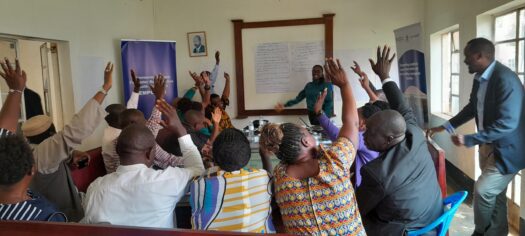
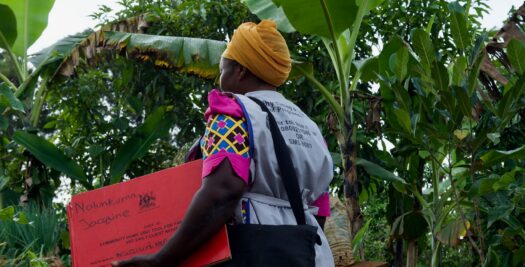
- Strengthening risk communication and community engagement by supporting Health Extension Workers and community structures with case identification and contact tracing; printing and distributing infection prevention and control materials, guides, algorithms, guidelines, and job aids; and, disseminating key messages through mass media and audio-mounted vehicles.
- Improving effective surveillance of COVID-19 by building the capacity of teams, including laboratory technicians, sample collectors, isolation center staff, contact tracers, and call center staff, on infection prevention and control and contact tracing.
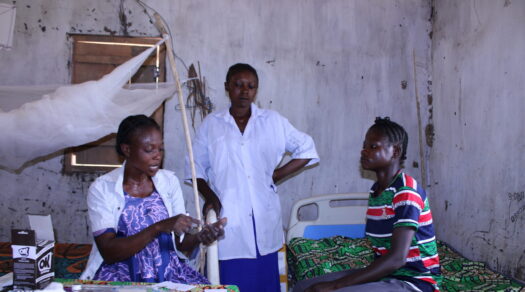
- Improving COVID-19 case management by making spacing arrangements at health facilities based on physical distancing guidelines, assigning crowd managers to help facilitate effective patient flow, ambulance management and maintenance, case management training, providing cleaning materials and supplies, and equipping in-patient wards.
The program will apply a gender lens in all aspects of its interventions. “All of our efforts around training and support to COVID-19 surveillance and case management approaches will be carefully reviewed to ensure they consider the differential gendered risks of COVID-19 to men and women,” said Dr. Asnake. “Our focus will be to promote women’s agency to seek and access essential family planning, reproductive health, and COVID-19 health information and services.”