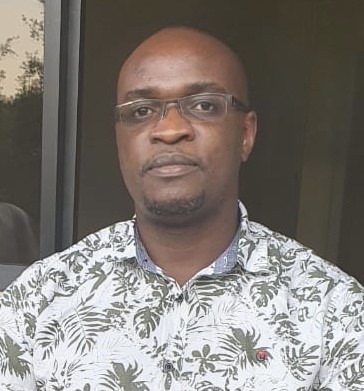
We recently welcomed Joram Sunguti to Pathfinder International as Senior Technical Advisor, HIV/AIDS. Joram is a medical doctor with experience in public health program support focused on HIV, tuberculosis, and COVID-19. He is based in Kenya.
What excites you most about your new role at Pathfinder International?
I’ve been meeting and interacting with staff from around world, and I’m working with a great team with diverse expertise and experience, including maternal and newborn health, cervical cancer, adolescent and youth sexual and reproductive health, and family planning. I’m learning something new every day!
What do you see as the biggest areas of progress in curbing HIV/AIDS over the past decade?
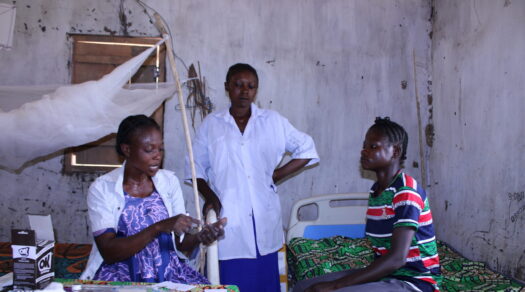
We’ve made significant progress in HIV prevention globally. There is more widespread access and adherence to antiretroviral therapy (ART). We’ve also made great strides in prevention of mother-to-child transmission of HIV (PMTCT), particularly in sub-Saharan Africa, and in voluntary medical male circumcision that reduces HIV transmission. We are more adept at reaching key populations, like female sex workers, injecting drug users, and men who have sex with men, and now we have pre-exposure prophylaxis—PrEP—targeting high-risk populations.
Alternatively, what are biggest challenges ahead?
We are not reaching children and adolescents fast enough with HIV prevention and treatment. The United Nations and World Health Organization have targets of identifying 90% of people living with HIV, initiating 90% of them on ART, and achieving 90% viral suppression. Children constitute a critical but challenging component in this cascade. Kids cannot stand up and speak for themselves and rely on their parents and caregivers to make decisions for them.
Beyond immediate caregivers, we need those working for HIV programs to be ambassadors for children, to speak up for them. They have a right to grow up and lead normal lives. We have the tools to prevent every case of HIV from being passed from mothers to their children, and we need to make sure we reach every vulnerable child.
How do you think Pathfinder International can help address those challenges?
We should continue to implement HIV strategies that are context specific and client centered with more focus on children who are greatly left behind. We need to look at the data from the countries where we work and see what it says: For instance, how do mothers and their children access PMTCT services, are they on ARVs, how are they suppressing the virus? Granular, site-level data disaggregated by age and sex can point us to where and how we need to invest HIV resources.
Partnerships with ministries of health and other stakeholders in these countries are critical in informing decisions on how to address these challenges. We need to continue remaining active in global advocacy for the needs of women and children to ensure they receive rights-based sexual and reproductive health care.
We’ll finish on a personal note. What’s your favorite country you’ve traveled to and why?
Mauritius: the people are friendly, there is beautiful scenery, an amazing culture, and delicious Creole-African-Indian food. Also, immigration is very smooth, and you can be in and out of the airport in five minutes. Last time I visited, I was there for one week and I didn’t want to go home. I plan to go back as soon as opportunity arises.