A fresh look at how task-sharing can be optimized in Nigeria
By Amina Dorayi, Country Director, and Fanna Mairami, Senior Technical Advisor, Pathfinder International
This blog is cross-posted from the Frontline Health Workers Coalition.
Only 14 medical doctors are currently working in Kaduna state, Nigeria, where an estimated 9 million people live. Kaduna is a largely rural state, and doctors often prefer to work in towns and cities, or leave the country altogether, exacerbating the lack of access to quality health care in places with the highest disease burdens and health-related mortalities.
Responding to the “brain drain” of medical professionals in underserved areas
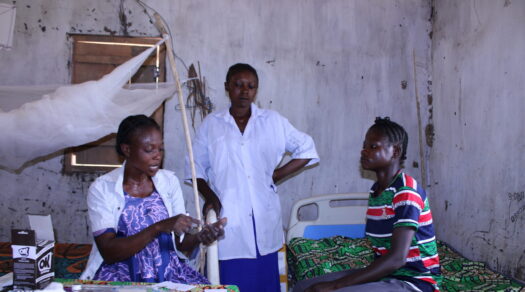
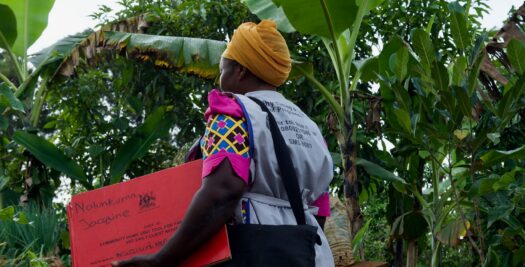
The Nigerian government has responded by developing a national task-shifting and task-sharing policy for essential health services that mobilizes the country’s more than 70,000 community health extension workers (CHEWs) to provide an expanded package of primary health care services—covering services traditionally provided by medical doctors and nurse midwives. In Nigeria, CHEWs are paid government employees, trained to provide basic primary and curative care in underserved communities.
Since 2014, when the national policy was enacted, a variety of task-sharing initiatives have been carried out, and many CHEWs now work in health facilities to offer services once provided by doctors and nurse midwives. Despite these initiatives, health outcomes are still disproportionately poor in some rural areas. In Kaduna, for example, only 8% of children are fully vaccinated according to the national schedule, 30% of women do not receive any antenatal care, and only 14% of women use modern contraception.
Evidence for a new task-sharing model
Pathfinder International, in partnership with Impact Catalysts, is working in Kaduna and Kano states to figure out why. Without a consolidated effort to measure the effectiveness of task-sharing interventions or determine where gaps still need to be filled, many states, including Kaduna, are struggling to maximize their investments in the community health workforce. The new initiative led by Pathfinder is assessing the performance of CHEWs and will introduce pilot interventions to optimize their care.
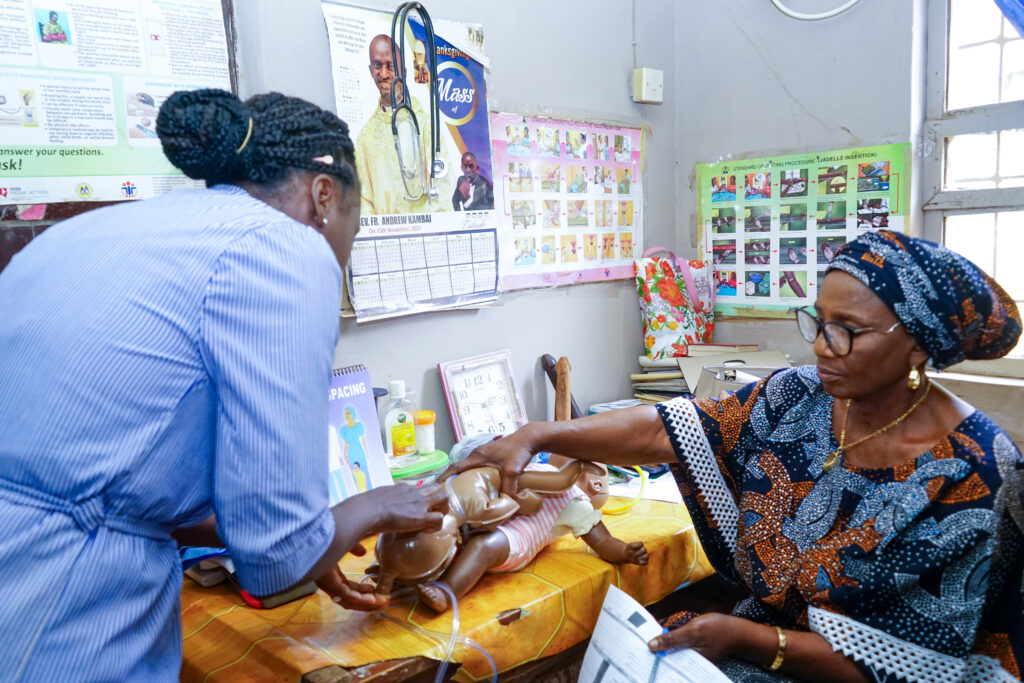
Initial findings show that many CHEWs have not received adequate mentoring and supervision for the tasks they are being meant to cover, and use of pre-service curricula are often not applied properly.
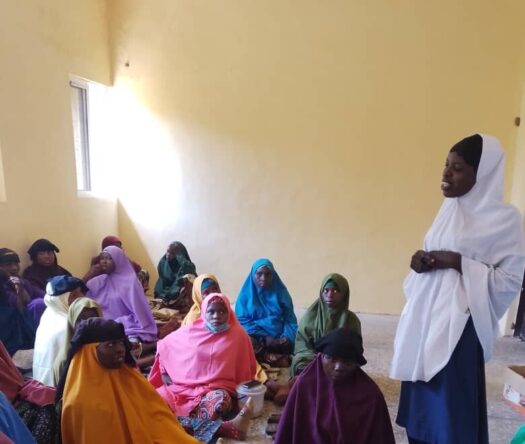
Pilot interventions developed over the next year will focus on strengthening skills for improved quality of care through systems of regular mentorship, improving data collection at health facilities, and engaging local stakeholders to sustain the interventions well into the future. Main service areas of focus will include:
- Ensuring all women have access to four or more antenatal care visits and can deliver their babies safely with the support of skilled birth attendants.
- Increasing access to postpartum family planning, a proven best practice for lowering the risks associated with closely spaced pregnancies.
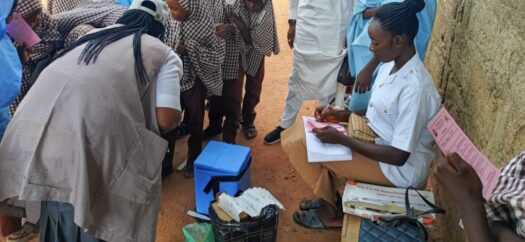
- Increasing the number of children who receive the full national schedule of immunizations.
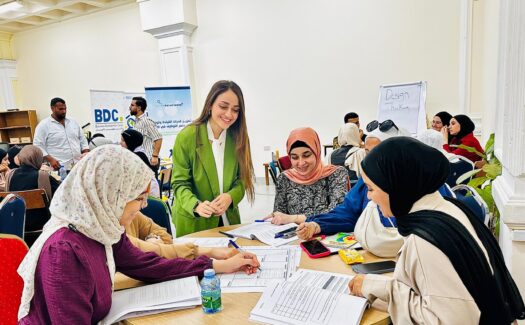
Evidence generated through these efforts will be used to assess the sustainability and scalability of the interventions, the value-add of capacity strengthening, and to conduct advocacy for expanding the scope of CHEWs. Working with state governments, regulatory bodies, and facility managers, Pathfinder and partners is designing an adaptable task-sharing model.
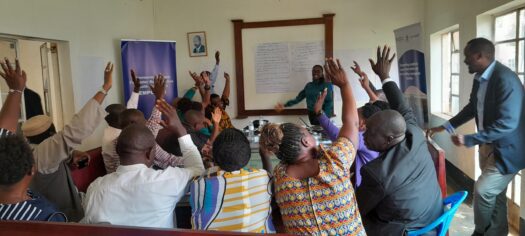
Local ownership will be essential to the success of the model going forward. Partners regularly liaise with primary health care boards in both states, for example, to get their buy-in. A sustainability plan will be developed with stakeholders in each state to ensure continuance beyond the project lifetime.
Local governments can take the lead
The “brain drain” of medical professionals from rural areas to urban centers, and low- and middle-income to high-income countries is not unique to Kaduna or Kano, nor is it new. It’s a challenge faced by numerous health systems around the world. The task-sharing model being developed is meant for national scale, but arguably, this is something that could be adapted in other countries as well with national task-sharing policies and decentralized systems for delivering health care.
Especially in the context of the sweeping cuts to foreign aid, task-sharing is a high-impact practice that can be widely used to improve health outcomes through the local ownership of health care delivery. Governments and communities can operationalize task-sharing themselves among their existing health workforce so that that they do not have to rely on donor funding to strengthen their health systems and deliver services.
But first they need substantiated evidence about what works—what’s cost-effective and high-impact in terms of addressing the most pressing health challenges. Streamlined systems of mentorship and data collection, coupled with sustained advocacy led by civil society organizations, can be a powerful approach to increasing local government autonomy over health care and improving and saving lives.