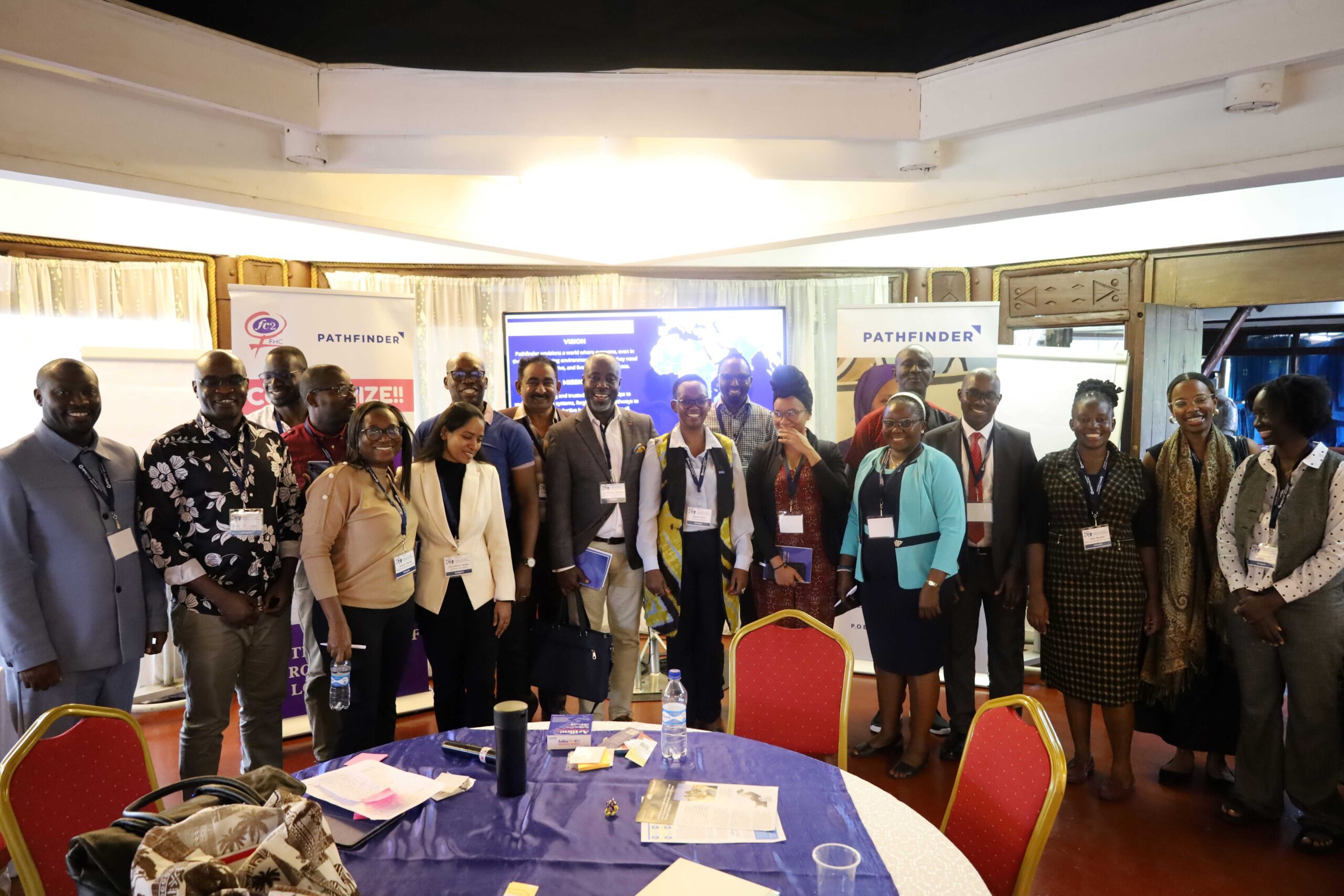
At the Global Health Practitioner Conference (GHPC) 2024, Pathfinder International brought together voices from Kenya, Pakistan, and Bangladesh to explore the intricate connections between climate change and women’s health. Under the moderation of Ruth Ngechu, our Advocacy and External Engagement Director, the session “Addressing Climate Change and Women’s Health through an Integrated Approach” unveiled powerful stories of community resilience and women’s leadership in the face of environmental challenges.
Regional Perspectives: Lake Victoria’s Lesson in Integration
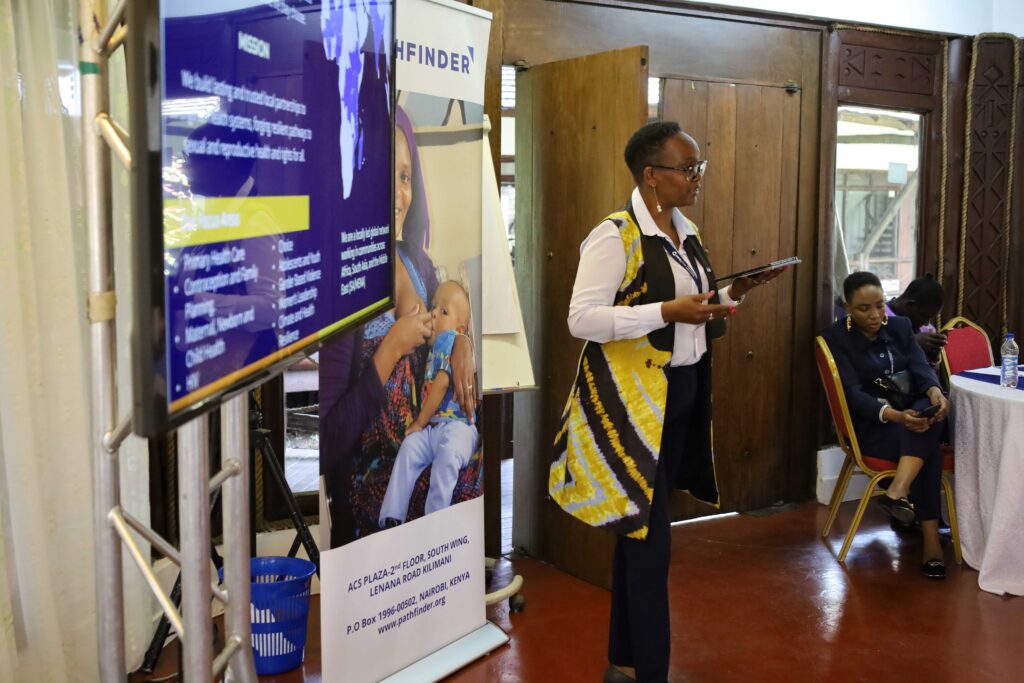
Sharon Atieno’s presentation on the Lake Victoria region painted a vivid picture of how gender, health, and environmental concerns intersect in real communities. “What we’ve learned from Lake Victoria,” Sharon shared, “is that women aren’t just facing the impacts of climate change – they’re pioneering solutions that work for entire communities.”
The initiative demonstrated how integrated approaches yield multiple benefits:
- Women-led conservation efforts protecting both livelihoods and ecosystems
- Community-based health services adapting to climate-related challenges
- Local leadership structures evolving to amplify women’s voices in decision-making
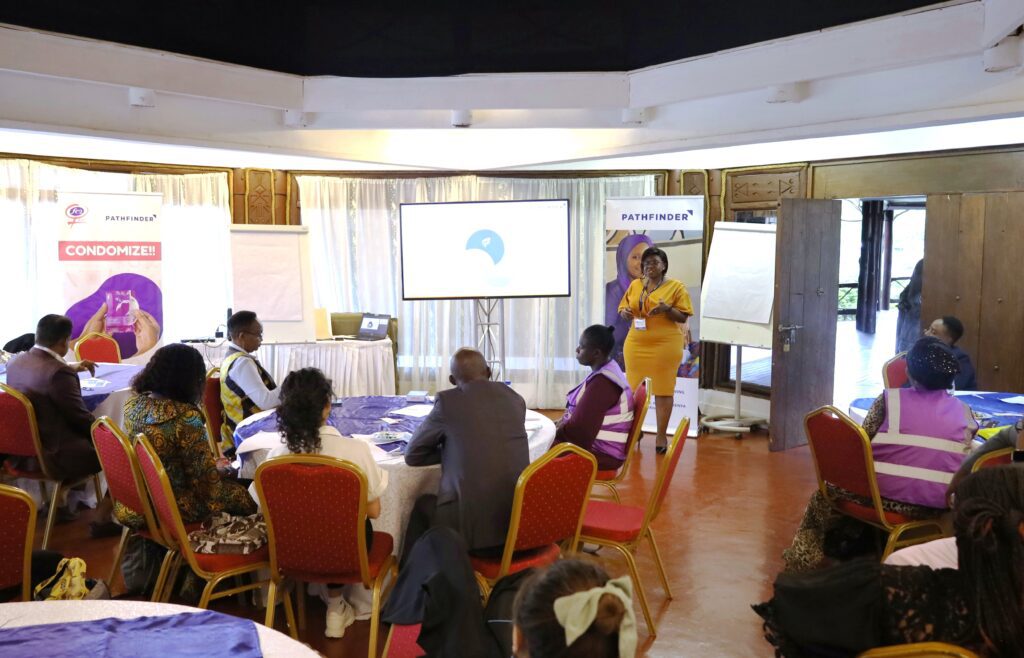
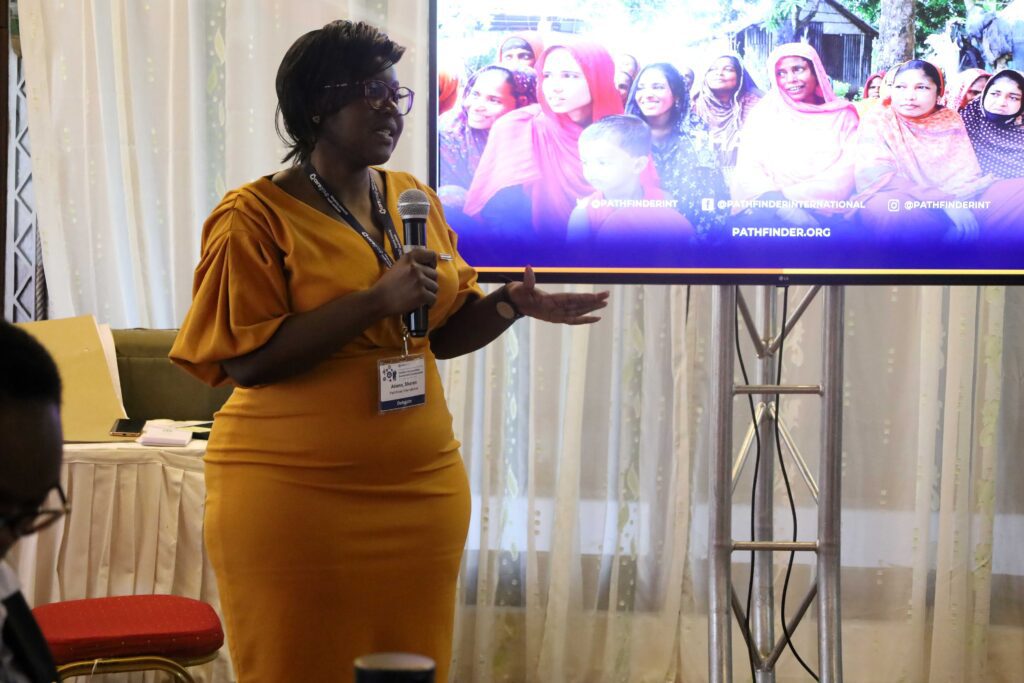
Sharon Atieno, Program Officer, Pathfinder Kenya, shares insights on the intersection of gender, health, and environment in communities.
Regional Perspectives: South Asia’s Story of Resilience
Muhammed Bakhsh Khaskheli and Nabila Chowdhury brought compelling evidence from Pakistan and Bangladesh, where coastal communities face increasing climate vulnerability. Their shared experiences revealed how local leadership and multi-stakeholder collaboration are transforming health systems:
- Community health workers becoming climate change advocates
- Local health facilities adapting to extreme weather events
- Women’s groups leading disaster preparedness initiatives
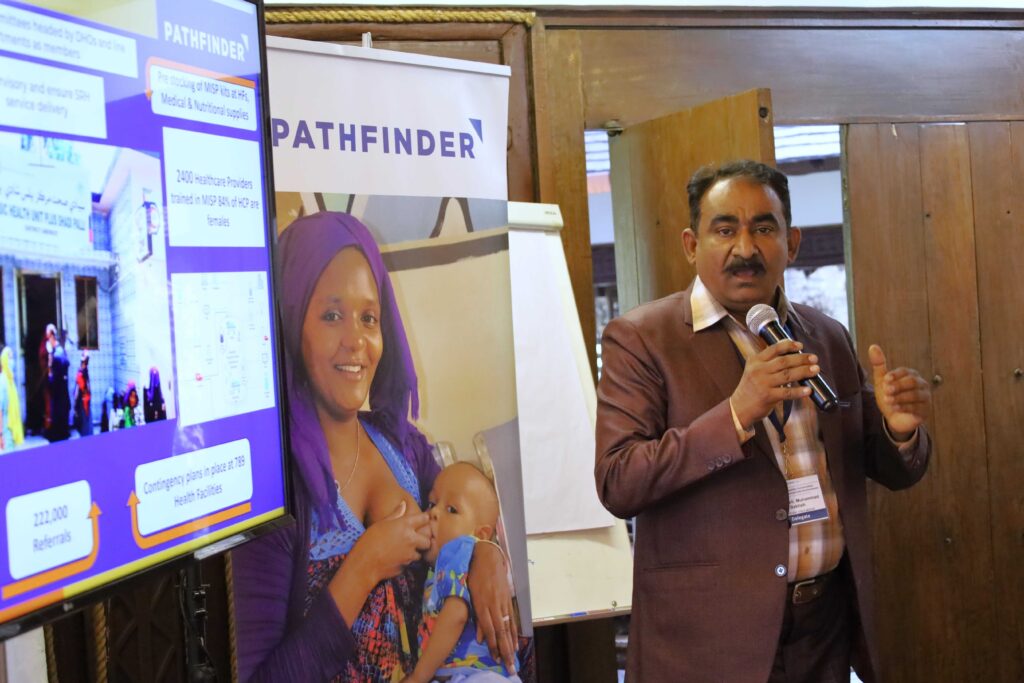
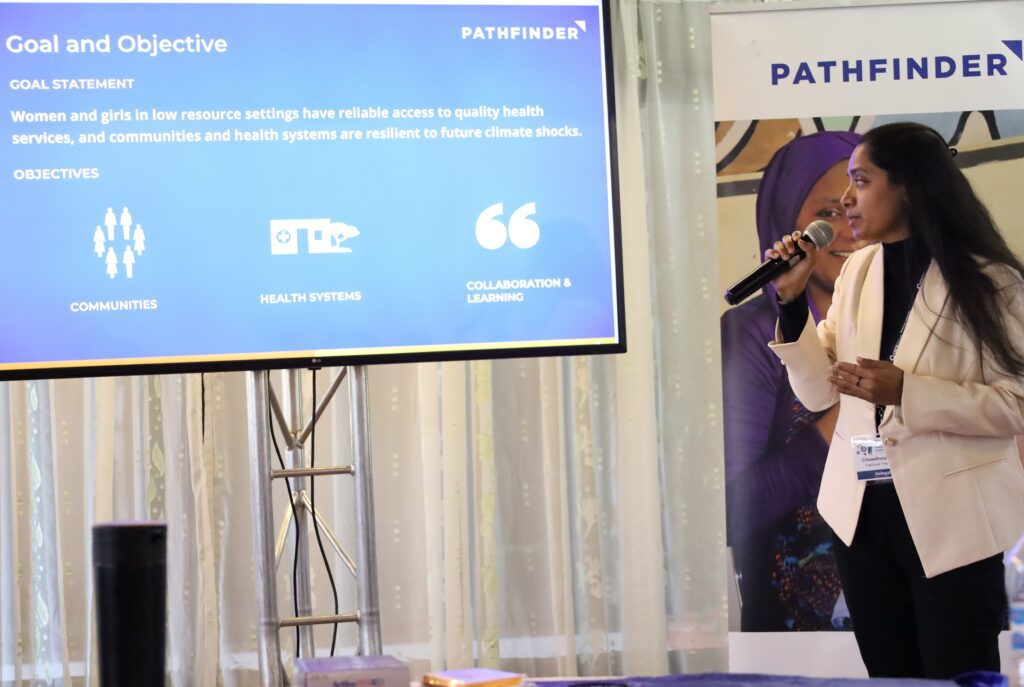
Muhammed Bakhsh Khaskheli (District Coordinator, TAKEDA Pakistan) and Nabila Chowdhury (SRHR Coordinator, Pathfinder Bangladesh) present strategies for building climate-resilient communities in vulnerable coastal regions.
Key Insights from Break-out Discussions
Health Systems that Bend, Not Break
In the health systems strengthening discussion, participants explored how to build resilience from the ground up.
“Our challenge isn’t just about stronger health systems,” one participant noted, “it’s about creating systems that can adapt and respond to changing climate realities.”
Key recommendations emerged:
- Adopt multi-stakeholder approaches involving government, donors, and communities
- Center vulnerable populations in program design
- Use data-driven approaches to predict and prepare for climate impacts
Advocacy Moves Mountains
The advocacy group tackled the crucial question of turning climate-health concerns into action.
The discussion yielded practical pathways:
- Build evidence-based advocacy strategies
- Engage government through structured partnerships
- Create sustainable handover mechanisms for long-term impact
Sustaining Change Through Local Leadership
The sustainability discussion, enriched by diverse regional experiences, emphasized the critical role of community ownership:
- Government harmonization of cross-sector activities
- NGO support for documentation and capacity building
- Private sector engagement through corporate social responsibility
Women as Change Agents
Across all discussions, one truth stood out: women are not merely victims of climate change – they are powerful agents of transformation. When given the opportunity, resources, and platforms, women lead initiatives that:
- Strengthen community health systems
- Protect environmental resources
- Build climate resilience
- Create sustainable economic opportunities
Our sessions demonstrated that addressing climate change and women’s health requires:
- Breaking down silos between health and environmental programs
- Building genuine partnerships with communities
- Recognizing and amplifying local leadership
- Creating platforms for women’s voices in decision-making
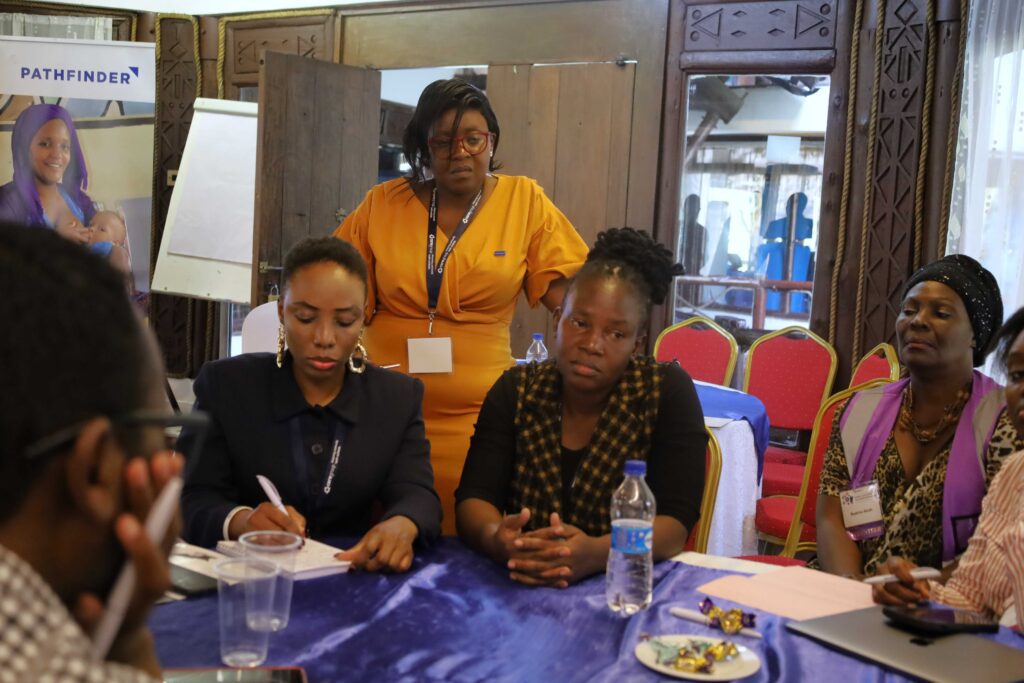
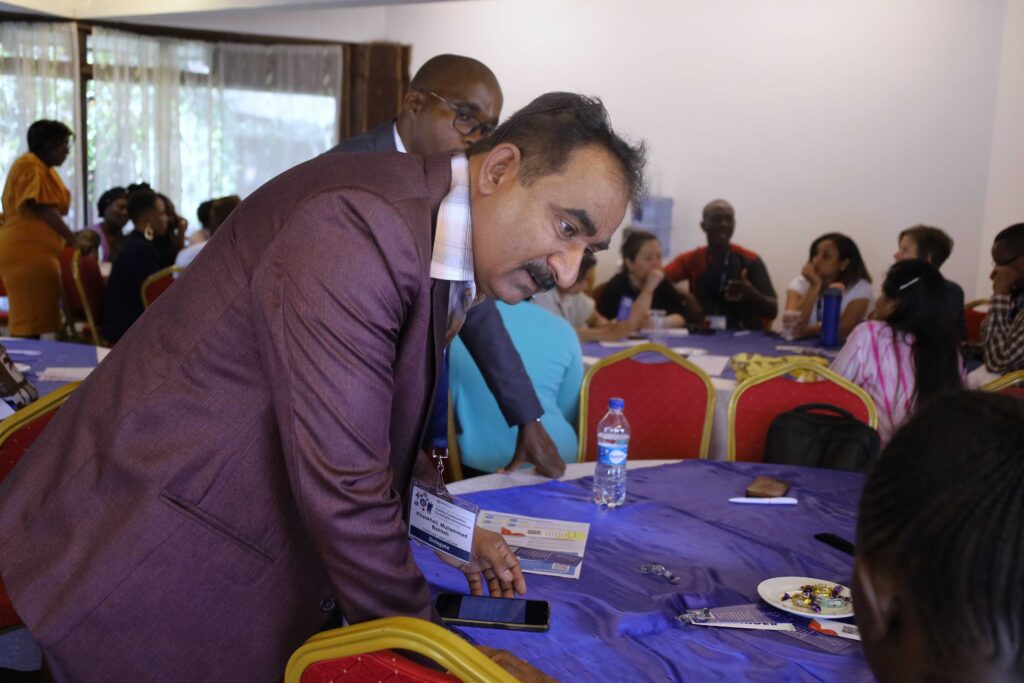
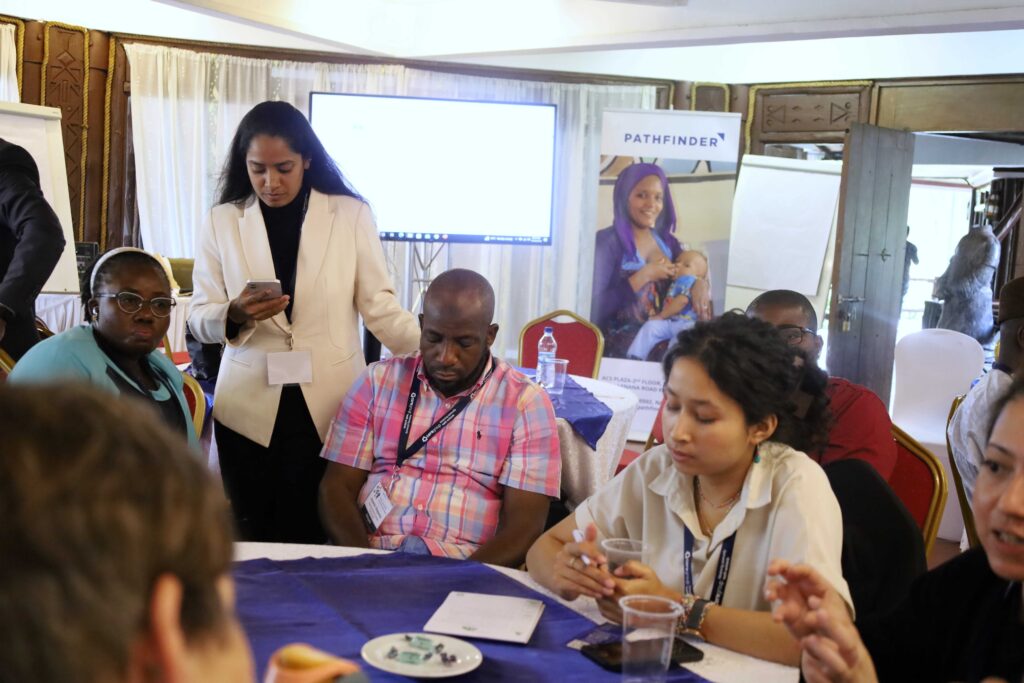
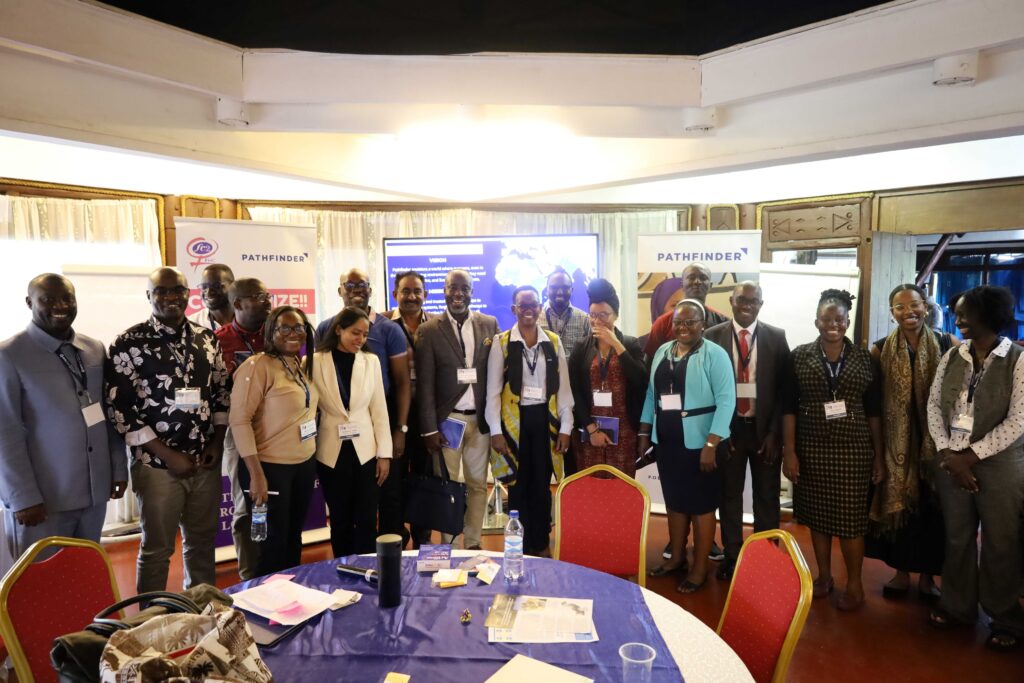
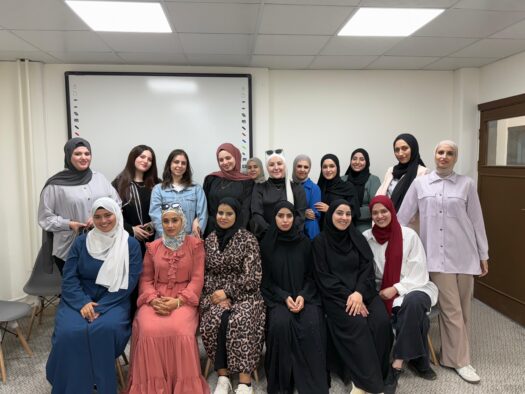
Break-out session participants tackle health systems strengthening, advocacy strategies, and sustainable solutions during GHPC 2024’s integrated approach workshop.
Moving Forward: A Call to Action
Our break-out discussions revealed three clear imperatives for action. First, investing in women’s leadership is non-negotiable for climate resilience. Women leaders in Lake Victoria, coastal Bangladesh, and rural Pakistan have proven their ability to transform communities through integrated climate and health solutions. They need direct access to resources, decision-making authority, and policy platforms.
Health systems must evolve to meet climate challenges. This means integrating climate considerations into health planning and service delivery. Community health workers are critical bridges between climate adaptation and healthcare access. Our experience shows that when health systems account for climate impacts, they deliver better care and respond more effectively to community needs.
Multi-stakeholder collaboration must move from concept to reality. Climate and health challenges demand coordinated action across sectors. Government policies, NGO programs, and community initiatives need alignment. Resources and knowledge must flow freely between regions and stakeholders, turning isolated successes into scalable solutions.
The Path Ahead
Effective climate and health solutions emerge from local leadership and community wisdom. The communities of Lake Victoria showed us how local environmental protection improves health outcomes. Pakistan’s coastal regions demonstrated how community-led disaster preparedness strengthens health systems. Bangladesh’s experience proved that when women lead climate adaptation, entire communities benefit.
Our work ahead is clear: support local leadership, strengthen health systems, and build genuine partnerships. Success requires direct action, clear accountability, and unwavering focus on community priorities. The future of climate-resilient health systems lies in the hands of the communities we serve. Our role is to support their leadership and amplify their solutions.
As one participant powerfully noted: “When we trust women to lead, when we invest in community solutions, when we break down the barriers between sectors – that’s when real change happens.”