A conversation with Dr. Ugochi Odinakachi Ohajoruka, CEO and Founder, Health Aid for All Initiative
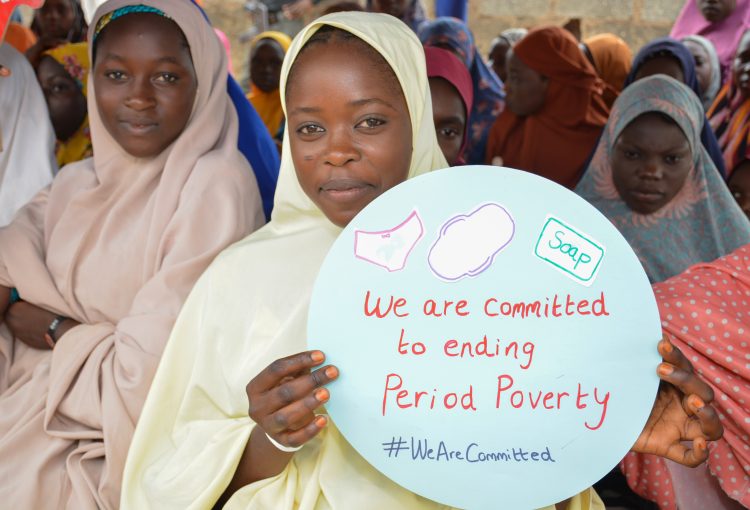
Can you tell us a bit about the scale of period poverty globally?
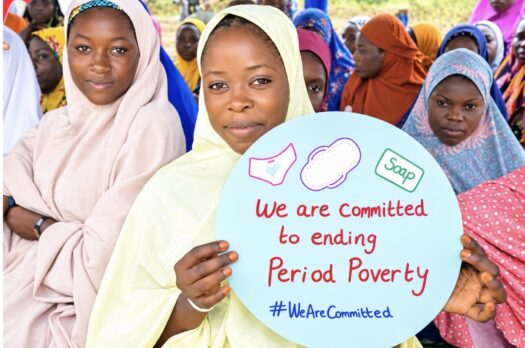
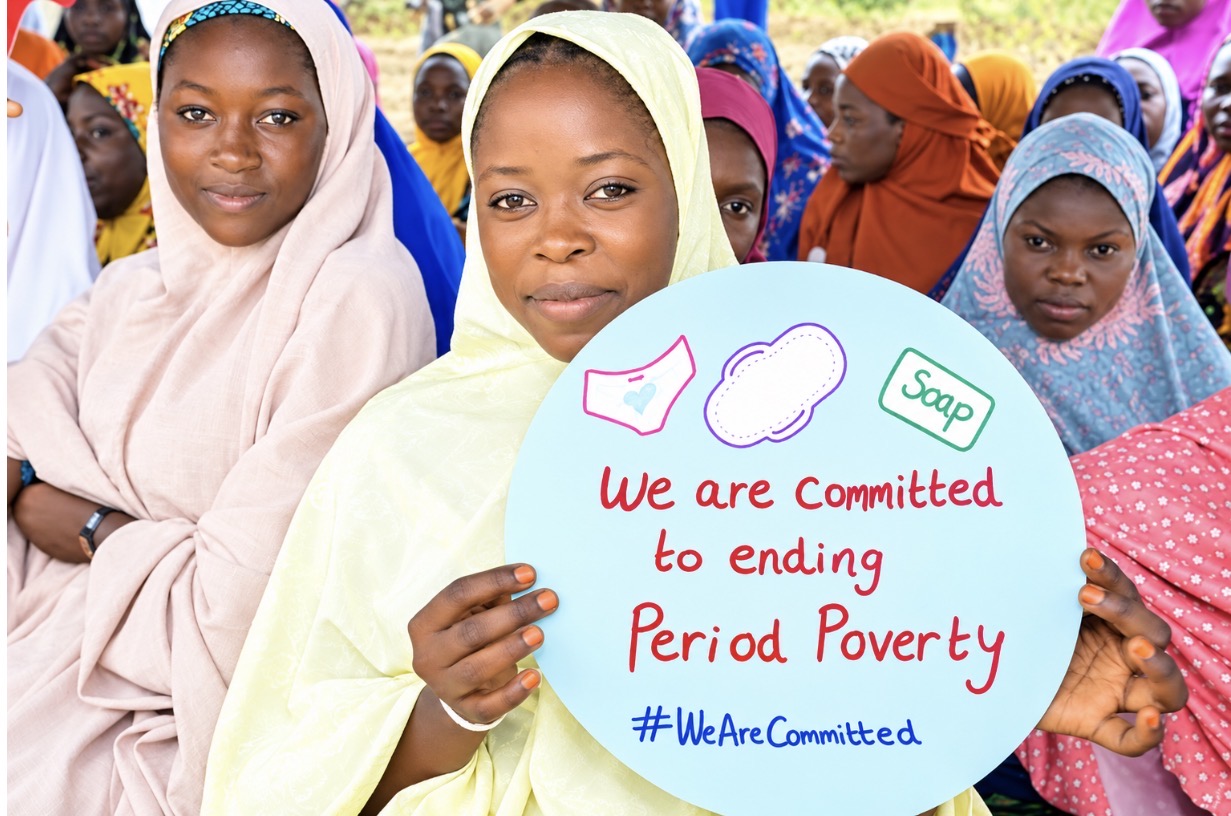
Period poverty is much bigger than an inability to afford sanitary pads. It’s a systemic gender equity issue. Menstruation intersects with poverty, education, health, sanitation, the environment, safety, dignity, and even social participation.
Globally, about 1.8 billion people menstruate, yet millions cannot manage menstruation safely with dignity. The World Bank also estimates that around 500 million people lack adequate access to menstrual products and facilities.
So, if you ask me: What is period poverty? I would say it occurs when someone who menstruates does not have reliable access to the things necessary to manage menstruation safely and with dignity. That includes affordable, appropriate menstrual products; clean water and soap; private, safe toilets; facilities for changing and disposing of menstrual materials; accurate information about menstruation; access to health care; and an environment free from shame and discrimination.
Can you talk a little bit about period poverty in Nigeria, where your organization, the Health Aid For All Initiative (HAFAI), operates? Does the situation reflect global trends?
In Nigeria, 23% of girls have missed school because of their period. And this isn’t simply because the girl doesn’t have a pad. There are some areas in Nigeria where girls on their periods are forbidden from staying around men or boys.
Last year in Nigeria, we had our very first menstrual health summit. Sitting in that conference room, I was glad that finally period poverty is having its moment and we are now discussing the issue. But another part of me was sad that it took so long after the world launched Menstrual Hygiene Day to discuss menstrual health and hygiene management policies in a country like Nigeria. If we are the giant of Africa, we should be leading cultural shifts in Africa. But the story is not so.
Tell us about HAFAI’s community-produced reusable pads. What lessons can be learned from localized manufacturing and ensuring women are a central part of driving the supply chain?
Eleven years ago, when I founded HAFAI, we worked on the Red Diamond project. Red Diamond integrated health clubs in schools, girl child mentorship, hygiene education, and the production of sanitary pads. Through the project, we distributed over 6,000 reusable pads, and each pad lasts for three years.
In communities, we created enterprise groups where we trained women to produce reusable pads hygienically. They received sewing machines and locally produced fabrics, made the reusable pads, and sold them in open markets. This opened an opportunity for women to discuss stigma around periods, reproductive health issues they faced, and ways to get help, instead of continuing to suffer in silence.
I remember Saloma. She became so good at sewing that she got a local contract to make school uniforms. She trained several other women to produce the pads and scaled up her business. She was able to support her family, and a lot of other women joined her class and learned how to make pads. This shows that local solutions can address period poverty and women’s economic empowerment simultaneously.
When women are involved in the supply chain—from sourcing the materials to producing and selling the pads and educating other women—they become drivers of the solution. Women from the community kept helping us innovate in our design because they were driving the solution. They built community ownership and resilience around menstrual health and reduced menstrual waste through reusable products.
Period poverty shouldn’t just be about giving access to products, it should be about engaging women to produce, distribute, own, and lead solutions within their own communities.
What is the potential for scale with this type of model?
Organizations can collaborate and scale this up. We have seen small businesses become large-scale enterprises. We have seen the power of one sewing machine, empowering cohorts of five women. Entire communities are now aware of menstrual health solutions. Women are now interested in making the pads and other women are going to the market to buy the products. So, there is demand—and now there can be supply that drives the possibility of scale-up.
How do medical/public health evidence and policy interventions translate into cultural shifts on the ground? What strategies effectively engage local leaders, ministries, and communities to treat menstrual health as a systemic priority rather than a taboo?
We can bring together community leaders, teachers, health professionals, women’s groups, and adolescent girls. Health professionals bring evidence. Community leaders break the silence. Teachers support girls in school. Women’s groups distribute affordable and reusable pads. Government provides the policies to support women and girls.
Before recruiting women for the enterprise groups through the Red Diamond project, we worked with community leaders—most of them men. We need community leaders’ voices and men’s support to create sustainable solutions. With their support, we can create a shift from viewing menstruation as something girls should hide to it being a regular issue that our communities have a responsibility to support. Community leaders can make it easier for parents and girls to speak openly. Periods should be an open conversation. It’s a normal biologic function after all.
So, trusted people and community-led action create cultural change. Policies create the framework and evidence establishes the need. In Nigeria, we have a lot of policies, but implementation is where the real work lies. When a girl stays home from school, it is not just her problem. When a woman cannot afford menstrual products for her daughter, it is not just a household problem. When women cannot participate fully at work, it is a community issue—a public health emergency—that community institutions and government must collectively solve. Local governments, schools, and primary health centers need to make policies real.
Do you think there have been major cultural shifts in terms of period poverty over the last 10, 20 years?
There have been cultural shifts where women can access information from the internet. Nigeria is a very vast country, and many people who live in hard-to-reach areas rely on local traditions. But in the cities where people have access to information, there has been a shift, and girls see they can be in school during their periods. But there are still areas in Nigeria where women and girls on their periods can’t be around boys and men. We are still working to shift mindsets in those areas.
How can established public health leaders and emerging innovators work together to co-create frameworks that survive funding shifts and scale sustainable solutions for women’s health?
The strongest approach is to bring public health leaders, women’s health innovators, entrepreneurs, and communities together from the beginning, rather than having one group design a solution and another group try to implement it later. Public health leaders bring evidence, policy experience, and relationships with government. Innovators bring new ideas and technology. Business strategists bring expertise in financing, markets, and scaling. Women and communities bring lived experiences. Whatever solution we co-create should sit at the intersection of all four.
We also need to design for sustainability from day one. We must build local ownership. Training local women as producers, distributors, and educators creates skills and income that remain after a particular grant ends. Three years after our Red Diamond project ended, we went back for an evaluation and realized that 82% of our beneficiaries had been upskilled! The continuity should fall back on the beneficiaries. If it’s an impactful project, they will pick up the button and continue working on the project. With sanitary pads, a model could combine government support, community-based production, affordable sales, social enterprise, and targeted subsidies for marginalized communities.
Innovators should engage the Ministry of Health, Ministry of Education, Ministry of Women Affairs, and local governments from the design stage. This makes it easier for successful interventions to become part of existing programs rather than remaining isolated NGO projects.
Two more must-haves: a model that can adapt—one with common principles but local flexibility—and a solid impact measurement framework. We don’t only want to count how many products we have distributed. We also want to ask: Are girls missing fewer days of school now? Are the products affordable and consistently available? Are women earning an income now? Are women more consistent with their jobs now? Are communities changing their attitudes? Can the program continue without external funding? These indicators show whether the intervention is actually creating lasting change.
The ultimate goal should be to move from projects to systems. If the public health leaders, the entrepreneurs, the government, the communities, and women themselves build the solution together, the project can evolve into a locally owned system.
Given your breadth of experience, what advice would you have for other African women looking to build solutions for systems that were never built for them?
There is strength in collaboration. I have seen a lot of organizations working in Nigeria on period poverty, and they are working in siloes—distributing pads and running advocacy separately. Let’s bring our ideas together and make sure we are building with women and not just for women. We must ensure women’s voices and solutions are part of the history being written. If we don’t tell our stories, others will redefine reality for us. This is difficult in a patriarchal society, but this is where collaboration comes in.
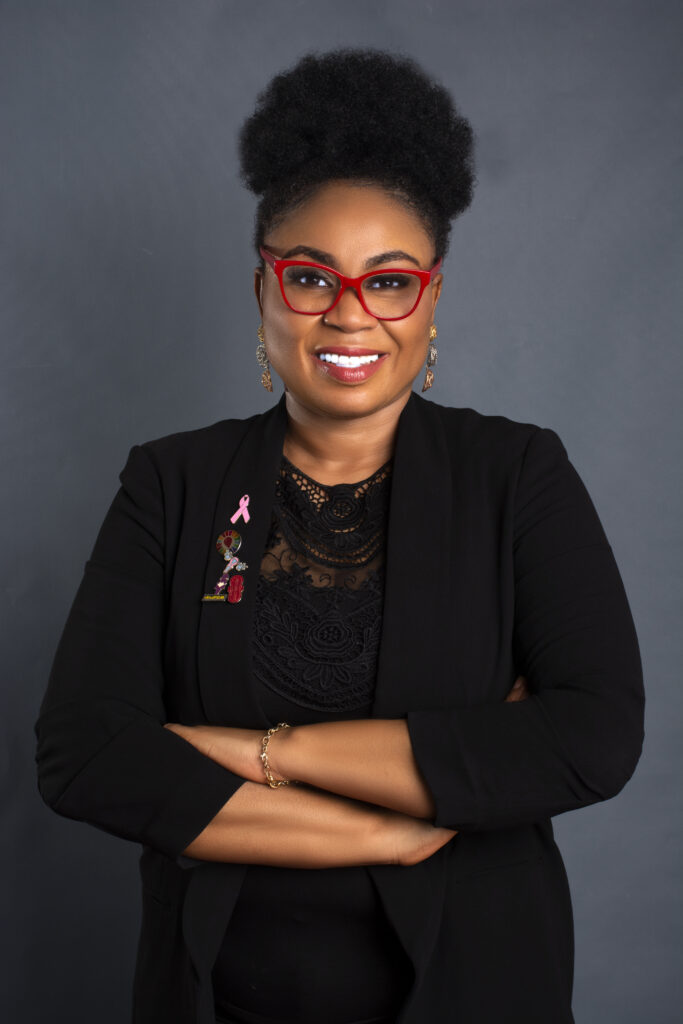
Dr. Ugochi is the Founder of the Health Aid For All Initiative (HAFAI), a nongovernmental organization focused on maternal, child, and adolescent health and its interconnections with gender equality, education, the environment, and economic empowerment. In Nigeria, HAFAI pioneered advocacy on locally produced eco-friendly pads and has distributed over 130,000 reusable pads, empowering women and girls with skills and tools to produce them. Dr. Ugochi is a medical doctor, public health practitioner, and author.