Traduction en français ci-dessous.

A Q&A with Dr. Patrick Kabeya Tshibemba, Project Manager, DISC Project, Democratic Republic of the Congo for World Contraception Day.
Expanding contraceptive choice is about more than introducing a new method. In settings where women have limited autonomy and access to information, it also requires health providers who listen, build trust, and support informed decision-making. In Democratic Republic of the Congo (DRC), that means pairing self-injectable contraception with empathy-based counseling.
In honor of World Contraception Day, we are dedicating this edition of our Country-Led in Action newsletter to a Q&A with Dr. Patrick Kabeya Tshibemba. Dr. Tshibemba is a project manager working with Pathfinder DRC. He supports the health system to deliver contraception in 14 health zones across DRC’s Kwilu and Kasai provinces under the PSI-led Delivering Innovations in Self-Care (DISC) program.
DISC is introducing self-injectable contraceptives in places where women’s autonomy is often restricted and contraceptive use remains low. Just 7% of women in Kasaï and 11% in Kwilu use a modern contraceptive method, and many women have never heard of contraception.
Pathfinder’s work with DISC builds on our support to the Ministry of Public Health and local partners over the past 18 years in scaling up community-based family planning across rural areas and rolling out DMPA-subcutaneous self-injectable contraception (DMPA-SC SI) nationally.
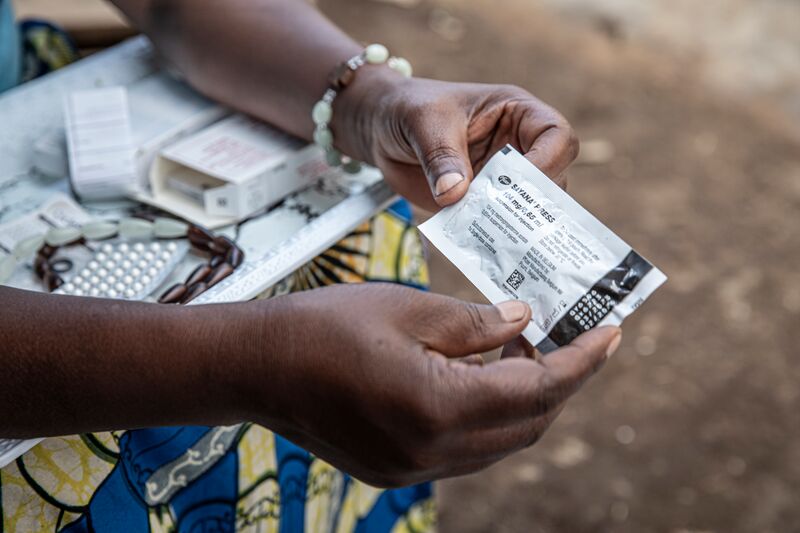
Can you tell us more about the training approaches you used with providers as part of the DISC project and how these fit the context, knowing women have very limited knowledge of and access to contraception?
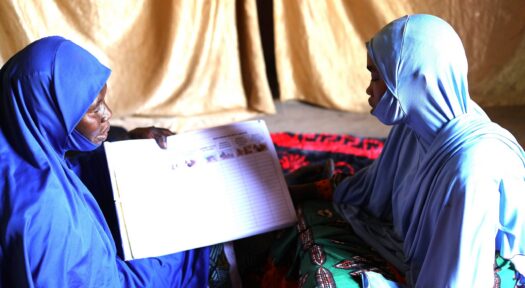
We have used a competency-based approach in DRC, covering the entire spectrum of contraceptive services, from communication and counseling to the administration of all methods. A key innovation of the DISC project has been the integration of empathy-based, client-centered counseling into provider training. This approach helps providers understand and address clients’ fears, concerns, and misconceptions about contraception, including self-injection.
PSI and Pathfinder have worked with the national reproductive health program to integrate an empathy-based approach into existing training and communications materials. We then trained a group of national facilitators on empathy-based service delivery and DMPA-SC SI administration. These national facilitators then trained provincial facilitators, who in turn trained local health providers, creating sustainable local capacity for self-injection and client-centered counseling.
DRC is a vast country with many remote and sparsely populated communities. How have you tracked whether women are choosing self-injection and using contraceptive services more broadly?
DISC supports countries to monitor the percentage of DMPA-SC product that is self-injected vs provider-administered as a key indicator of market maturity. When at least 40% of DMPA-SC visits are for self-injection, we consider the SI market to have reached maturity.
Data are collected on DMPA-SC SI through the national health information system. To help improve the quality of data collected, we strengthen the local health system’s capacity in data reporting. We trained local health providers in the two provinces how to enter data into new family planning registries and monthly reporting forms. We also trained a data manager in each of the 14 health zones, who is responsible for entering data in the national system. Our technical guide helps the data managers to facilitate monthly data monitoring meetings in each health zone.
Can you tell us more about what you’re seeing in the preliminary data? And have the data been unexpected?
Preliminary results are encouraging. Nearly half (45%) of women who were offered DMPA-SC SI as part of a full range of contraceptive options selected the method, representing 129 of 284 women counseled.
It’s not completely unexpected. Returning to the fundamentals of empathetic, client-centered family planning counseling helps providers coach women on self-injection—and it also impacts how these providers discuss ALL methods with clients. They listen to their concerns, provide accurate information without judgment, and create a space where they feel comfortable making their own choices about whether to use contraception and, if so, which contraceptive method is best for them.
What have you learned through your work on the DISC project that you’d like to share with other practitioners working with governments to strengthen contraceptive service delivery in similar settings?
Pathfinder continues to learn alongside governments, providers, and clients. We believed that introducing DMPA-SC SI could expand contraceptive choice by giving women the option to self-administer a proven and trusted method. What we are learning is that the impact can be even broader. By emphasizing empathy, informed choice, and respectful counseling, self-injection programs can help strengthen the quality of family planning services overall and place women more firmly at the center of their own health decisions.
Keep up with our country-led journey by subscribing to
our Country-Led in Action newsletter on LinkedIn.
L’empathie : un élément clé pour offrir aux femmes un choix en matière de contraception
Entretien avec le Dr Patrick Kabeya Tshibemba, directeur du projet DISC en République démocratique du Congo, à l’occasion de la Journée mondiale de la contraception.
Élargir le choix en matière de contraception ne se résume pas à l’introduction d’une nouvelle méthode. Dans les contextes où les femmes disposent d’une autonomie et d’un accès à l’information limités, cela nécessite également des professionnels de santé qui savent écouter, instaurer un climat de confiance et favoriser une prise de décision éclairée. En République démocratique du Congo (RDC), cela se traduit par l’association d’une contraception auto-injectable au counseling fondé sur l’empathie.
À l’occasion de la Journée mondiale de la contraception, nous consacrons ce édition de notre newsletter « Country-Led in Action » à un entretien avec Dr Patrick Kabeya Tshibemba. Dr Tshibemba est chef de projet chez Pathfinder RDC. Il aide le système de santé à fournir des moyens de contraception dans 14 zones sanitaires des provinces du Kwilu et du Kasaï, en RDC, dans le cadre du projet « Delivering Innovations in Self-Care » (DISC) dirigé par PSI.
DISC met en place la contraception auto-injectable dans des régions où l’autonomie des femmes est souvent restreinte et où l’utilisation contraceptive reste faible. Seules 7 % des femmes du Kasaï et 11 % de celles du Kwilu utilisent une méthode contraceptive moderne, et de nombreuses femmes n’ont jamais entendu parler de la contraception.
Le travail de Pathfinder dans le cadre du projet DISC s’appuie sur le soutien que nous apportons depuis 18 ans au ministère de la Santé publique et à nos partenaires locaux pour développer les programmes de planification familiale communautaire dans les zones rurales et déployer la contraception auto-injectable DMPA sous-cutanée (DMPA-SC AI).
Pouvez-vous nous en dire plus sur les approches de formation que vous avez utilisées auprès des prestataires dans le cadre du projet DISC et sur la manière dont celles-ci s’adaptent au contexte, sachant que les femmes ont des connaissances et un accès très limités à la contraception ?
En RDC, nous avons adopté une approche axée sur les compétences, couvrant l’ensemble des services de contraception, de la communication et du counseling à l’administration de toute la gamme de méthodes. L’une des principales innovations du projet DISC a été l’intégration, dans la formation des prestataires, d’un accompagnement centré sur la cliente et fondé sur l’empathie. Cette approche aide les prestataires à comprendre et à répondre aux craintes, aux préoccupations et aux idées fausses des clientes concernant la contraception, y compris l’auto-injection.
PSI et Pathfinder ont collaboré avec le programme national de santé reproductive afin d’intégrer une approche fondée sur l’empathie dans les supports de formation et de communication existants. Nous avons ensuite formé un groupe de facilitateurs nationaux à la prestation de services fondée sur l’empathie et à l’administration de l’auto-injection de DMPA-SC. Ces facilitateurs nationaux ont ensuite formé des facilitateurs provinciaux, qui ont à leur tour formé les prestataires de santé locaux, créant ainsi une capacité locale durable en matière d’auto-injection et du counseling centré sur la cliente.
La RDC est un vaste pays comptant de nombreuses communautés isolées et peu peuplées. Comment avez-vous pu déterminer si les femmes optent pour l’auto-injection et recourent plus largement aux services de contraception ?
DISC aide des pays à suivre la proportion de produit DMPA-SC administré par auto-injection par rapport à celle administrée par un prestataire de santé, cet indicateur étant considéré comme un indicateur clé de la maturité du marché. Lorsque 40 % au moins des consultations DMPA-SC sont pour l’auto-injection, nous considérons que le marché AI a atteint sa maturité.
Les données relatives à l’auto-injection de DMPA-SC sont collectées via le système national d’information sanitaire. Afin d’améliorer la qualité des données collectées, nous renforçons les capacités du système de santé local en matière de communication des données. Nous avons formé les professionnels de santé locaux des deux provinces à la saisie des données dans les nouveaux registres de planification familiale et les formulaires de rapport mensuels. Nous avons également formé un responsable des données dans chacune des 14 zones sanitaires, chargé de saisir les données dans le système national. Notre guide technique aide ces responsables à animer les réunions mensuelles de suivi des données dans chaque zone sanitaire.
Pouvez-vous nous en dire plus sur ce que vous observez dans les données préliminaires ? Ces données vous ont-elles surpris ?
Les résultats préliminaires sont encourageants. Près de la moitié (45 %) des femmes à qui le DMPA-SC AI a été proposée dans le cadre d’une gamme complète de méthodes contraceptives ont choisi cette méthode, soit 129 femmes sur les 284 ayant bénéficié du counseling.
Ce n’est pas tout à fait inattendu. Le retour aux principes fondamentaux d’un counseling sur la planification familiale basé sur l’empathie et centré sur la cliente aide les professionnels de santé à coacher les femmes à l’auto-injection — et cela influence également la manière dont ces professionnels abordent TOUTES les méthodes avec leurs clientes. Ils écoutent leurs préoccupations, fournissent des informations précises sans porter de jugement et créent un espace où elles se sentent à l’aise pour faire leurs propres choix quant à l’utilisation d’une contraception et, le cas échéant, quant à la méthode contraceptive qui leur convient le mieux.
Quels enseignements tirés de votre travail sur le projet DISC aimeriez-vous partager avec d’autres professionnels collaborant avec les pouvoirs publics pour renforcer la prestation de services de contraception dans des contextes similaires ?
Pathfinder continue d’apprendre aux côtés des pouvoirs publics, des prestataires et des usagères. Nous étions convaincus que la mise en place d’un projet de DMPA-SC AI permettrait d’élargir l’éventail des choix contraceptifs en offrant aux femmes la possibilité de s’administrer elles-mêmes une méthode éprouvée et fiable. Ce que nous constatons aujourd’hui, c’est que l’impact peut être encore plus large. En mettant l’accent sur l’empathie, le choix éclairé et un accompagnement respectueux, les programmes d’auto-injection peuvent contribuer à renforcer la qualité globale des services de planification familiale et à placer davantage les femmes au cœur de leurs propres décisions de santé.