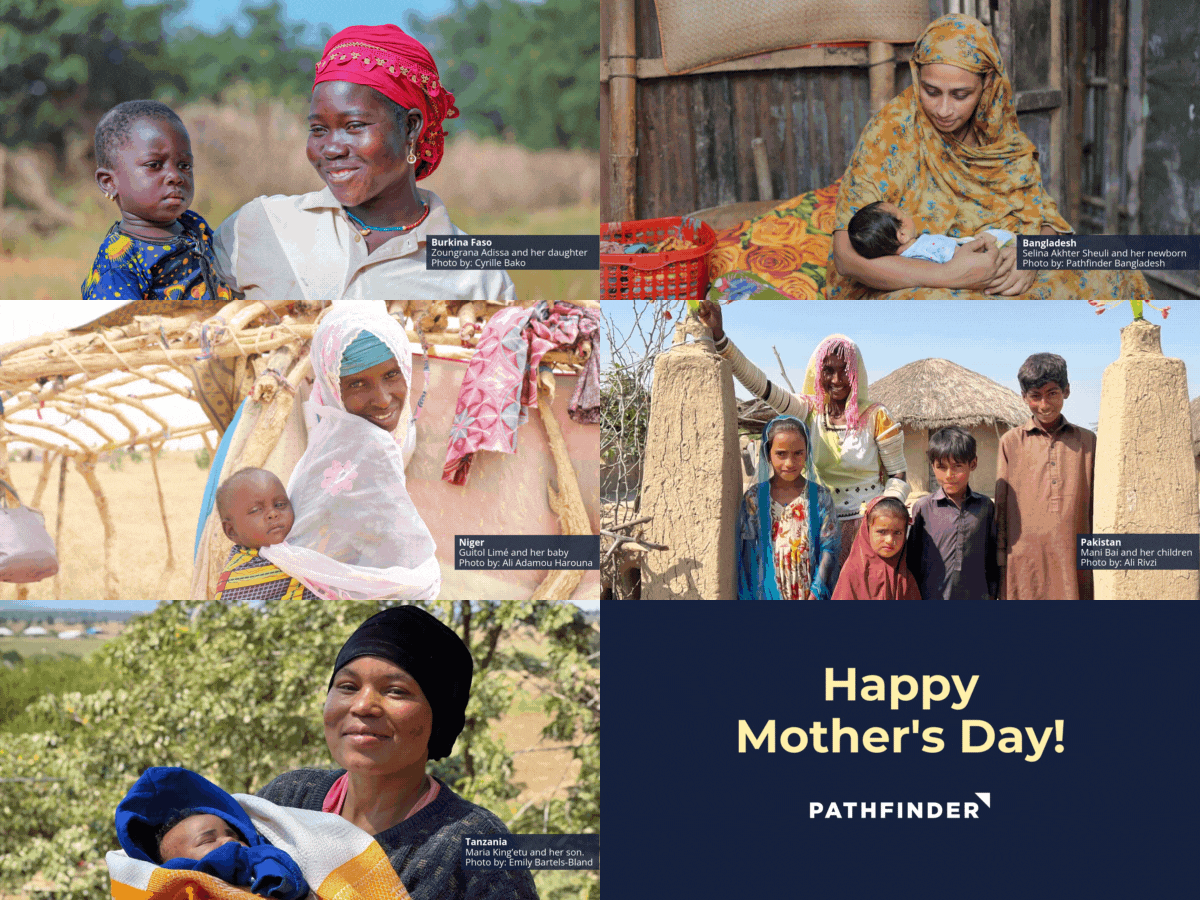
Mother’s Day is a time of celebration in the United States, but this year let’s also make it a time to pause and consider that around the world, many women lack access to the proper reproductive and maternal healthcare they need.
The repercussions are devastating – and sometimes fatal.
I encounter examples of this crisis much too often through my work as Board Chair for Pathfinder.
As a South African refugee who grew up in Uganda, Kenya, and Tanzania during apartheid, I knew of women who died in childbirth, suffering the consequences of not having reliable medical care and a safe place to give birth. I watched girls become pregnant when they were teenagers. Not only were their health and lives at risk, but their dreams of a career were also robbed from them.
As a father, I call on other fathers to advocate for women’s access to reproductive and maternal healthcare on this Mother’s Day.
My own life experience tells me that we can make tremendous progress here. I had the good fortune to study at Macalester College and later work on improving quality of health care in hospital systems in Minnesota and Nashville. In my life and work, I have therefore seen big changes be possible.
Yet, despite progress in global health over the past 25 years, maternal mortality is still one of the leading causes of death among African women, and 72% of all maternal deaths occur in sub-Saharan Africa.
A host of barriers stand in the way of women receiving the care they need in so many countries. In some cases, they may be forbidden from making their own reproductive health decisions. Or they don’t have the means to travel to health facilities that could give them the care they need. Or the health providers who are available to them may have inadequate training. Or the health facilities may be insufficiently equipped, especially if a pregnancy has complications. The list goes on.
You don’t have to venture outside the United States to encounter inequities. Among high-income countries, the U.S. is the most dangerous place to give birth, with a lifetime risk of maternal death at one in 2,700. Compare that to Norway, where the risk is one in 43,000.
If you are Black in the U.S., you are three times more likely to die in childbirth than if you are white, and the prevalence of delivery complications is 46% higher among Black mothers than white mothers. Infant mortality is also higher for babies born to mothers who are Black, American Indian, Alaska Native, Native Hawaiian, and other Pacific Islanders. When compared to white women, those groups also have higher shares of preterm births, low birthweight births, or births for which they received late or no prenatal care.
This is not a crisis without a solution, though. These problems are preventable when women and girls are provided with the following:
- Contraceptive choice so that they can plan their pregnancies.
- Accessible and affordable maternal healthcare services, including safe delivery services and prenatal care throughout their pregnancies.
- Respectful and dignified maternal health care where their voices are heard and their needs are met, along with access to financial resources so they can make the care decisions they need to make.
- Postpartum support, including screenings for postpartum depression.
- Access to affordable childcare and healthcare as their children grow.
- Woman-friendly workplace policies.
I am proud to be Board Chair of an organization working on these high-impact solutions.
This Mother’s Day, I call for all fathers to join me in committing to a future where no woman dies giving birth, where no woman, when she becomes pregnant, has to fear for her life and the life of her newborn.
Your gift will change lives.
We know that healthy mothers mean healthier babies, healthier communities, and healthier nations. Join us in building a future where mothers and their children can thrive.