Two Youth Champions Work Toward Reproductive Choice for All
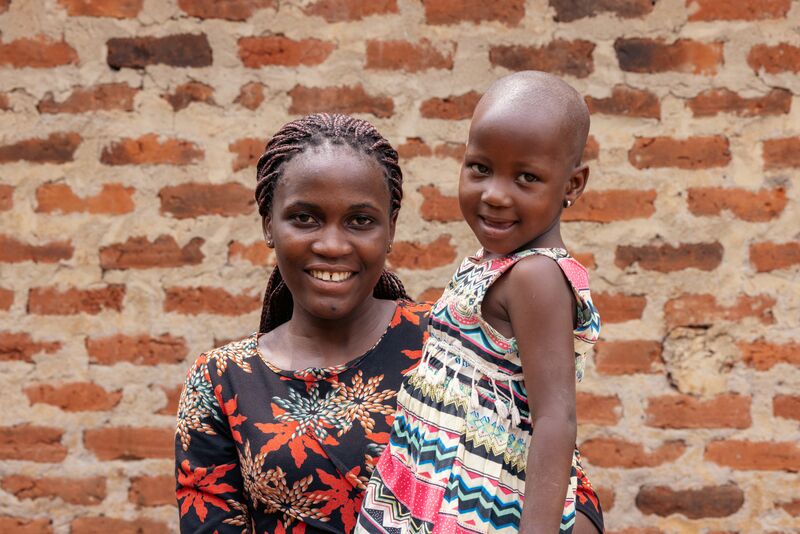
Twenty-year-old Sharon Ayebale, a youth champion and community health worker, is using her experience as a teenage mom to educate and promote awareness among fellow youth in Kyenjojo district, western Uganda. Sharon got pregnant at the age of 14, which forced her to drop out of school.
“I never knew how to use contraceptives,” said Sharon. “I thought that family planning was only meant for married couples. I also feared that I would not give birth (later on) if I used family planning at that age.”

According to Sharon, she would not have gotten pregnant had she had access to comprehensive and accurate information about pregnancy prevention. Sharon’s decision not to use family planning was driven by different myths and misconceptions about how contraception would impact her body and the belief that she could not get pregnant at 14. Sharon’s childhood dream was to become a doctor, but she dropped out of school when she became pregnant. This frustrated her, and she never wished the same to happen to other girls in her village.
A youth district coordinator working with the USAID/Uganda Family Planning Activity (FPA) reached Sharon. Recognizing her immense potential, the coordinator asked Sharon to become a youth champion and work with young people. FPA trained Sharon and other youth champions on family planning, including guidance on managing side effects and dispelling prevalent misconceptions about contraception among their peers. With this training, the youth champions advocated for young people’s access to contraception and reproductive health care.
“I learnt about various family planning methods, side effects, and how to manage them as well as HIV prevention measures,” says Sharon. To date, Sharon has reached more than 700 young people ages 15 to 24 in her community. She equips them with comprehensive information on pregnancy prevention and refers them to health facilities for more specialized reproductive health services. Recognizing that young people may feel shy about approaching health workers, she administers methods like Sayana Press and provides condoms and pills to them at Kyenjojo General Hospital.
Sharon takes advantage of any youth gatherings such as football matches to discuss sexual and reproductive health, drawing from her own experiences, and working to change negative attitudes. In addition, she often goes door to door in her community to reach her peers.
I tell them [youth] my story as a teenage mother and encourage them to use family planning to avoid experiencing the same… They understand me and believe me.
Sharon Ayebale, youth champion with the Uganda FPA program
Sharon and her daughter. Photo: Lovington Kambugu
Sharon herself is a satisfied user of Depo-Provera, a short-term injectable family planning method, and with this method in place, concerns about unplanned pregnancy no longer trouble her.
Presently, she has enrolled in a local institute to pursue a certificate in social work and social administration, while simultaneously delving into poultry farming to secure a steady income. Through her poultry venture, she generates funds to provide for her child’s needs and fulfill her day-to-day expenses. Her ambitions include enlarging her poultry enterprise, reflecting her determination and aspiration to grow.
“Today, many things have changed in my life. I am aware of family planning and its benefits. I would have fallen pregnant and couldn’t have been able to take care of another child if I didn’t (get this information).”
A Brighter Future: Muhammad Ensures Men are Champions for Women’s Agency and Choice
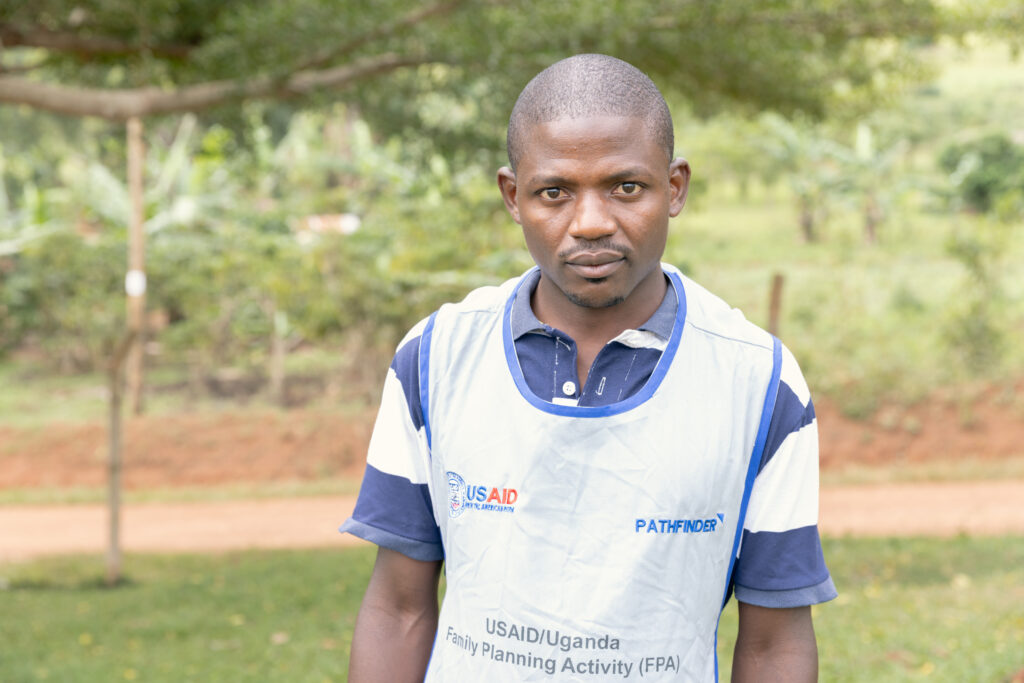
Muhammad Sempala, 27, is a youth champion and ‘Young Emanzi’ facilitator from Butambala district, central Uganda. Rooted in the Rukiga language of western Uganda,’emanzi’ means a male role model. Like many young people, Muhammad dropped out of school during the COVID-19 pandemic. He had been pursuing mechanics at a vocational school.
“When COVID-19 broke out in Uganda, it became hard for my parents to make money. They could only afford to pay school fees for my younger siblings. I dropped out,” Muhammad said.
In 2021, the USAID/Uganda Family Planning Activity (FPA) started reaching out to adolescents and young men, ages 10-24, through a gender-transformative mentorship approach known as the Young Emanzi Curriculum. The approach involves engaging young men in supporting women and girls to make informed decisions about their reproductive health, specifically family planning. This youth-focused, curriculum-based model includes messages that address social and cultural norms hindering the uptake of family planning services. The model provides a guide for mentoring youth on life skills, such as self-esteem, effective communication, conflict resolution, and financial literacy.
FPA trained Muhammad to become a mentor to fellow youth, and he has since gained confidence to reach out to his peers.
“I used to think that family planning was only for women. Now I know that there are options for men too. I now have a clear understanding of family planning and its benefits,” he said. Muhammad adds, “The Young Emanzi mentorship program has given me the platform to talk to fellow youth without any fear.”
In May 2023, Muhammad mobilized his peers for an initiative to save money for a joint business venture of bookbinding. “I thought about how we could support each other as a group of young men. I shared my idea and told them that it was possible. I encouraged them to save whatever they could afford to,” he said.
The group is determined to save for at least two years to raise enough money for the business. Muhammad ensures that the money is kept safely and that the records are accurate.
Aside from that, Muhammad, who has a one-and-a-half year old child, has carried the information he has learned about family planning to his home, and has supported his wife, encouraging her to embrace a family planning method. She opted for a three-year implant. The couple plans to have another child when they are financially stable.
Muhammad admits that the most significant change in his life has been how the community perceives him. “I have become a good example. Fellow young men talk to me about their issues without fear. My savings group trusts me to keep the money,” he says with pride.