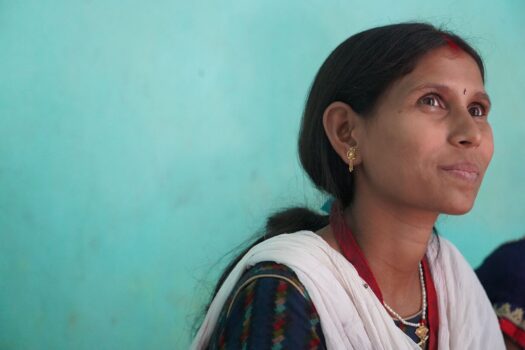
Gender equality starts at home with the family, said Hamdia Yassin Ahmed, who works with Pathfinder’s Ma’an project in Egypt.
Hamida grew up in the village of Salamon, located in Upper Egypt’s Sohag governorate. In her village, the stigma of using contraception and accessing reproductive health services impedes women’s ability to make informed decisions about their health and well-being, harming the health of their families.
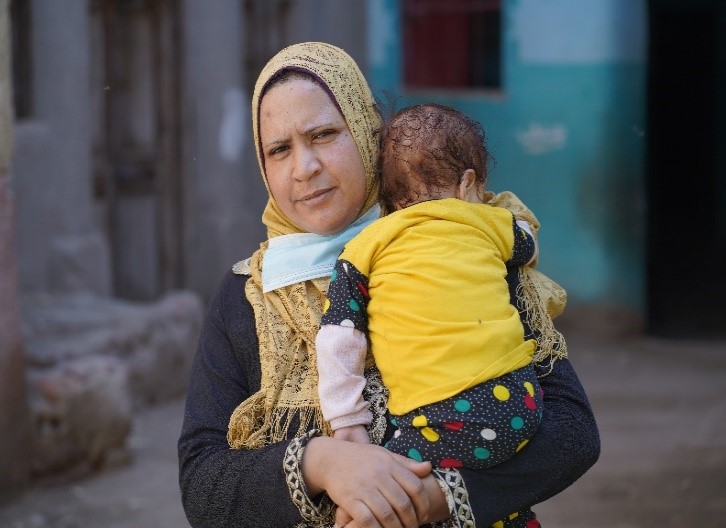
Sohag governorate has one of the highest fertility rates in Egypt, where women have an average of more than four children (EDHS 2014-2015). In Egypt, only 8% of women and 10% of men believe it is appropriate for a couple to use family planning before having their first child (DHS 2015).
Growing up in this environment made her passionate about empowering women and families. Hamida works with Pathfinder to further gender equality by increasing access to quality sexual health and reproductive services and giving women information about their health and that of their families.
Empowering Women Means Strengthening Families
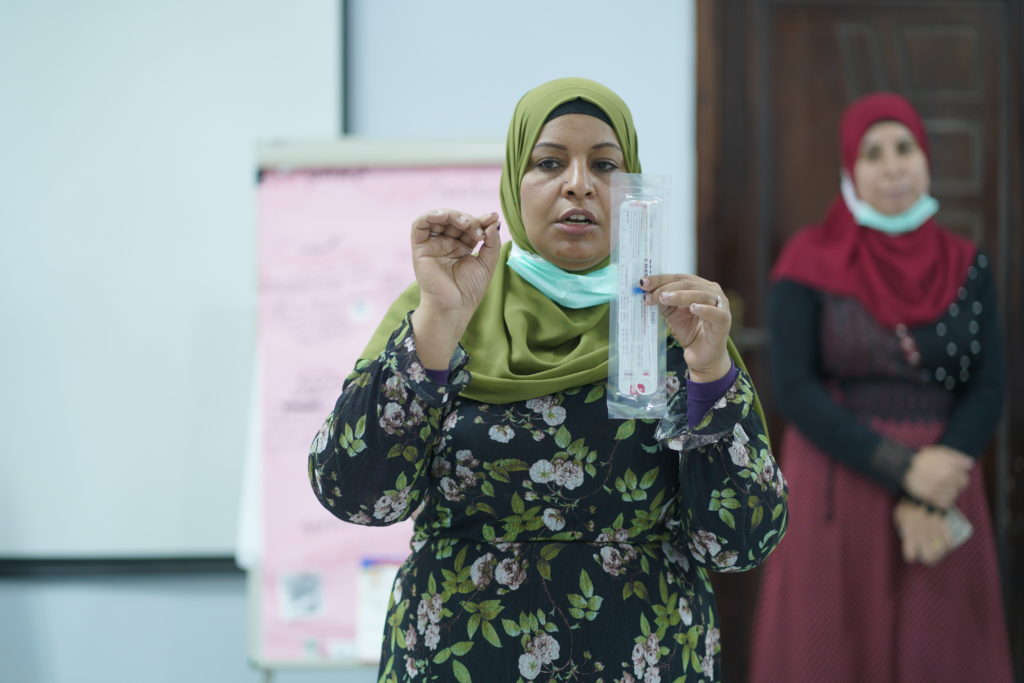
Hamida’s strategy has been simple: gain valuable social and economic skills and share them with others. In 2013, she first engaged with Pathfinder through the USAID-funded Fostering Opportunities in Rural Southern Areas (FORSA) project, learning about:
- essential sexual and reproductive health care;
- negotiation and financial skills;
- how to start a business; and
- counseling others.
She became a leader and peer educator in her community. “I trained 100 women. This boosted my self-confidence. I felt proud [seeing] women improve their health behaviors and [feeling] economically empowered to start a small business to provide for their families,” she said.
Hamida did not stop there. Today, she is a facilitator for Pathfinder’s Ma’an project. Ma’an, which means “together” in Arabic, enhances the capability of nongovernmental clinics and private health service providers in four districts in Sohag governorate to respond to the family planning needs of women and men (including first-time parents and young married women) in Upper Egypt. Ma’an is a scalable and replicable model that could be rolled out to other districts and governorates to ensure sustainable family planning services are available to those who need them the most.
Men & Women Working Together
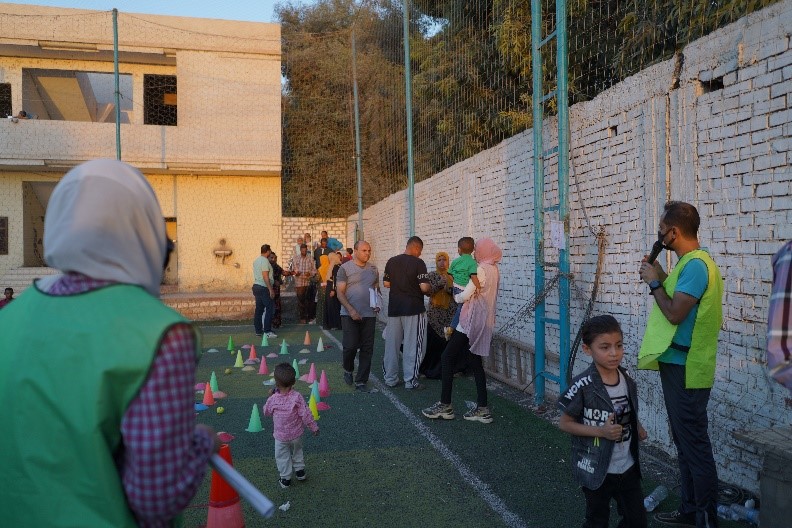
As a Ma’an facilitator, Hamida encourages men and women to work together to strengthen the family unit as a whole. She shares vital health information about breastfeeding, maternal health, child health and nutrition, family planning, gender equality, and much more. She has brought families closer through innovative games called “Family Interaction Day,” designed by Ma’an, filled with music, dancing, and activities highlighting important reproductive health messages. Ma’an has already carried out 10 Family Interaction Days, with each session including 35 participating families, engaging nearly 700 community members. “Many of the families who attended Family Interaction Day told me: ‘I wish this day had happened years ago’ and others have said, ‘we have never [been] out together or played together before like this,’” Hamida recalled.
It hasn’t always been this easy. One of Hamida’s biggest challenges was getting men to participate in Family Interaction Day. “Many [men] were rejecting the idea of learning about sexual and reproductive health. [I] worked with leaders in the village and influencers to solve this problem. The men grew to learn that it was really important to attend because they gained lots of health information related to family planning. Now [men] are [actively] participating and helping us educate other families.”
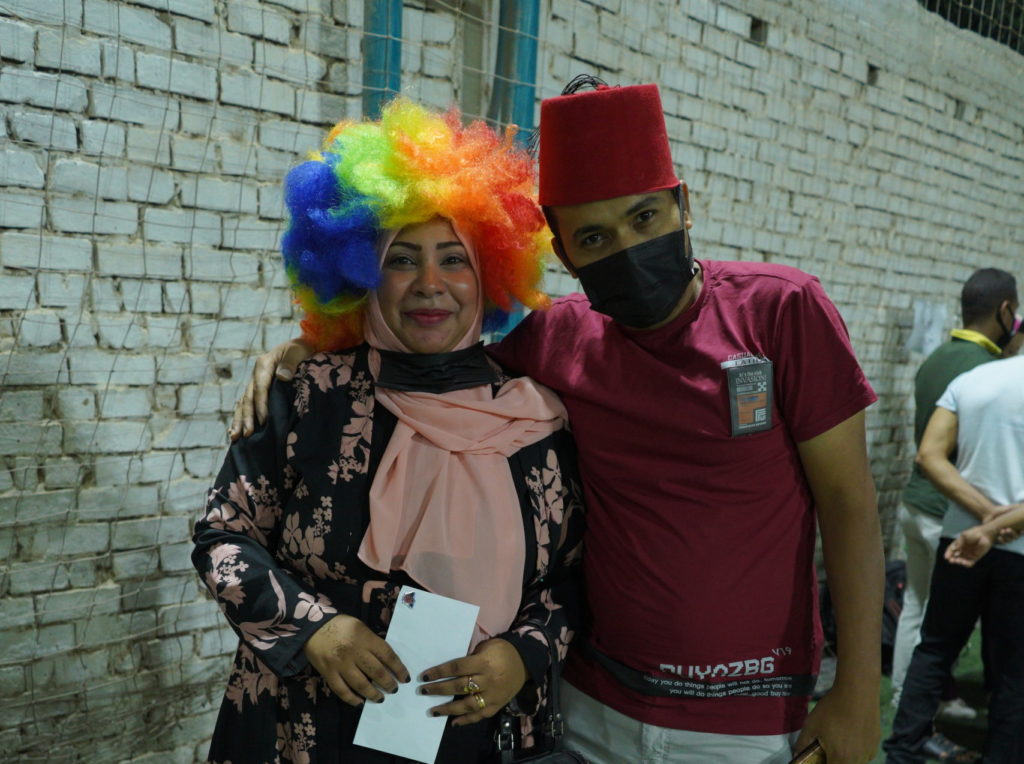
Hisham Rabie Mahmoud and his wife, Ola Shehata Muhammad, are among several families who participated in a recent Family Interaction Day. Hisham affirmed, “Before the program, I did not believe in the spacing between children and that the mother needs a great period of rest [between [pregnancies]. I saw the man as the sole controller of the family, the woman having no role but to raise the children and provide only for the daily requirements of the house. Now, this has all changed.”
Hamida is proud of the work she has done, but knows the road ahead is long. She is grateful to be able to bring families closer together and help them access sexual and reproductive health information and services.
Read more about our work in Upper Egypt.