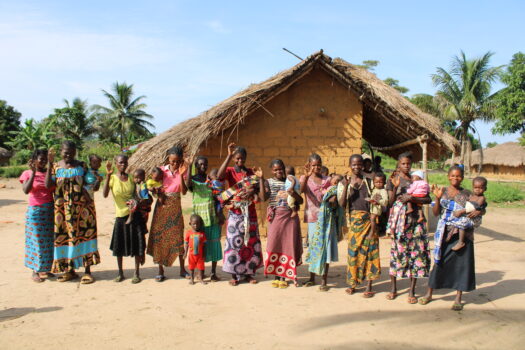
Imagine you are a young woman living in a remote corner of western Tanzania.
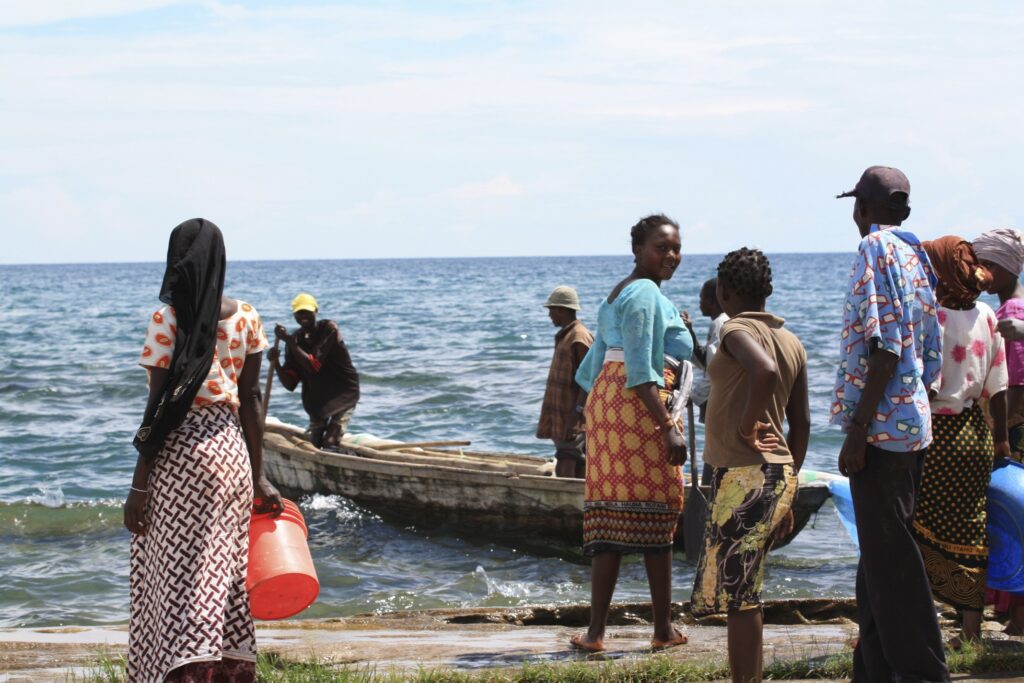
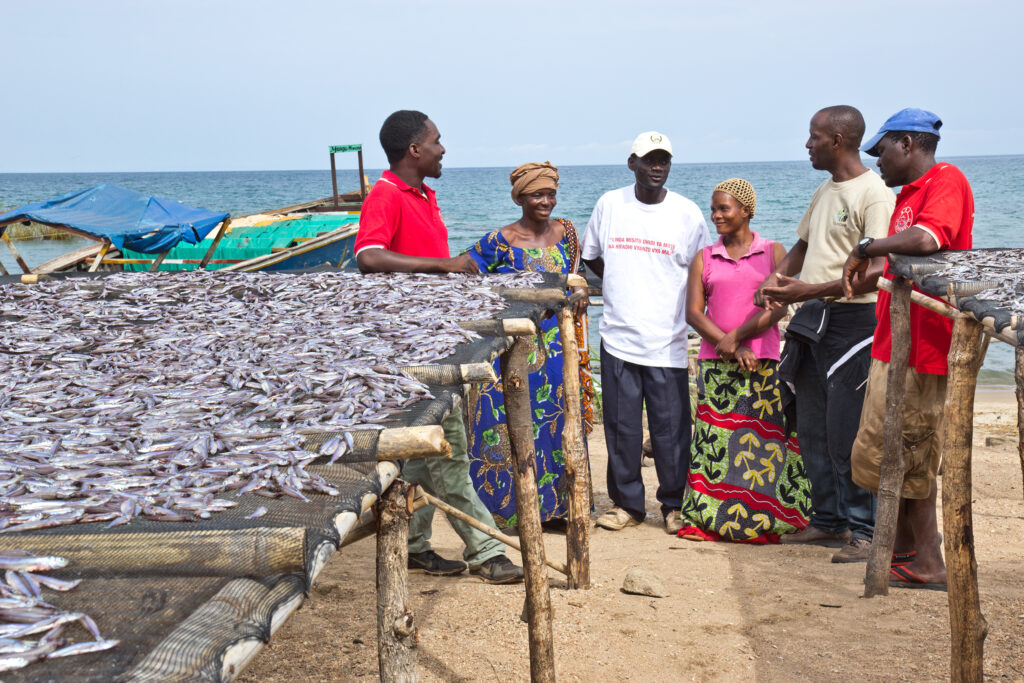
You are pregnant with your first child. Your family will grow, like families have for generations, in a village along the shore of Lake Tanganyika. One of the world’s largest freshwater lakes, Tanganyika is the source of food and income for fishing communities like yours. You depend on the nearby forests for firewood. You farm the land—when you are healthy. But you haven’t been feeling very well these days.
The truth is, while you are excited to welcome your baby daughter into the world, you are worried. You fear for your family’s future.
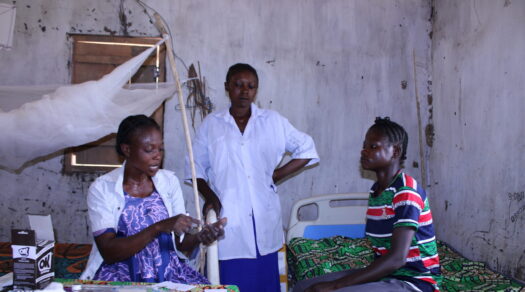
Fish are disappearing from the lake. Rain is not falling like it used to. It comes down in floods—or not at all. You are struggling to make ends meet. There’s less and less to eat. You worry about your pregnancy. The nearest major emergency hospital is eight hours away. If you and your baby survive your pregnancy, what happens next? Will you get pregnant again before you are ready? Will your daughter get the nutrition she needs? Will she be able to go to school one day? Not a lot of girls can.
No expectant mother should face so many urgent and difficult challenges. Not when we have the tools to help.
That’s why Pathfinder International and the Evidence to Action (E2A) Project, in close collaboration with the Nature Conservancy, set out to meet these challenges with a groundbreaking integrated program called Tuungane.
Since 2011, Tuungane (Kiswahili for “Let’s Unite”) has been working in partnership with the Government of Tanzania and remote, marginalized communities to promote positive health and natural resource management practices, including voluntary family planning, which support the long-term wellbeing of families and conserve the local ecosystem.
As we enter 2021, Tuungane’s work is more relevant than ever.
Experts around the globe are considering the intersections of climate resilience, reproductive health, gender equity, and effective programming for youth. It is something I think about every day in my role at Pathfinder.
Now I am excited to share a new, relevant publication from Tuungane, Improving Family Planning Outcomes for First-Time Parents in the Greater Mahale Ecosystem of Tanzania. To mark the release of this report, I’ll briefly answer four questions that touch on some key lessons we have learned:
1. Why should reproductive health organizations focus on overall resilience?
If you talk to people living in these villages, they will tell you their hopes for the future: access to land and fisheries resources, good education for their children, quality health services, different sources of income and access to finances. Right now, all of these hopes are threatened.
- As populations grow and move, more people are competing for limited income sources, over their ability to access public health services, over the protected natural resources they rely on.
- Unpredictable rain patterns—with reduced amounts of rainfall—affect food and nutrition security.
- Rising water temperatures and overfishing in the lake are leading to a decline in fish catch, which affects both nutrition availability and income.
- There are very limited sources of income and access to local financial support in general.
- For girls and young women, challenges are compounded. They also face limited educational opportunities—along with early marriages and early pregnancies—that further limit their options to realize their aspirations.
All of this makes communities, and especially women and girls, increasingly vulnerable to the effects of climate change. Ultimately, if we want to make a real, lasting impact on people’s lives in this region, health sector interventions alone are not enough. We have found a better, more holistic way of working.
Through collaboration with conservation organizations, such as The Nature Conservancy, Pathfinder has been able to drive improvements in health and natural resources management while addressing critical livelihoods and food security needs. Together, we can help women and families cope more effectively with changes—both foreseen and unforeseen.
2. How is Tuungane increasing communities’ resilience to withstand and thrive through challenges caused by climate change?
Tuungane is increasing community resilience in a number of ways. For example, look at voluntary family planning…
Family planning is a powerful tool for household and women-led resilience. When a woman has the ability to plan and space her pregnancies—to make choices about her desired family size, in line with her available resources—she can better anticipate and meet the nutritional needs of her children even during prolonged drought and famine.
Also consider our work with young first-time mothers. When young mothers are empowered to make informed family planning decisions, like delaying their second pregnancy, they can focus on economic opportunities that increase their ability to earn an income. This is an important tool for climate-change adaptation.
Overall, one of the major achievements of Tuungane is helping people understand the connection between their health and the health of their environment. People need a healthy ecosystem to survive, and an ecosystem is more sustainably managed when supporting healthy communities. When people understand this, they adopt more positive behaviors to protect their health and use resources more sustainably. This is what ultimately makes them more resilient to challenges they face from climate change.
3. Why focus on first-time parents?
Some of these communities have the highest levels of teenage childbearing in all of Tanzania, and modern contraceptive use in both Kigoma and Katavi regions is among the lowest in the country (DHS 2015-16). Young first-time mothers face unique challenges that limit their reproductive health choices and actions. Before Tuungane, it was hard for them to get accurate health information. They were often isolated and without supportive social networks.

Many first-time mothers face unequal power and gender dynamics in their households and communities that encourage early childbearing and closely-spaced repeat pregnancies. First-time mothers told us they rarely make decisions about whether and when to have children on their own.
All of this adds up, putting the lives of first-time mothers and their new babies at risk. So one of the reasons Pathfinder—with leadership from E2A—focused on first-time parents is because we care about saving lives.
But there is another very important reason too.
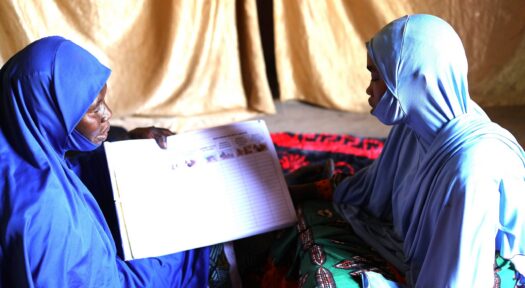
Young first-time parents are a great audience for resilience programming. During this pivotal stage of their lives, they are open to new ideas and may be more willing to try new approaches to improve their health and their family’s future.
First-time parents have been able to make direct links between their health, environment, and livelihoods based on their own situation. It has been relatively easy for them to disseminate knowledge to other young people in their communities, which potentially leads to changes in the mindsets of their peers.
Family planning use increased from 50% to 73% among first-time mother peer group members throughout the course of the intervention
Tuungane has fostered increased couple communication about family planning and shifts in attitudes related to couples’ decision making. Partner support and attitudes related to their involvement in healthy timing and spacing have improved since the start of our first-time parent activities.
We have also provided first-time parents with links to the project’s ongoing resilience activities, including climate-smart agriculture groups, beach management units, and community conservation banks (COCOBAs). These linkages have helped first-time parents gain the confidence to interact with other, older community members. First-time parents are one step closer to generating income, which is acutely needed at a time when new parenthood brings additional costs and stresses to young people’s lives.

4. How does Tuugane point the way forward for future programs?
Working with first-time parents was not originally part of Tuungane’s design. However, focusing on this population, with E2A’s support, has allowed Tuungane to more effectively reach youth. As a result, we are seeing an increased number of young people adopting voluntary family planning and building their resilience to different shocks, including the impacts of climate change.
Tuugane points the way forward for anyone who shares my vision:
I want to live in a world where girls and women have access to quality reproductive health education and services, they are food and nutrition secure, and that they can live a life of dignity including access to stable income.
To make this vision a reality, we should ensure all resilience programs have a deliberate focus on youth and first-time parents, not as an add-on or coincidence. And we must design them for scale.