MOMENTUM Integrated Health Resilience Celebrates
International Youth Day
In Tanzania, MOMENTUM Integrated Health Resilience aims to simultaneously improve access to health services and help communities manage natural resources in ways that allow them to improve their livelihoods and conserve biodiversity. MOMENTUM supports Population, Health, and Environment (PHE)* school clubs, which leverage a curriculum developed by the Jane Goodall Institute to help educate adolescents and youth ages of 8-18 on the links between their health and the environment.
As we mark the theme of this year’s International Youth Day on August 12th—Green Skills for Youth: Towards a Sustainable World for All—MOMENTUM and its partners recognize the enormous value in investing in this type of integrated youth-based programming.
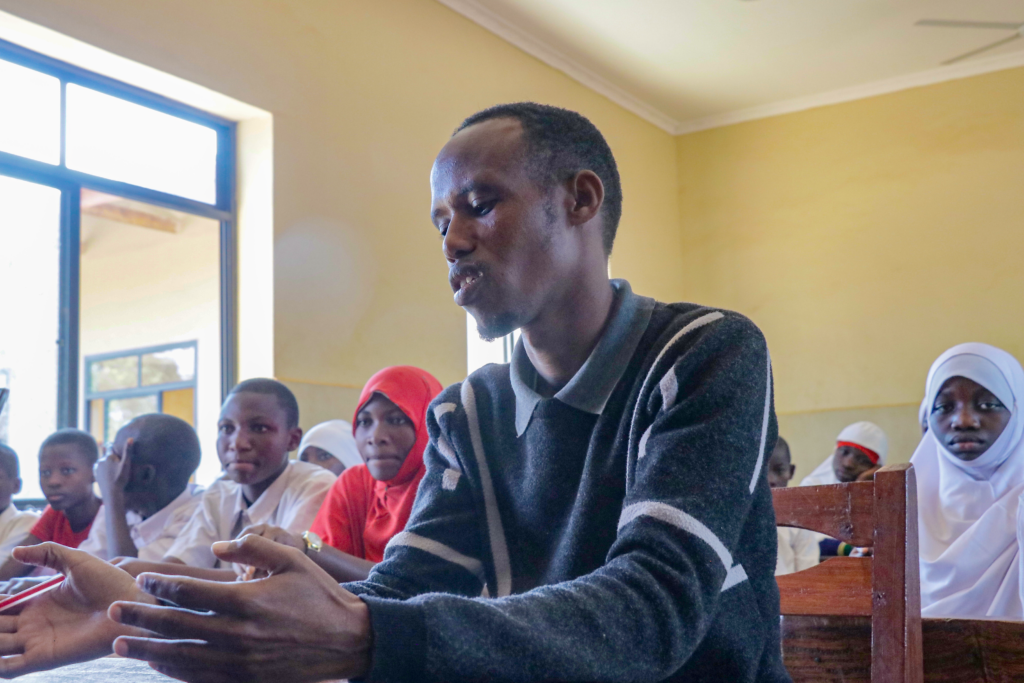
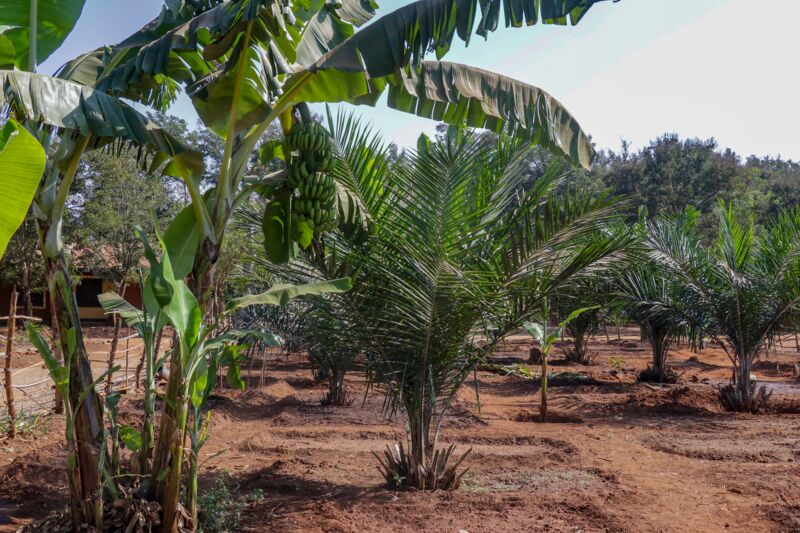
Learning about the health-environment connection
Daniel Peter Maegga, a 34-year-old teacher who has overseen the PHE school club at Igalula Primary School since 2018, has seen firsthand how his students are participating in the club and the impact they are having in the community.
Mr. Maegga described how the PHE school club works to ensure the grounds around the school are clean. He shared that “students are planting trees, fruits, flowers, and vegetables, and are receiving educational lessons multiple times a week on health and environment and the link that exists between them.” The students share what they learn with their families and the broader community.
Planting for profit
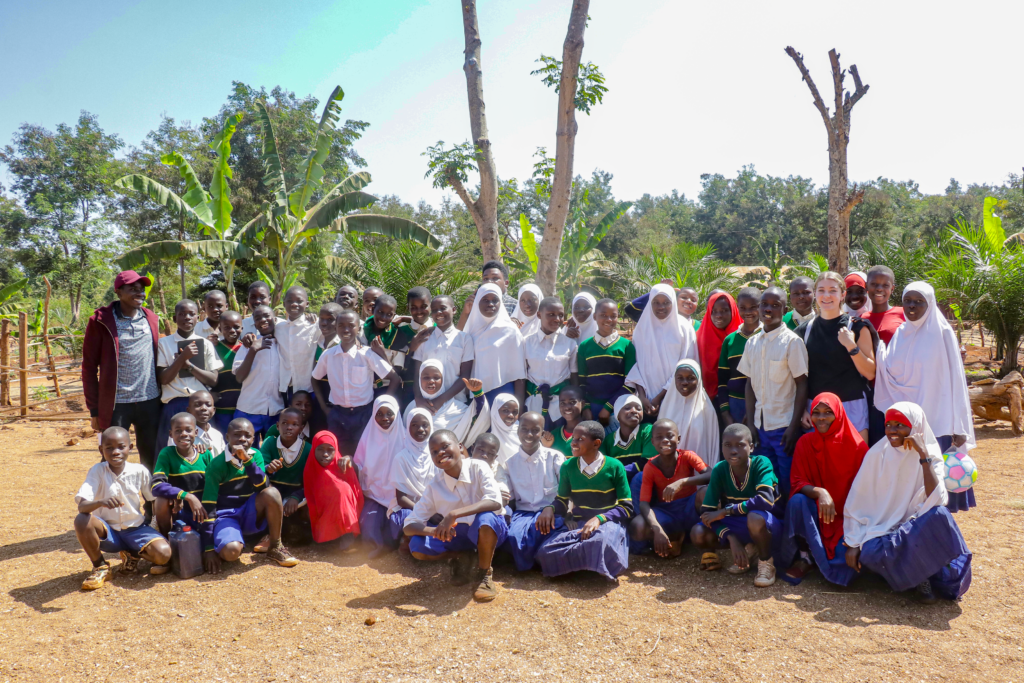
The goal of the PHE school clubs help inspire positive PHE behaviors and train young people to become the future change agents, PHE champions, and active citizens who are committed to learning and participating in personal health care and hygiene, natural resource management, and environmental conservation.
Photo: Students stand in front of their school garden
Students maintain the garden and sell produce in the community, learning entrepreneurship skills while reinvesting their profits to maintain their garden and support other PHE activities. The garden brings in close to 300,000 shillings each month. Some profits are being used to buy books, pens, and other materials that support their learning. This motivates other students to join the club, learn more about PHE, and adopt positive PHE behaviors.
Mr. Maegga noted that PHE school clubs are a great way to reach and meaningfully engage youth, as well as diffuse positive PHE behaviors throughout the community. He noted that community members have seen the impact from the PHE schools clubs and have reached out to him for support so they can replicate the activities in their own home.
MOMENTUM plays a key role in supporting the PHE school clubs by providing technical assistance and resources, such as watering cans, wheelbarrows, harvesting tools, seedlings, and other materials to help maintain the garden. The program team also conducts supportive supervision field visits to PHE school clubs for routine monitoring and support.
Students bring environmental stewardship home
One student, a member of the PHE school club from Igalula Primary School, shared that he did not know much about how to conserve the environment by planting trees and vegetables, but after joining the school club, his fellow students have learned different ways to protect natural resources, as well as the benefits this has on their health and the health of the community.
Another student, Amina Shaba, age 13, who is chairperson of the school club mentioned that through learning about the connections between health and the environment, she has been able to educate her family on positive PHE behaviors. She shared that “after I have seen how to prepare gardening and the profit the school managed to get, I decided to cultivate at home. I used the same methodologies, and I got enough products. Some I sold, and the rest were used to be consumed at home.”
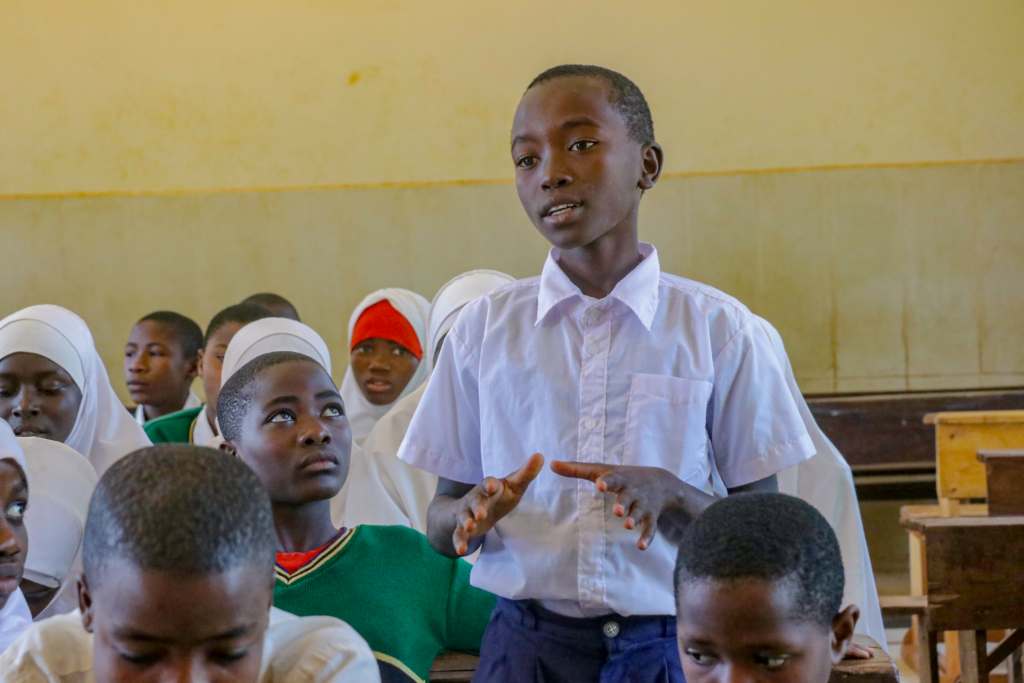
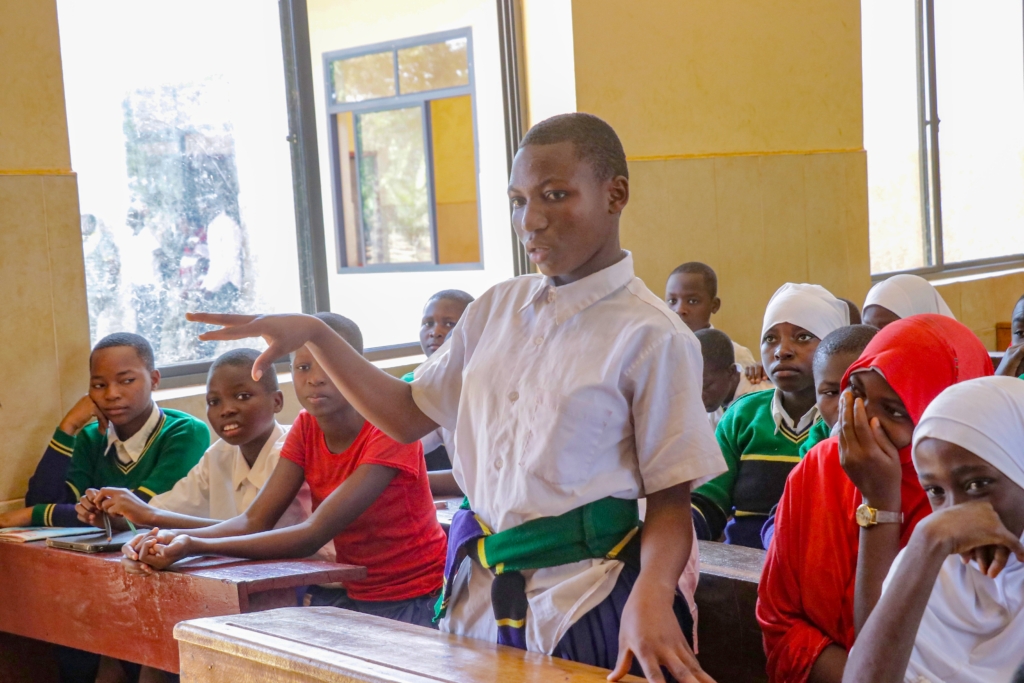
Targeting youth with integrated health and environment programming is just one way that MOMENTUM and its partners meaningfully engage youth to support participation within their communities, schools, organizations, peer groups, and families. These efforts help increase their skills, provide opportunities, and promote youth’s individual and community resilience.
To learn more about MOMENTUM’s work to meaningfully engage youth, see Partnering with Youth for Impact: Profiles of MOMENTUM Youth Partners from Across the Globe.
Pathfinder is a MOMENTUM partner.
Story written by: Sara Seper, Senior Associate, Knowledge Management and Strategic Communications and Vedastus Mugeta, Program Officer, MOMENTUM Integrated Health Resilience
*Although Pathfinder no longer uses the terminology, “Population, Health, and Environment,” across all of the countries where we work, we seek to implement integrated health and climate resilience programs. The work described in this blog is one example of those integrated programs.